
Water-Soluble Carboxymethyl Chitosan for Easier Aqueous Formulation
- All
- Microplastics
- Water Soluble
- All
- Native Chitosan
- Black Soldier Fly Chitosan
- Chitosan Oligosaccharide Hydrochloride
- Chitosan Oligosaccharide
- Chitosan Hydrochloride
- Carboxymethyl Chitosan
- Quaternary Chitosan
- Trimethyl Chitosan
- Sulphonated Chitosan
- Phosphorylated Chitosan
- Biochar
- Home Cleaning System
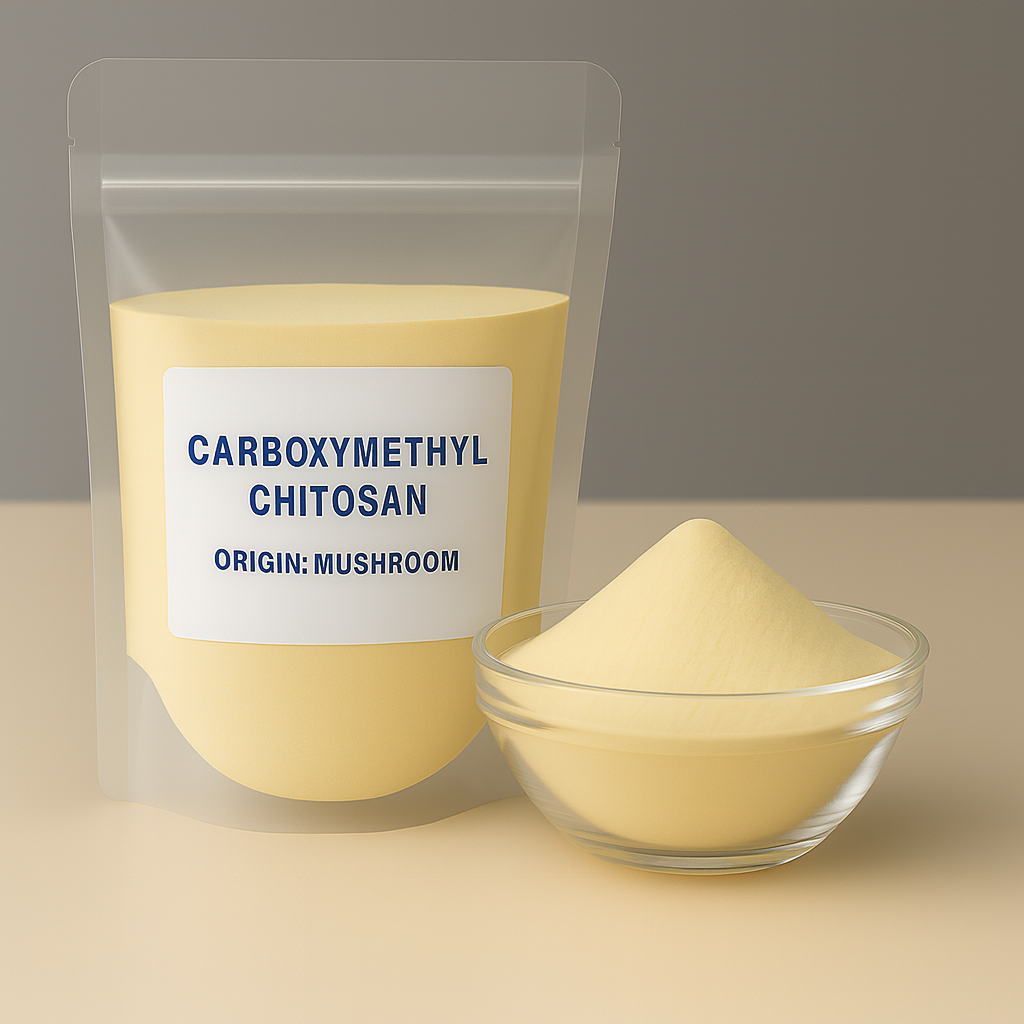
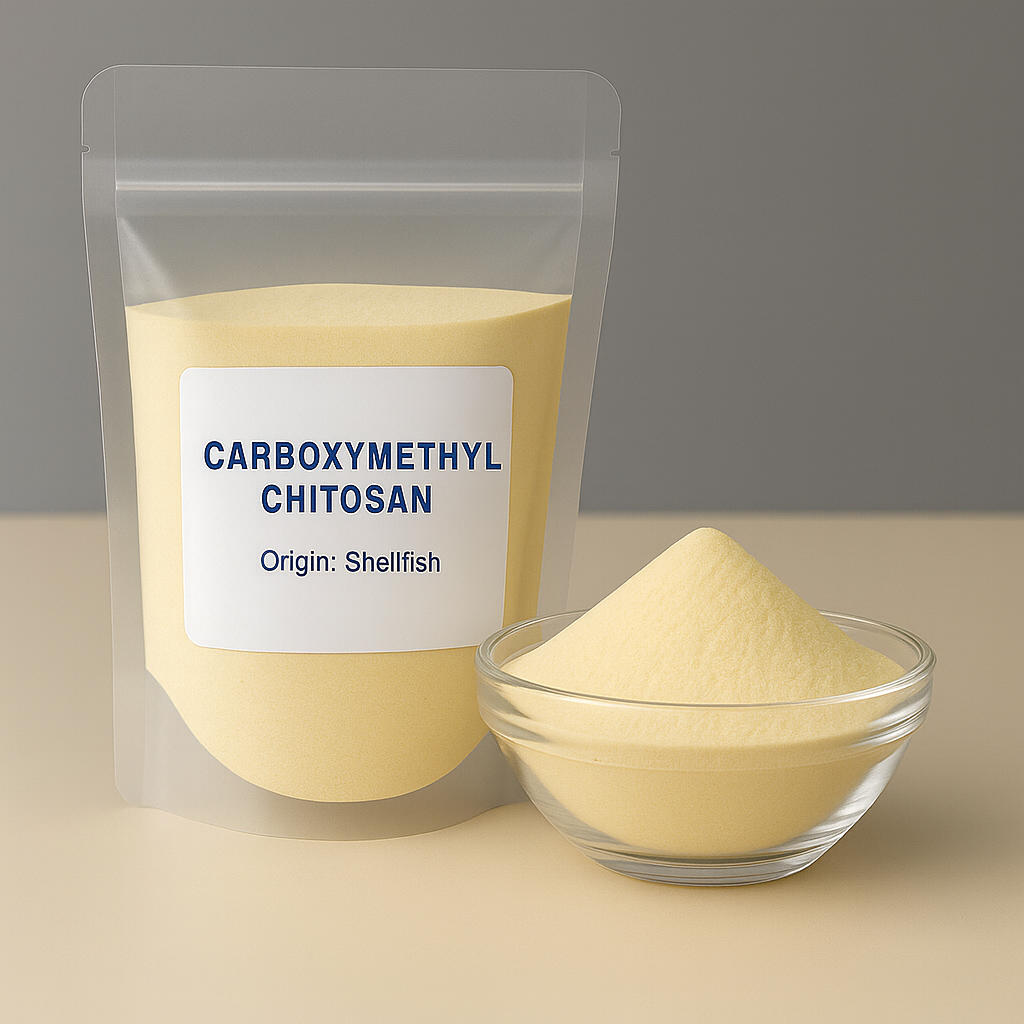
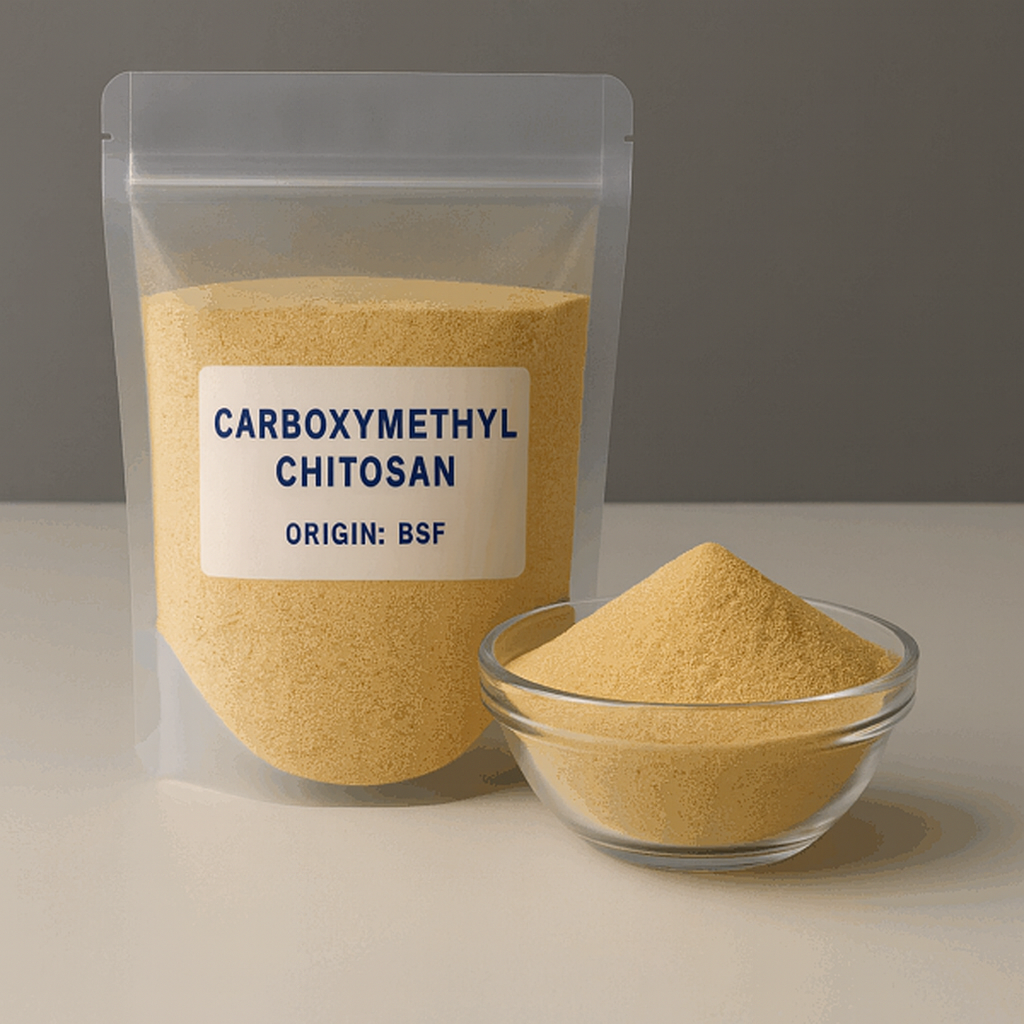
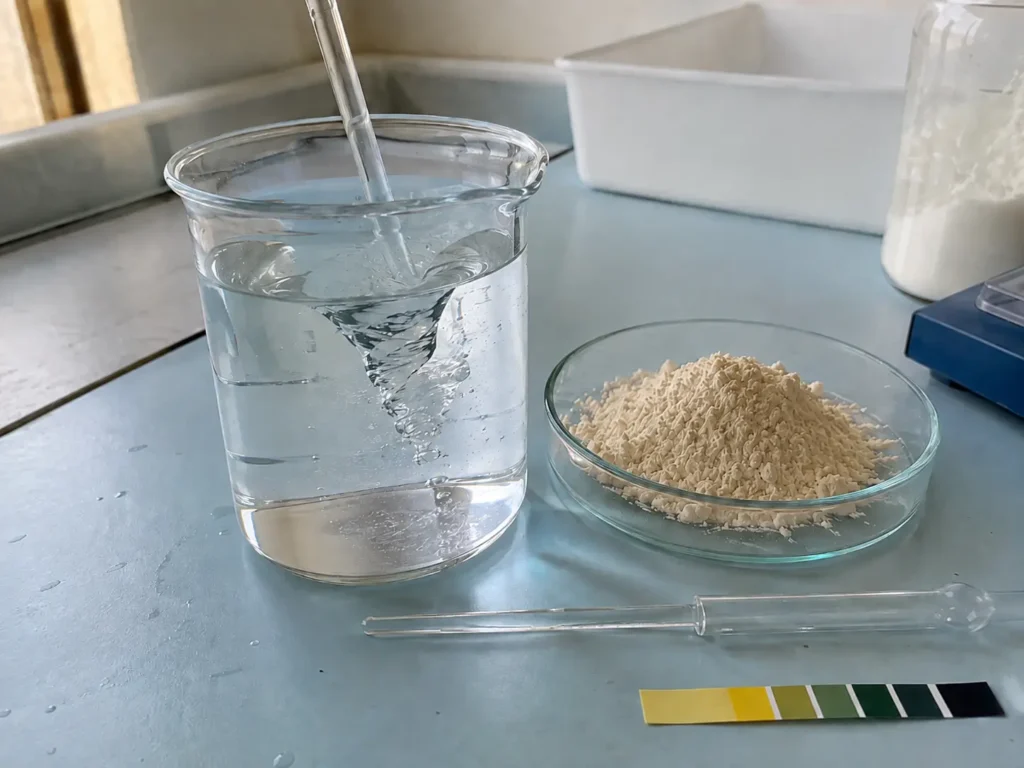
A chitosan material may look promising on paper until the formulation reaches the mixing vessel.
Native chitosan is valuable across many technical applications, but its pH-dependent aqueous solubility can create an immediate formulation constraint. When a system needs water-based processing without relying heavily on acidic dissolution conditions, formulators may need a modified chitosan derivative with different solution behavior.
That is where water-soluble carboxymethyl chitosan (CMC) becomes particularly useful.
Carboxymethyl modification introduces hydrophilic functionality into the chitosan structure, enabling appropriately specified CMC grades to provide broader aqueous processability than conventional native chitosan. Published research has consequently explored CMC in hydrogels, delivery systems, films, coatings, food-preservation materials, and other water-based polymer systems.
But selecting CMC should involve more than finding a powder labeled “water soluble.”
The real question is:
Will this specific grade dissolve, process, and perform correctly inside your actual formulation?
Testing a Water-Based Formulation?
Before committing to a larger quantity, evaluate the material under your own processing conditions.
Start with a 25 g Mushroom Carboxymethyl Chitosan sample for bench-scale formulation work.
Buy 25 g Mushroom Carboxymethyl Chitosan Sample
From Acid-Dependent Chitosan to Water-Compatible CMC
The practical difference between native chitosan and CMC becomes easier to understand from a formulation perspective.
Native chitosan contains amino groups that become protonated under acidic conditions. This protonation helps the polymer dissolve, which is why conventional chitosan formulations frequently involve an acidic dissolution step.
Carboxymethyl chitosan changes the equation.
Introducing carboxymethyl groups increases hydrophilic character and alters the ionic behavior of the polymer. Depending on its structure and degree of substitution, CMC can therefore provide considerably broader aqueous solubility.
For a formulator, that can mean a different workflow:
Native Chitosan
Powder → Acidified Medium → Dissolution → pH Adjustment → Formulation
Carboxymethyl Chitosan
Powder → Aqueous Evaluation → Hydration/Dissolution → Formulation
This simplified comparison is not a universal processing instruction. Actual behavior depends on the grade and formulation.
For the molecular chemistry behind this difference, see Why Carboxymethyl Chitosan Is Water Soluble.
“Water Soluble” Is Only the Beginning
One of the easiest mistakes in CMC sourcing is treating water solubility as a binary specification.
A material either dissolves or it does not right?
For formulation development, the answer is more complicated.
Two CMC materials described as water soluble can behave differently because of differences in:
- degree of substitution;
- position of substitution;
- molecular weight;
- molecular-weight distribution;
- DDA;
- polymer concentration;
- solution pH;
- ionic strength; and
- other ingredients in the formulation.
Research has shown that the degree and position of carboxymethyl substitution can significantly affect the pH-solubility behavior of CMC.
So a specification stating “water soluble” should begin the qualification process not end it.
Five Questions to Ask Before Choosing a Water-Soluble CMC
1. At What pH Will You Use It?
A material tested in purified water may behave differently in an acidic, neutral, buffered, or alkaline formulation.
Define your intended working pH first.
2. What Polymer Concentration Do You Need?
A dilute solution and a concentrated polymer system can have very different viscosity, hydration, and mixing behavior.
Solubility alone does not tell you how easily a concentrated CMC system can be processed.
3. What Else Is in the Formula?
Salts, proteins, minerals, surfactants, preservatives, active ingredients, and other polymers may interact with CMC.
4. What Molecular Characteristics Matter?
Molecular weight, substitution, and related structural characteristics can influence how a CMC grade behaves after dissolution.
5. What Must the Finished System Do?
A clear aqueous solution, coating, hydrogel precursor, controlled-release matrix, and film-forming system do not require the same polymer characteristics.
Select CMC for the finished formulation—not simply for its ability to disappear into a beaker of water.
What Happens After CMC Enters Water?
Dissolution is only one stage of the formulation process.
Once CMC is introduced into an aqueous system, formulators may need to evaluate several additional behaviors.
Hydration
How quickly and uniformly does the material hydrate?
Poor dispersion during addition can make an otherwise soluble polymer more difficult to process.
Viscosity Development
The resulting solution may change viscosity as polymer concentration and molecular characteristics change.
This can matter for pumping, mixing, spraying, coating, casting, and gel preparation.
Ionic Interaction
Carboxymethyl chitosan contains amino and carboxyl functionality and can exhibit amphoteric behavior depending on conditions.
This means pH and other charged components may influence polymer interactions.
Stability
A solution that looks acceptable immediately after preparation may behave differently after storage or after additional formulation ingredients are introduced.
That is why dissolution testing should be followed by formulation testing.
A Formulator’s Qualification Matrix
Instead of asking only “Is it water soluble?”, use a broader qualification framework.
| Check | Question to Answer |
|---|---|
| Source | Does the project require mushroom/fungal rather than crustacean-derived material? |
| Solubility | Does the actual grade dissolve under the intended conditions? |
| Working pH | Does it remain suitable in the formulation’s pH range? |
| Molecular Weight | Is the MW appropriate for the desired solution behavior? |
| Degree of Substitution | Is substitution information available where required? |
| Viscosity | Does the solution meet processing requirements? |
| Concentration | What happens at the intended use concentration? |
| Ionic Compatibility | How does it behave with salts, buffers, or charged ingredients? |
| Purity | Does the grade meet the project’s quality requirements? |
| Batch Documentation | Is a current COA available for qualification? |
For the broader material specifications and properties of fungal-derived CMC, use the Mushroom Carboxymethyl Chitosan technical guide.
Where Does Water-Soluble CMC Create Formulation Opportunities?
Water compatibility becomes most valuable when it solves a real processing problem.
Rather than treating CMC applications as one long list, it is useful to look at what the material is being asked to do in each system.
When You Need a Hydrogel Precursor
Hydrogel development often begins with an aqueous polymer phase.
CMC provides functional groups that can participate in different network-forming strategies, making it an extensively researched component of single- and multi-polymer hydrogel systems.
Researchers may evaluate:
- swelling behavior;
- water retention;
- crosslinking;
- mechanical properties;
- adhesion;
- porosity; and
- release behavior.
The chemistry and performance of the final hydrogel depend on the complete network, not CMC alone.
Explore the application in Carboxymethyl Chitosan for Hydrogels.
When You Need an Aqueous Delivery Matrix
CMC has also received substantial attention in drug-delivery research.
Its water compatibility and available functional groups make it useful for investigating polymeric carriers, hydrogels, nanoparticles, microspheres, and composite delivery systems.
This does not mean a general commercial CMC grade is automatically suitable or approved for pharmaceutical use. Biomedical applications require application-specific material qualification and regulatory review.
For the research and formulation considerations, see Carboxymethyl Chitosan for Drug Delivery.
When You Need a Film or Coating from an Aqueous Phase
Film and coating development is another area where aqueous processability can be valuable.
Researchers have investigated CMC-containing systems for:
- polymer films;
- functional coatings;
- composite packaging;
- active-ingredient carriers; and
- food-preservation materials.
In these systems, CMC may be only one part of the formulation. Plasticizers, other polymers, active compounds, drying conditions, and film thickness can all influence the final material.
See the dedicated research guide on Carboxymethyl Chitosan for Food Preservation.
Water-Soluble CMC or Chitosan Hydrochloride?
A project requiring water-compatible chitosan does not automatically require CMC.
Chitosan hydrochloride is another derivative used where improved aqueous handling is desired.
But the two materials solve the problem differently.
Carboxymethyl Chitosan
The polymer itself is modified by introducing carboxymethyl functionality.
Chitosan Hydrochloride
Chitosan is supplied as a hydrochloride salt.
That difference can influence charge characteristics, pH response, polymer interactions, and suitability for particular formulation systems.
Therefore:
Need water solubility? → Consider both.
Need particular ionic/functionality behavior? → Compare the chemistry.
Need to select a commercial material? → Compare specifications and test.
Use the full Carboxymethyl Chitosan vs Chitosan Hydrochloride comparison before treating the two materials as substitutes.
Pure Water Is Not Your Finished Formulation
This is one of the most important considerations on this page.
Suppose a CMC powder dissolves successfully during an initial water-solubility test.
Your finished formulation then introduces:
Buffer + Salt + Active Ingredient + Preservative + Second Polymer
The environment has changed.
Polymer behavior may also change.
Depending on the system, formulators may observe changes in:
- viscosity;
- clarity;
- dispersion;
- polymer association;
- precipitation;
- gel formation;
- stability; or
- interaction with active components.
Therefore, a supplier solubility specification should never replace application-specific bench testing.
A Better Way to Test Water-Soluble CMC
Instead of moving directly from technical literature to a bulk order, use a staged qualification process.
Stage 1 — Define the Target System
Record the intended application, working pH, polymer concentration, processing conditions, and important co-ingredients.
Stage 2 — Review Product Documentation
Check the current specification and request a COA for the supplied material.
Stage 3 — Start Small
Use a sample to evaluate initial hydration and dissolution.
Stage 4 — Challenge the Material
Test the CMC under the pH, ionic strength, concentration, and temperature relevant to the formulation.
Stage 5 — Build the Complete Formula
Add the other ingredients and evaluate compatibility.
Stage 6 — Observe Over Time
Where relevant, assess viscosity, appearance, stability, or other application-specific properties after preparation.
Stage 7 — Scale Only After Qualification
Once the material meets bench requirements, move into pilot evaluation and commercial sourcing.
SPECIFICATION → COA → 25 G SAMPLE → WATER TEST → FORMULATION TEST → PILOT → BULK
Start with 25 g Before You Scale
For R&D teams, the smallest useful purchase is often more valuable than committing immediately to a commercial quantity.
A 25 g Mushroom Carboxymethyl Chitosan sample can be used for initial bench work to evaluate whether the material fits your formulation strategy before discussing larger supply.
Buy 25 g Mushroom Carboxymethyl Chitosan Sample
For procurement, documentation, and larger-volume considerations, see the Carboxymethyl Chitosan Supplier guide.
Why Mushroom-Derived CMC?
For some projects, functionality is not the only selection criterion. Biological source can also matter.
Mushroom-derived CMC provides an alternative for projects seeking a fungal, non-crustacean source of carboxymethyl chitosan.
This can be relevant to:
- source-specific R&D;
- non-crustacean product development;
- raw-material diversification;
- fungal biomaterial research; and
- formulation programs comparing alternative chitosan sources.
Source should nevertheless be evaluated alongside the technical specification.
A mushroom origin does not by itself determine solubility, viscosity, purity, or application performance.
The better procurement question is:
Does this mushroom-derived CMC have the specifications and formulation behavior our system requires?
Frequently Asked Questions About Water-Soluble CMC
Is carboxymethyl chitosan soluble in water?
Carboxymethyl modification can give chitosan substantially broader aqueous solubility than native chitosan. Actual behavior depends on factors such as substitution, molecular characteristics, pH, concentration, and the surrounding formulation.
Why is carboxymethyl chitosan more water soluble than native chitosan?
Introducing carboxymethyl groups increases hydrophilic and ionizable functionality in the polymer. For the chemistry rather than the formulation implications, read why carboxymethyl chitosan is water soluble.
Does CMC dissolve without acid?
Appropriately specified CMC can offer aqueous solubility without the same acid-dissolution requirement commonly associated with native chitosan. The actual grade should be tested under the intended conditions.
Is CMC soluble at neutral pH?
CMC can provide substantially broader pH-solubility behavior than native chitosan, but it should not be assumed that every grade behaves identically at every pH. Degree and position of substitution can influence solubility behavior.
What affects CMC solubility in a formulation?
Important variables include pH, molecular weight, substitution, polymer concentration, ionic strength, temperature, and interactions with other formulation ingredients.
Is water-soluble CMC better than native chitosan?
Not universally. CMC may be more convenient when broader aqueous processability is required, while native chitosan can remain preferable for applications that specifically benefit from its conventional characteristics. See Carboxymethyl Chitosan vs Native Chitosan.
Should I test CMC before buying bulk?
Yes. Technical specifications establish an initial qualification point, while bench testing helps determine how the actual material behaves under your intended formulation conditions.
Where can I buy a sample?
Current specifications and sample options are available on the Mushroom Carboxymethyl Chitosan product page.
Test the Material in Your Formulation
A water-soluble specification tells you what the material is designed to do.
Your formulation tells you whether it is the right material.
For a more reliable purchasing decision:
Review the specification. Request the COA. Test a small quantity. Validate the complete formulation. Then scale.
Start with a 25 g Mushroom Carboxymethyl Chitosan Sample
Need commercial quantities after testing? Request bulk pricing and current batch documentation.
You May Also Like
- All
- Native Chitosan
- Phosphorylated Chitosan
- Sulphonated Chitosan
- Quaternary Chitosan
- Chitosan Oligosaccharide Hydrochloride
- Chitosan Hydrochloride
- Carboxymethyl Chitosan
- Chitosan Oligosaccharide
Get in Touch
Technical & Custom Solutions
Abhinav Chauhan, PhD – Application Scientist
Stephen Nice – Application Scientist