
Headlines about microplastics in blood, lungs, placentas and even brain tissue are real. So are the cleanse kits that promise to flush them out. Neither tells you what is actually supported by research.
This guide gives you a realistic microplastic detox protocol built on three ideas: reduce the plastic you take in, support normal digestion and excretion, and keep general health habits steady. It includes a daily routine and a 4-week plan. It also says plainly what no routine, supplement or cleanse has been shown to do.
Quick answer: No protocol is proven to remove microplastics from human tissue. The best-supported step is reducing exposure, especially heat plus plastic around food and drink. Beyond that, a high-fiber diet supports normal digestion, and some chitosan research suggests a possible role in stool excretion of ingested particles, though that research does not show removal from organs.
Key Takeaways
- A “detox” cannot honestly promise to remove particles already in tissue.
- Cutting exposure at the source is the most practical lever: water, hot drinks, food storage, reheating and cutting boards.
- Chitosan has direct microplastic research in rats and one small preliminary human stool study, all using crustacean-derived chitosan, mostly with larger chains than chitosan oligosaccharide.
- Fiber, vegetables and good hydration support normal digestion but have not been shown to clear microplastics.
- Cleanse kits, foot baths and sauna “sweat-outs” had no supporting evidence in our review.
What a Microplastic Detox Can and Cannot Do
What the evidence supports
- Microplastics can be measured in human stool, so some ingested particles pass through the digestive tract.
- Reducing the plastic that contacts hot food and drink lowers one avoidable source of particles.
- Animal studies and one small preliminary human study report higher stool excretion of microplastics after chitosan. Read the details in our review of the chitosan microplastic excretion study.
What no protocol can honestly claim
- Removing particles already in organs, blood or the brain. See where microplastics actually go and what we actually know about microplastics and human health.
- Results from juice cleanses, ionic foot baths or saunas. We found no evidence for them.
For the reasoning behind each method, read how to remove microplastics from your body. This page is the action-plan version.
The Three Pillars
- Reduce intake. Water, hot drinks, food storage, reheating and kitchen tools.
- Support normal digestion and excretion. Fiber-rich meals and, if you choose, a chitosan product used as labeled.
- Keep general health habits steady. Vegetables, regular sleep and medical care. These support health overall, but they are not shown to clear microplastics.
The Daily Routine: Morning, Meals, Evening
Morning
Rethink your water. A 2024 study found that boiling hard tap water and filtering out the scale removed up to about 90% of added nano- and microplastics, though results varied with water type (ScienceAlert summary of Yu et al.; DOI). If you use a filter, check which particle sizes the manufacturer tests for and whether the claim is independently certified. News coverage of a World Health Organization review reported more microplastics in bottled water than in tap water (Valley News Live), so bottled water is not automatically the cleaner choice. See also bottled water vs tap water microplastics.
Choose your tea and coffee gear. A McGill University study found that a single plastic tea bag steeped in near-boiling water released billions of microplastic and nanoplastic particles (Irish Times report). Loose-leaf tea, a steel infuser or a paper filter avoids that source. The authors said more research is needed on human effects.
With Your Two Largest Meals
Meals are when much food-related exposure happens, so this is where many people place their routine.
Build the plate. Fill about half with vegetables and fiber-rich foods. Fiber supports normal digestion, which is useful whether or not you use a supplement. Our guide to foods and microplastics explains what food can and cannot do.
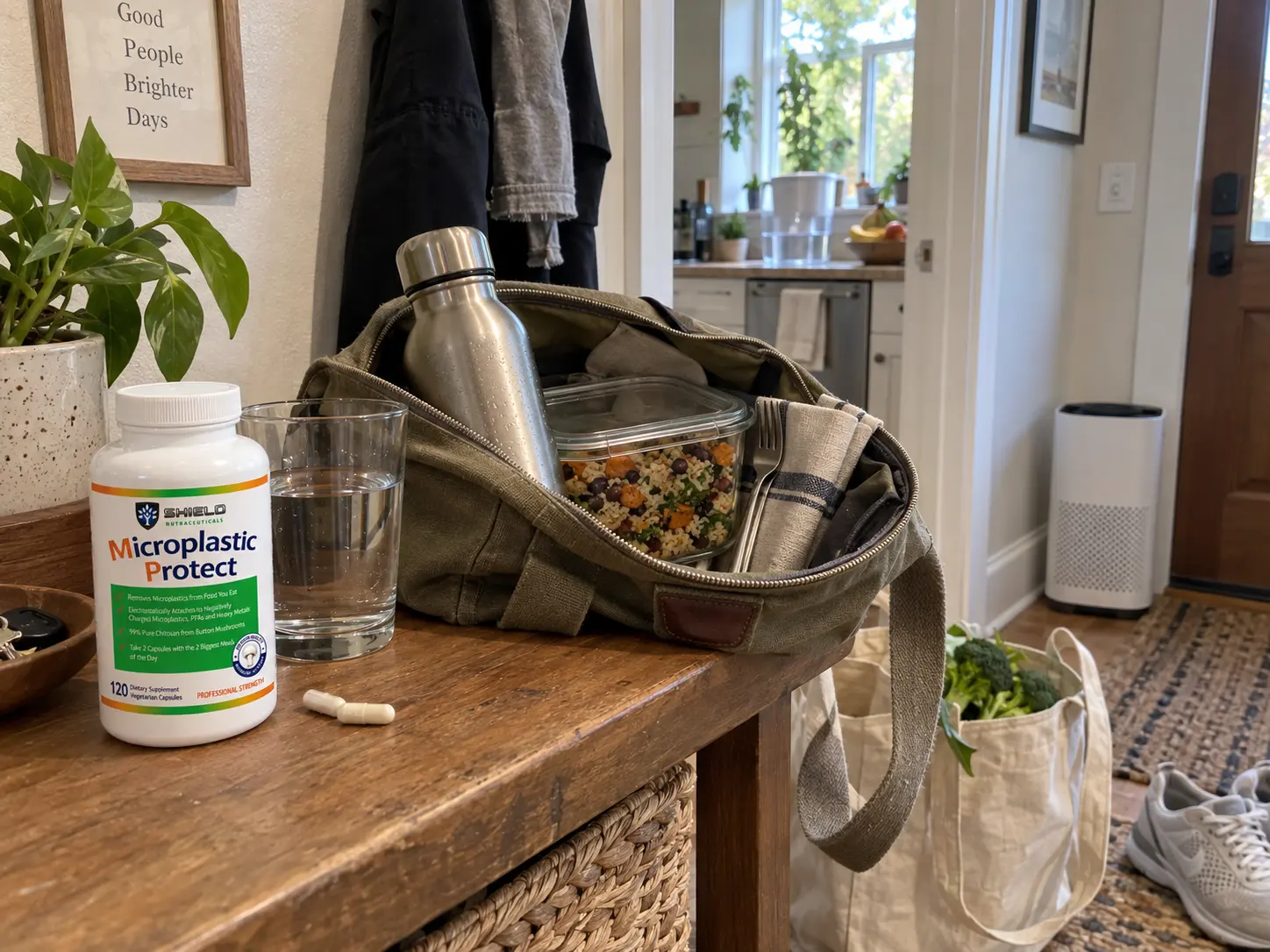
If you use a chitosan supplement, follow the label. The Microplastic Protect label directs two capsules (1,200 mg) with water about 15 minutes before each of the two largest meals. Read how to take Microplastic Protect for the full routine, and speak with a healthcare professional first if you take medication, are pregnant or breastfeeding, or have allergies.
In the Kitchen
- Storage and reheating. Heating food in plastic containers, even ones labeled microwave-safe, increases particle release compared with glass or ceramic, according to a summary of the research (Park Record). Use glass or ceramic. See what heating food in plastic does.
- Cutting boards. A 2023 Environmental Science & Technology study estimated that regular use of polyethylene or polypropylene boards could release roughly 14 million to 79 million microplastic particles per year (Park Record summary). Wood, bamboo or tempered glass boards avoid that source.
- Hot plastic. Where heat meets plastic, more particles move into food and drink, so keep the two apart.
Evening and at Home
- Cruciferous vegetables. Broccoli, cauliflower, cabbage and kale are good dietary choices. They contain sulforaphane, but we could not identify a peer-reviewed human trial showing it removes microplastics.
- Air and dust. Synthetic textiles and household dust can carry fibers. Ventilating rooms and vacuuming regularly may reduce what you breathe in, though we have not cited a study for this tip.
- Leftovers. Move hot leftovers into glass or steel containers rather than letting hot food sit in plastic.
The 4-Week On-Ramp Plan
Changing everything at once is why most routines fail. Build it in stages.
| Week | Focus | New habits |
|---|---|---|
| 1 | Water and drinks | Review your water source and filter, cut single-use bottles, switch to loose-leaf tea or a steel infuser |
| 2 | Kitchen | Move storage to glass or steel, reheat in ceramic, swap plastic cutting boards for wood or glass |
| 3 | Meals | Add a high-fiber food to both large meals; start any supplement only after checking with a professional, following the label |
| 4 | Home and habits | Add a daily vegetable serving, ventilate sleeping space, review textiles and dust |
By week four the routine takes only a few minutes a day. It is a long-term habit for a continuous exposure, not a seven-day cleanse.
Supplements: What Has Evidence and What Does Not
| Option | Role proposed | Microplastic evidence | Notes |
|---|---|---|---|
| Chitosan | May interact with particles in the gut | Rat studies and one small preliminary human stool study | Studies used crustacean chitosan, mostly larger chains; allergy and medication cautions |
| Fiber and vegetables | Supports normal digestion | No plastic-specific human trials identified | Sensible baseline regardless |
| Sulforaphane | Proposed cellular effects | No peer-reviewed human trial identified | Dietary sources are the simple route |
| Zeolite and bentonite clay | Marketed for “toxin binding” | None found in humans | Lead contamination reported in some products |
| Cleanse kits and foot baths | Marketing | None found | Avoid |
Chitosan in Context
A 2025 rat study reported higher microplastic excretion after chitosan (Scientific Reports). A 2026 study concluded that chitosan of 673,000 molecular weight or higher promoted excretion in rats (Frontiers in Nutrition), and a small 2025 human study linked 0.8 g of crayfish-derived chitosan to higher stool excretion of several microplastic types (Foods). None of these tested Microplastic Protect, which lists chitosan oligosaccharide with much shorter chains, and none shows removal from tissue. See can chitosan bind microplastics and the comparison of Microplastic Protect vs chitosan supplements.
Zeolite and Bentonite Clay
The FDA issued a warning letter after laboratory testing found lead in a bentonite clay marketed for detox (ConsumerLab report), and a zeolite supplement shipment was flagged in Europe for lead (NutraIngredients). For a four-way comparison, read our guide to the best microplastic detox supplement.
Safety Considerations
Consumer references advise caution with chitosan for people with shellfish or mushroom allergies (Healthline). Chitosan may interact with warfarin and may reduce absorption of fat-soluble vitamins (WebMD), and constipation, gas and bloating are common side effects (MedicineNet). The National Center for Complementary and Integrative Health notes that supplements can change how medications work and recommends telling all your health care providers what you take (NCCIH). This is general information, not medical advice.
Common Mistakes That Undo the Routine
- Filtering water but heating food in plastic. Fix the biggest sources first.
- Buying a cleanse instead of building a routine. Exposure continues with every meal, so habits matter more than a one-off event.
- Skipping the label. If you use Microplastic Protect, follow the label directions and speak with a professional about timing alongside your medicines.
- Treating a supplement as permission to ignore exposure. Reducing plastic contact still comes first.
- Chasing zero. Exposure cannot reach zero in modern life. Aim for a meaningfully lower load, sustained.
How Will You Know if It Is Working?
We are not aware of a validated way to measure your microplastic load at home, so you cannot see results the way you can with a blood pressure reading. Judge the routine by what you control: the habits you keep and the exposure sources you removed. Research on how to measure and reduce body burden is still developing.
Frequently Asked Questions
How do you detox microplastics from your body?
No method is proven to remove microplastics from tissue. The most practical approach is to reduce exposure, support normal digestion with fiber and discuss any supplement with a healthcare professional.
How long does a microplastic detox take?
There is no established timeline. Because exposure is continuous, a routine works better as a long-term habit than a short cleanse.
Can you flush microplastics out of your body naturally?
Some ingested particles pass through the digestive tract and appear in stool. Whether particles in tissue can be cleared is not established.
What foods help remove microplastics from the body?
No food has been shown to remove microplastics. A fiber-rich diet with plenty of vegetables supports normal digestion and general health.
Does drinking water flush out microplastics?
There is no evidence that drinking more water clears microplastics from the body. The source of your water matters more, since boiling and filtering hard tap water reduced particles in one study.
Does boiling water remove microplastics?
A 2024 study found that boiling and filtering hard tap water removed up to about 90% of added nano- and microplastics, with results varying by water type.
Is bottled water worse than tap water for microplastics?
Coverage of a WHO review reported more microplastics in bottled water than in tap water, so bottled water is not automatically the cleaner choice.
Do tea bags contain microplastics?
Some do. A McGill University study found a single plastic tea bag released billions of particles in near-boiling water. Loose-leaf tea avoids that source.
Are plastic cutting boards a source of microplastics?
Research estimated that regular use of polyethylene or polypropylene boards could release millions of particles per year. Wood, bamboo or glass boards avoid it.
Is it safe to microwave food in plastic containers?
Studies and summaries indicate heating food in plastic increases particle release, even in containers labeled microwave-safe. Glass or ceramic is the lower-exposure choice.
Do saunas, foot baths or juice cleanses remove microplastics?
We found no evidence that they do.
Do I need to fast or cleanse to remove microplastics?
No evidence supports fasting or cleanse kits for microplastic removal.
What is the best supplement for a microplastic detox?
None is proven. Chitosan has the most direct microplastic research, but it is limited to rat studies and one small human stool study using different chitosan than many products.
Is chitosan safe to take every day?
Common side effects include constipation, gas and bloating, and it may interact with warfarin and fat-soluble vitamins. People with shellfish or mushroom allergies should be cautious. Consult a healthcare professional first.
When should I take chitosan, with food or before?
Follow the product label. The Microplastic Protect label directs two capsules about 15 minutes before each of your two largest meals, with water.
Can you remove microplastics from blood or the brain?
There is no proven method. Research into where microplastics accumulate is ongoing; see our summary of microplastics found in the living human brain.
Is there a test for microplastic levels in the body?
We are not aware of a validated test available for routine personal use.
How can I reduce my microplastic exposure at home?
Avoid heating food in plastic, use glass or steel storage, switch to loose-leaf tea, use wood or glass cutting boards and review your drinking water. See microplastics in food and water for more.
Sources and Further Reading
- Ingesting chitosan can promote excretion of microplastics, Scientific Reports (2025)
- Effect of different chitosan molecular weights on microplastic excretion, Frontiers in Nutrition (2026)
- Preliminary study on chitosan and microplastic excretion in human stools, Foods (2025)
- Boiling and filtering tap water, Environmental Science & Technology Letters (2024)
- NCCIH: how medications and supplements can interact
These statements have not been evaluated by the Food and Drug Administration. Microplastic Protect is not intended to diagnose, treat, cure or prevent any disease. This article is for education and is not medical advice.
Talk to the Chitosan Global Team
Have questions about chitosan products, specifications or documentation? Our technical team can help with product selection, source, molecular weight and degree of deacetylation, samples and bulk supply. You can also view the Microplastic Protect product page, see how to find real chitosan capsules online or read our return policy.
- Call us on +1 (423) 202-6145
- Email your questions to steve@chitosanglobal.com
- Request wholesale pricing or contact our team to book a free initial consultation