
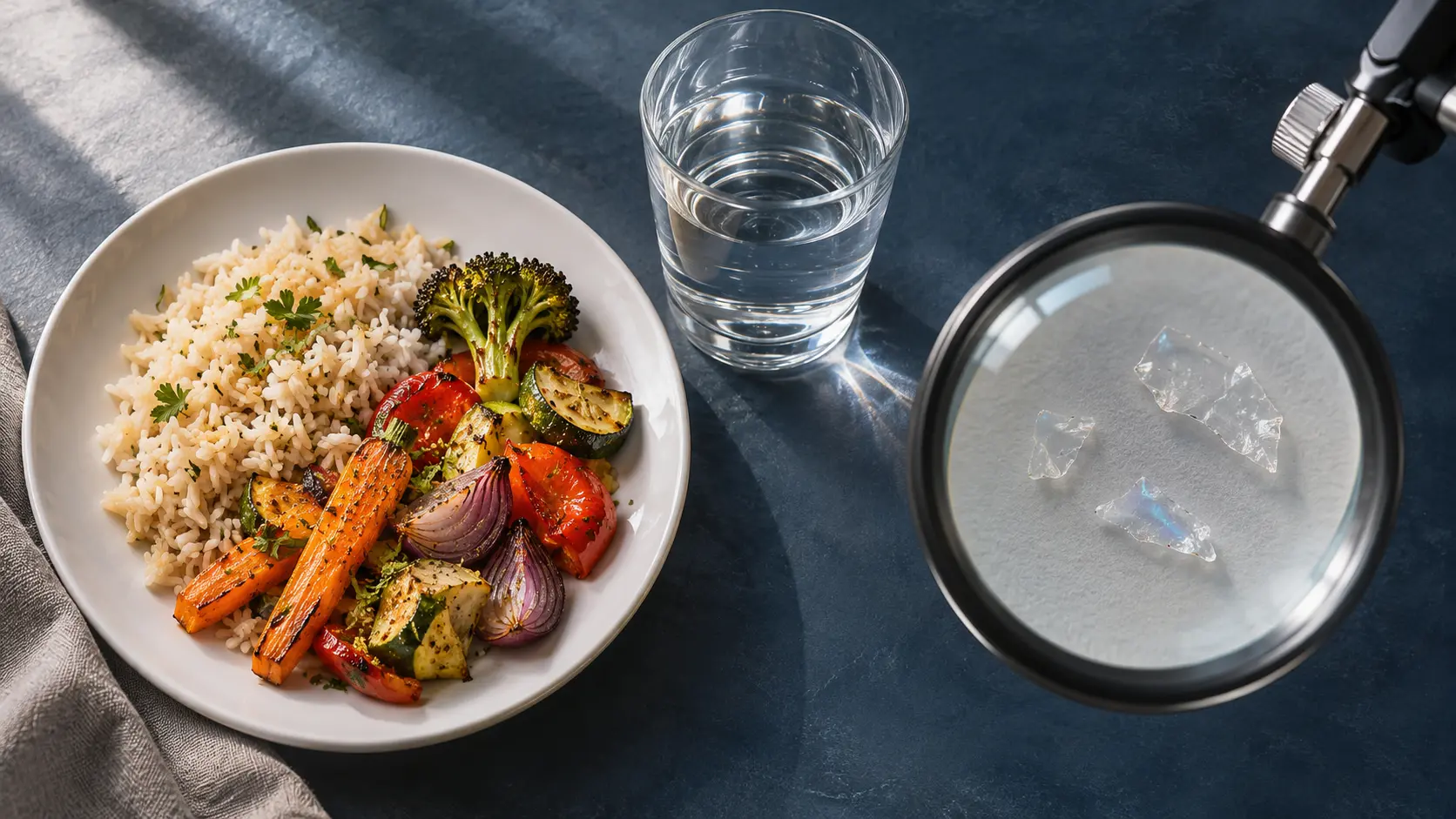
A 2019 study estimated that people in the United States could swallow 39,000 to 52,000 microplastic particles per year from the foods and drinks it assessed. That works out to roughly 107 to 142 particles per day. The study covered items representing about 15% of U.S. calorie intake, so the total across a full diet remains uncertain. Cox et al., Human Consumption of Microplastics
How Much Microplastic Do We Consume per Day and per Year?
The researchers combined published measurements of microplastics with recommended food and drink intake. Their estimates varied by age and sex. The first row below shows how many particles people could swallow from the items assessed. The second row adds particles they could breathe in. The daily figures are approximate equivalents calculated by dividing the yearly estimates by 365. Cox et al.
| What the estimate includes | Particles per year | Approximate particles per day |
|---|---|---|
| Swallowed from the foods and drinks assessed | 39,000–52,000 | 107–142 |
| Swallowed and breathed in | 74,000–121,000 | 203–332 |
If you’ve seen 121,000 particles per year quoted as the amount people eat or drink, check what the number includes. It’s the upper end of the combined estimate for swallowing and breathing in particles. The 39,000 to 52,000 range is the study’s estimate for swallowing alone, within the sources it assessed. Cox et al.
How Much Microplastic Do We Consume From Drinking Water?
The same study compared two scenarios. If someone met all their recommended drinking-water intake with bottled water, the model estimated about 90,000 particles per year from water. In the tap-water-only scenario, the estimate was about 4,000 particles per year from water. Both figures depend on the water measurements available to the researchers at the time. Cox et al.
The number in a specific bottle or glass can vary by source and testing method. Newer techniques can detect smaller particles, including nanoplastics, which helps explain why newer bottled-water studies can report very different counts. NIH research summary
Read the full comparison in our guide to microplastics in bottled water vs. tap water.
Do We Really Eat a Credit Card’s Worth of Plastic Every Week?
The widely shared “one credit card per week” comparison refers to about five grams of plastic. A published review found major problems with the calculations behind the estimate. The five-gram figure remains disputed. Journal of Hazardous Materials Letters
Part of the confusion comes from mixing two measurements. Particle count tells you how many pieces were detected. Mass tells you how much those pieces weigh. A sample with 1,000 tiny fragments can weigh much less than a sample with 1,000 larger fragments. Estimating weight from a count requires information about the particles’ sizes, shapes, and densities. Review of the credit-card-per-week estimate
Why Do Microplastic Intake Estimates Vary?
What people eat and drink differs from day to day, and many foods are missing from the 2019 analysis. Two people could drink similar amounts of water but get it from different sources. Their actual intake can therefore differ even if a published estimate puts them in the same group. Cox et al.
Testing methods also affect what gets counted. A method that detects smaller particles can produce a higher count from a similar sample. The FDA points to the lack of standardized methods for detecting, counting, and characterizing microplastics and nanoplastics in food. When comparing two estimates, check what was tested, what particle sizes the method could detect, and whether the result is a count or a weight. FDA overview
Frequently Asked Questions
How much microplastic do we consume in a week?
The 2019 study’s dietary estimate works out to about 750 to 1,000 particles per week when divided by 52. That figure covers the foods and drinks included in the analysis. It gives a weekly equivalent for the study’s annual estimate. Cox et al.
Does everyone consume the same amount of microplastic?
Individual intake varies with what people eat, what they drink, and how much they consume. The study used published measurements and recommended intake amounts to estimate exposure across groups. Your own intake would depend on the specific foods and drinks you consume. Cox et al.
What can I change in my daily routine?
Start with a habit you repeat often. If you regularly reheat lunch in a plastic takeout container, transfer it to a microwave-safe glass or ceramic dish first. If you have access to safe drinking water, carry a refillable stainless steel bottle. NYU Langone Health
For more ideas, read our guide on how to reduce microplastic exposure in daily life.
Explore Microplastic Protect™
Microplastic Protect™ is a dietary supplement made with chitosan derived from button mushrooms. Each bottle contains 120 vegetarian capsules. Visit the product page to see the ingredients, label directions, and current price.
Sources
- Cox et al. — Human Consumption of Microplastics
- Journal of Hazardous Materials Letters — Review of the credit-card-per-week estimate
- FDA — Microplastics and Nanoplastics in Foods
- NIH — Plastic Particles in Bottled Water
- NYU Langone Health — Tips for Reducing Exposure to Microplastics and Plastic Additives