
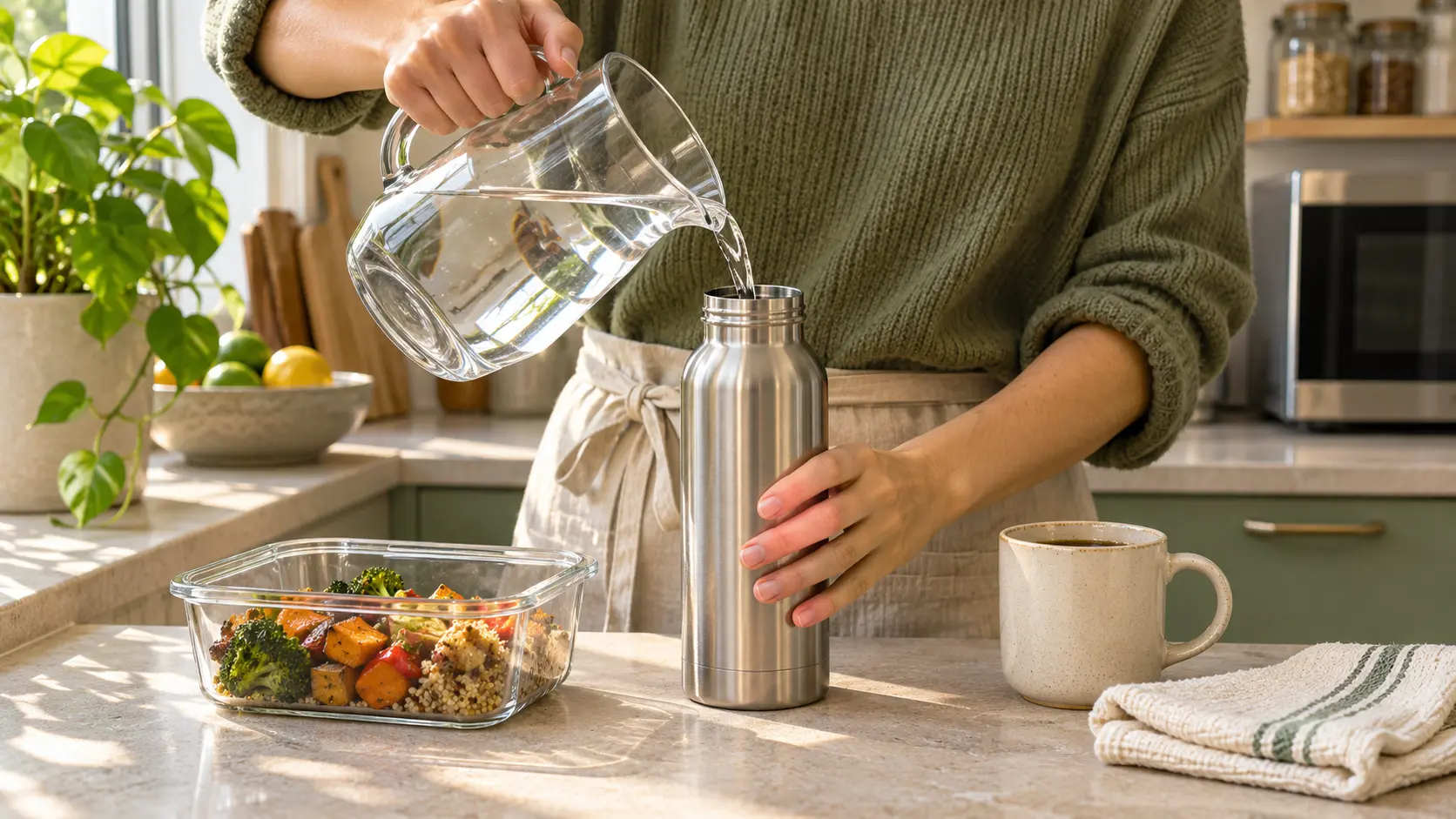
You can’t avoid microplastics completely they’ve been detected in food, water, and air but five low-effort habits target the sources you touch most often: refill a stainless steel or glass bottle with safe drinking water, reheat leftovers in glass or ceramic, use a ceramic mug or steel tumbler for hot drinks, clean up dust with a damp cloth and vacuum regularly, and replace worn plastic food containers with glass or steel. No single change is proven to cut a person’s total exposure researchers are still quantifying that but each one addresses a documented source: drinking water, food-contact plastic, or indoor dust.
The 5 Swaps at a Glance
| Habit | What you swap | Why it helps |
|---|---|---|
| Refill a reusable bottle | Single-use plastic bottles → stainless steel or glass | Bottled water tested in 2024 held ~240,000 plastic particles per liter |
| Reheat in glass or ceramic | Heating food in plastic → microwave-safe glass/ceramic dish | Heat stresses plastic; experts advise against heating food in it |
| Bring your own mug or tumbler | Plastic-lined disposable cups → ceramic or steel | Hot water in LDPE-lined cups released trillions of nanoparticles in lab tests |
| Damp-dust and vacuum | Dry dusting → damp cloth + regular vacuuming | Removes settling fibers from synthetic textiles in indoor dust |
| Retire worn plastic gradually | Old plastic containers → glass or steel as they wear out | Degraded plastic (dishwasher, acidic foods) is the one to replace first |
1. Refill a Reusable Bottle With Safe Drinking Water
If your tap water is safe to drink, fill a stainless steel or glass bottle before leaving home. Keeping a bottle in your work bag makes it easier to refill during the day. Researchers have detected micro- and nanoplastics in bottled water a 2024 study using a new laser-imaging technique found an average of about 240,000 plastic particles per liter in three popular brands, roughly 90% of them nanoplastics, 10 to 100 times more particle counts than earlier studies that only caught larger microplastics. Filling a reusable bottle reduces how often you rely on single-use plastic bottles. Use bottled water if local authorities advise against drinking from the tap.
For a closer look at the research, see our guide to microplastics in bottled water versus tap water.
2. Reheat Leftovers in Glass or Ceramic
When lunch comes in a plastic takeout container, transfer it to a microwave-safe glass or ceramic dish before heating. “We recommend not heating food in plastic containers, because chemicals leach from that plastic into the food product,” says Dr. Sheela Sathyanarayana, a pediatrician and environmental epidemiologist at UW Medicine. Dishwashers and long storage of acidic foods can degrade plastic containers through the same process. Try the same at work by keeping a microwave-safe bowl near your desk, you can make this change with a dish you already own.
For more kitchen-specific tips, see how to reduce microplastic exposure during meals.
3. Use a Ceramic Mug or Stainless Steel Tumbler for Hot Drinks
Use a ceramic mug for coffee at your desk or bring a reusable tumbler on your commute. Many disposable paper cups have a plastic lining, and heat matters: in NIST lab tests, water at 100 °C held in low-density polyethylene-lined hot beverage cups for 20 minutes picked up more than a trillion nanoscale plastic particles per liter. A reusable mug is a practical swap if you buy hot drinks regularly.
4. Wipe Away Dust and Vacuum Regularly
Synthetic textiles and other plastic materials shed fibers that become part of indoor dust. Start where dust collects fastest — windowsills, shelves, and floors around rugs. Use a damp cloth on hard surfaces, vacuum carpets and upholstered furniture as part of your usual cleaning routine, and consider taking shoes off at the door. These steps remove settled dust, though the effect on your total microplastic exposure is hard to quantify.
5. Change How You Store Food as Containers Wear Out
When a food container needs replacing, consider glass for leftovers you regularly reheat and stainless steel for snacks you carry cold. Start with the one container you use most: if you microwave lunch every workday, one microwave-safe glass container can cover that routine. Containers that are already scratched, clouded, or dishwasher-worn are the sensible first replacements.
Can You Avoid Microplastics Completely?
Microplastics have been detected in food, water, and air, so avoiding them completely is difficult. There is also a difference between finding particles and showing they cause harm at the levels people typically encounter: the FDA states that current scientific evidence does not demonstrate that the levels of microplastics and nanoplastics detected in foods pose a risk to human health, while noting that many studies have used methods of “variable, questionable, and/or limited accuracy” and that the agency continues to monitor the research.
“The goal is not to get to zero exposure. It’s to try to reduce your exposure as much as possible,” says Sathyanarayana.
Start with the habit you repeat most. If that’s reheating lunch, use a microwave-safe plate. If it’s buying bottled water on the way to work, pack a refillable bottle when you have access to safe drinking water.
Sources
- FDA — Microplastics and Nanoplastics in Foods
- NIH Research Matters — Plastic Particles in Bottled Water
- NIST — Everyday Plastic Products Release Trillions of Microscopic Particles
- UW Medicine — Limiting Your Exposure to Microplastics at Home
Microplastic Protect™ is a dietary supplement made with chitosan derived from button mushrooms. Each bottle contains 120 vegetarian capsules. Visit the product page to see the ingredients, label directions, and current price.