
Outside the USA? Contact us for international shipping rates.

How to Reduce Microplastic Intake From Food and Water

Chitosan Science Research, applications and technical insight

If you’re looking for how to reduce microplastic intake, start with the food and drinks you consume most often. Refill a reusable bottle where tap water is safe, reheat leftovers in microwave-safe glass or ceramic, and use a ceramic mug for hot drinks. These changes can reduce contact with some sources of plastic particles. Researchers are still working out how much each change affects the total amount people swallow. FDA overview · NYU Langone Health

How to Reduce Microplastic Intake in 4 Practical Steps

1. Refill a Bottle Where Tap Water Is Safe to Drink

If you buy a disposable bottle on your way to work every morning, try filling a stainless steel or glass bottle before leaving home. Researchers have detected plastic particles in both bottled and tap water, and counts vary by source and testing method. Refilling lets you rely less on single-use bottles. Follow local drinking-water advisories when choosing a water source. NIH bottled water research summary · Cox et al.

Read our comparison of microplastics in bottled water vs. tap water.

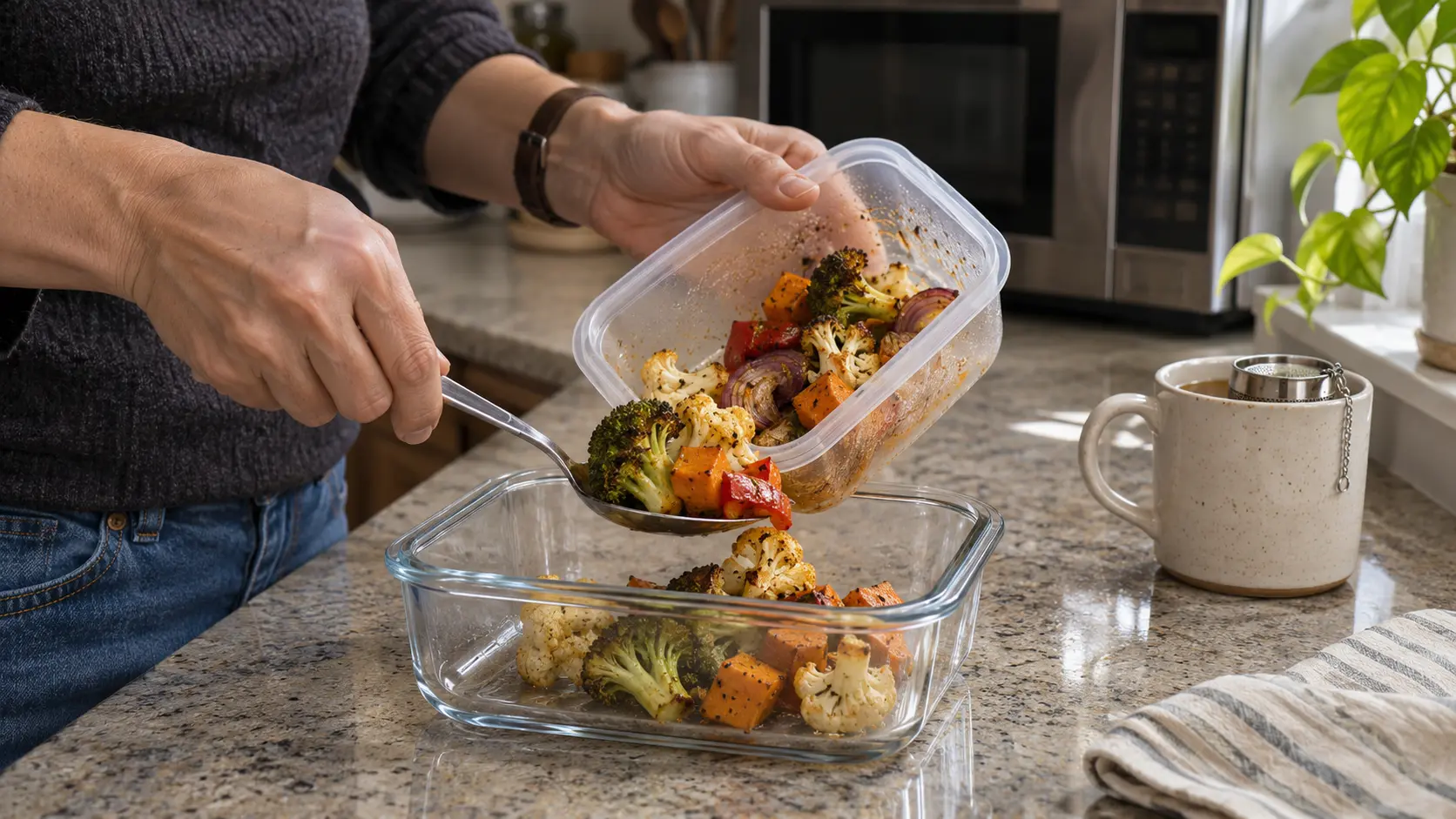
2. Transfer Food to Glass or Ceramic Before Microwaving

Before reheating takeout or leftovers, move the food to a microwave-safe glass or ceramic dish. A 2023 lab study tested selected plastic containers and pouches with liquids that simulated foods. In those tests, microwaving produced the highest particle release among the conditions studied. The results apply to the tested materials and conditions. Hussain et al., Environmental Science & Technology

If you pack lunch in a plastic container, you can still use a glass or ceramic plate for reheating. Keeping a microwave-safe bowl at work makes this easier to do consistently.

3. Use a Ceramic Mug for Hot Drinks

If you drink coffee or tea every day, use a ceramic mug at home or a stainless steel tumbler on the go. In a lab study, NIST researchers found that hot water could pick up nanoscale plastic particles from the lining of some single-use beverage cups. Switching the cup you use most often gives you a specific place to start. NIST study summary

4. Check Whether Your Tea Bags Contain Plastic

If tea is part of your daily routine, check what the bag is made from. One lab study found that some plastic tea bags released micro- and nanoplastics during steeping. If you want to avoid that particular source, use loose-leaf tea with a stainless steel infuser. Hernandez et al., Environmental Science & Technology

Which Change Should You Make First?

If you often… Start here
Buy bottled water on your commute Fill a reusable bottle before leaving home when you have safe drinking water.
Microwave lunch in the takeout container Keep a microwave-safe glass or ceramic dish nearby.
Buy hot drinks in disposable cups Bring a reusable mug or tumbler where the café accepts it.
Steep tea in plastic mesh bags Try loose-leaf tea with a stainless steel infuser.

Pick the habit you repeat most. If you reheat lunch five days a week, a microwave-safe dish can make that change easy to repeat. If you rarely microwave food but buy a bottle of water most days, start with your water bottle.

Frequently Asked Questions

Can you completely avoid swallowing microplastics?

Microplastics have been detected across a range of foods and beverages, so avoiding every source is difficult. The FDA says current evidence has yet to demonstrate that the levels detected in foods pose a risk to human health. FDA overview

How much microplastic do we swallow each day?

One widely cited study estimated about 107 to 142 particles per day based on the foods and drinks it assessed. That’s a daily equivalent of its annual estimate. The items studied represented about 15% of U.S. calorie intake, so the full dietary total remains uncertain. Cox et al.

Will these changes reduce my intake by a specific amount?

The studies measured particles in particular products or under controlled conditions. They don’t provide a percentage reduction you can apply to your whole diet. The amount depends on what you eat and drink, the products you use, and the size of particles a test can detect. FDA overview · Hussain et al.

Explore Microplastic Protect™

Microplastic Protect™ is a dietary supplement made with chitosan derived from button mushrooms. Each bottle contains 120 vegetarian capsules. See the product page for the ingredients, label directions, and current price.

Shop Microplastic Protect™

Technical Consultation

Need Help Applying Chitosan to Your Project?

Speak with our technical team about product selection, formulation, origin, molecular weight, DDA, samples, documentation, bulk pricing and commercial supply.

Product Selection Technical Guidance Sample & Bulk Support
Free Initial Discussion

Book a Consultation

Select a convenient time to discuss your application and purchasing requirements.

How to Reduce Microplastic Intake From Food and Water

How to Reduce Microplastic Intake From Food and Water

If you’re looking for how to reduce microplastic intake, start with the food and drinks you consume most often. Refill a reusable bottle where tap water is safe, reheat leftovers in microwave-safe glass or ceramic, and use a ceramic mug for hot drinks. These changes can reduce contact with some sources of plastic particles. Researchers are still working out how much each change affects the total amount people swallow. FDA overview · NYU Langone Health

How to Reduce Microplastic Intake in 4 Practical Steps

1. Refill a Bottle Where Tap Water Is Safe to Drink

If you buy a disposable bottle on your way to work every morning, try filling a stainless steel or glass bottle before leaving home. Researchers have detected plastic particles in both bottled and tap water, and counts vary by source and testing method. Refilling lets you rely less on single-use bottles. Follow local drinking-water advisories when choosing a water source. NIH bottled water research summary · Cox et al.

Read our comparison of microplastics in bottled water vs. tap water.

2. Transfer Food to Glass or Ceramic Before Microwaving

Before reheating takeout or leftovers, move the food to a microwave-safe glass or ceramic dish. A 2023 lab study tested selected plastic containers and pouches with liquids that simulated foods. In those tests, microwaving produced the highest particle release among the conditions studied. The results apply to the tested materials and conditions. Hussain et al., Environmental Science & Technology

If you pack lunch in a plastic container, you can still use a glass or ceramic plate for reheating. Keeping a microwave-safe bowl at work makes this easier to do consistently.

3. Use a Ceramic Mug for Hot Drinks

If you drink coffee or tea every day, use a ceramic mug at home or a stainless steel tumbler on the go. In a lab study, NIST researchers found that hot water could pick up nanoscale plastic particles from the lining of some single-use beverage cups. Switching the cup you use most often gives you a specific place to start. NIST study summary

4. Check Whether Your Tea Bags Contain Plastic

If tea is part of your daily routine, check what the bag is made from. One lab study found that some plastic tea bags released micro- and nanoplastics during steeping. If you want to avoid that particular source, use loose-leaf tea with a stainless steel infuser. Hernandez et al., Environmental Science & Technology

Which Change Should You Make First?

If you often… Start here
Buy bottled water on your commute Fill a reusable bottle before leaving home when you have safe drinking water.
Microwave lunch in the takeout container Keep a microwave-safe glass or ceramic dish nearby.
Buy hot drinks in disposable cups Bring a reusable mug or tumbler where the café accepts it.
Steep tea in plastic mesh bags Try loose-leaf tea with a stainless steel infuser.

Pick the habit you repeat most. If you reheat lunch five days a week, a microwave-safe dish can make that change easy to repeat. If you rarely microwave food but buy a bottle of water most days, start with your water bottle.

Frequently Asked Questions

Can you completely avoid swallowing microplastics?

Microplastics have been detected across a range of foods and beverages, so avoiding every source is difficult. The FDA says current evidence has yet to demonstrate that the levels detected in foods pose a risk to human health. FDA overview

How much microplastic do we swallow each day?

One widely cited study estimated about 107 to 142 particles per day based on the foods and drinks it assessed. That’s a daily equivalent of its annual estimate. The items studied represented about 15% of U.S. calorie intake, so the full dietary total remains uncertain. Cox et al.

Will these changes reduce my intake by a specific amount?

The studies measured particles in particular products or under controlled conditions. They don’t provide a percentage reduction you can apply to your whole diet. The amount depends on what you eat and drink, the products you use, and the size of particles a test can detect. FDA overview · Hussain et al.

Explore Microplastic Protect™

Microplastic Protect™ is a dietary supplement made with chitosan derived from button mushrooms. Each bottle contains 120 vegetarian capsules. See the product page for the ingredients, label directions, and current price.

Shop Microplastic Protect™

Recent Posts

Access this document

Please enter your details to download the file.
Thank you. You can now access the document below.