
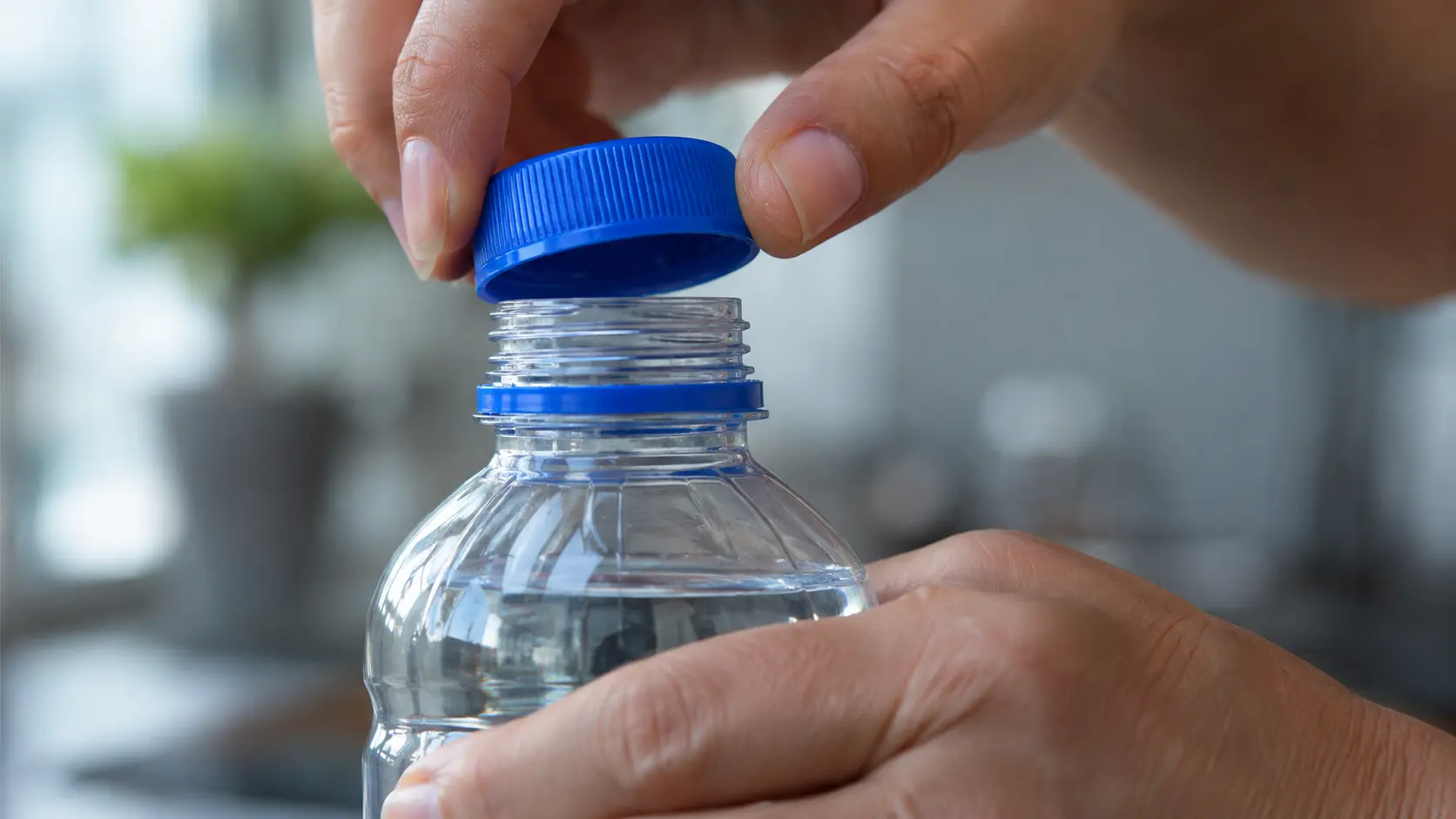
Microplastic release from plastic bottles can occur where the screw cap rubs against the bottle neck. Lab studies have found that repeatedly opening and closing some bottles can generate tiny plastic fragments. Researchers have also detected microplastics and nanoplastics in bottled water, where particles can come from several sources. Here are three findings that explain the difference. Winkler et al., Water Research · NIH research summary
1. Microplastic Release From Plastic Bottles Can Start at the Cap
Each time you unscrew a cap, its threads slide against the threads on the bottle neck. Researchers testing single-use PET water bottles found that repeated opening and closing generated particles. They also observed differences in how much wear occurred across bottle brands. PET, short for polyethylene terephthalate, is commonly used for the bottle body. The cap can be made from a different plastic. Winkler et al.
A separate preliminary study examined the screw-cap system on reusable PET bottles. It compared bottles opened and closed once with bottles opened and closed 11 times. That study counted particles 10 micrometers and larger, so its measurements covered a specific size range. The number released from a particular bottle can depend on its materials, cap design, and how it’s used. ACS ES&T Water study
2. Squeezing and Twisting Can Produce Different Results
A thin water bottle bends easily in your hand. Researchers tested whether squeezing the bottle walls would increase the number of particles in the water. In the 2019 experiment, squeezing did not significantly increase the measured particle count, while repeated opening and closing increased particle release under the conditions tested. Winkler et al.
That distinction matters when you see advice about handling plastic bottles. Squeezing puts pressure on the bottle wall. Twisting the cap causes friction where two surfaces meet. The result from one experiment applies to the bottles and test conditions used in that study. Winkler et al.
3. A Bottled Water Particle Count Includes More Than Bottle Wear
A 2024 study found an average of about 240,000 plastic particles per liter across the bottled water samples it tested. About 90% were nanoplastics, which are smaller than one micrometer. The researchers detected PET as well as polyamide, a type of plastic used in some water filtration equipment. The count describes what was measured in the finished bottled water. The study did not assign that entire count to the bottle or cap. NIH research summary
| What researchers tested | What the result tells us |
|---|---|
| Opening and closing a screw cap repeatedly | Friction at the cap and neck can generate particles. |
| Squeezing single-use PET bottles | The tested squeezing procedure did not significantly increase particle counts. |
| Analyzing finished bottled water | The sample can contain different types and sizes of plastic particles from multiple potential sources. |
For a closer look at the water itself, read our comparison of microplastics in bottled water vs. tap water.
Frequently Asked Questions
Does opening a plastic water bottle release microplastics?
It can. Studies have observed particle generation from contact between the screw cap and bottle neck. The amount can vary with the bottle design and how often the cap is opened and closed. Journal of Water and Health study
Does every liter of bottled water contain 240,000 plastic particles?
The figure was an average across the samples in one study. Counts vary with the water sampled and the smallest particles the testing method can detect. A method that counts nanoplastics can capture particles outside the range of a test designed for larger microplastics. NIH research summary
What can I use instead of a single-use plastic bottle?
If you have access to safe drinking water, a refillable stainless steel or glass bottle is a practical way to use fewer single-use plastic bottles. For more ideas, see how to reduce microplastic exposure in daily life.
Explore Microplastic Protect™
Microplastic Protect™ is a dietary supplement made with chitosan derived from button mushrooms. Each bottle contains 120 vegetarian capsules. Visit the product page for ingredients, label directions, and current pricing.