
Chitosan Hydrochloride vs Native Chitosan: Which Form Actually Fits Your Formulation?
- All
- Microplastics
- Water Soluble
- All
- Native Chitosan
- Black Soldier Fly Chitosan
- Chitosan Oligosaccharide Hydrochloride
- Chitosan Oligosaccharide
- Chitosan Hydrochloride
- Carboxymethyl Chitosan
- Quaternary Chitosan
- Trimethyl Chitosan
- Sulphonated Chitosan
- Phosphorylated Chitosan
- Biochar
- Home Cleaning System
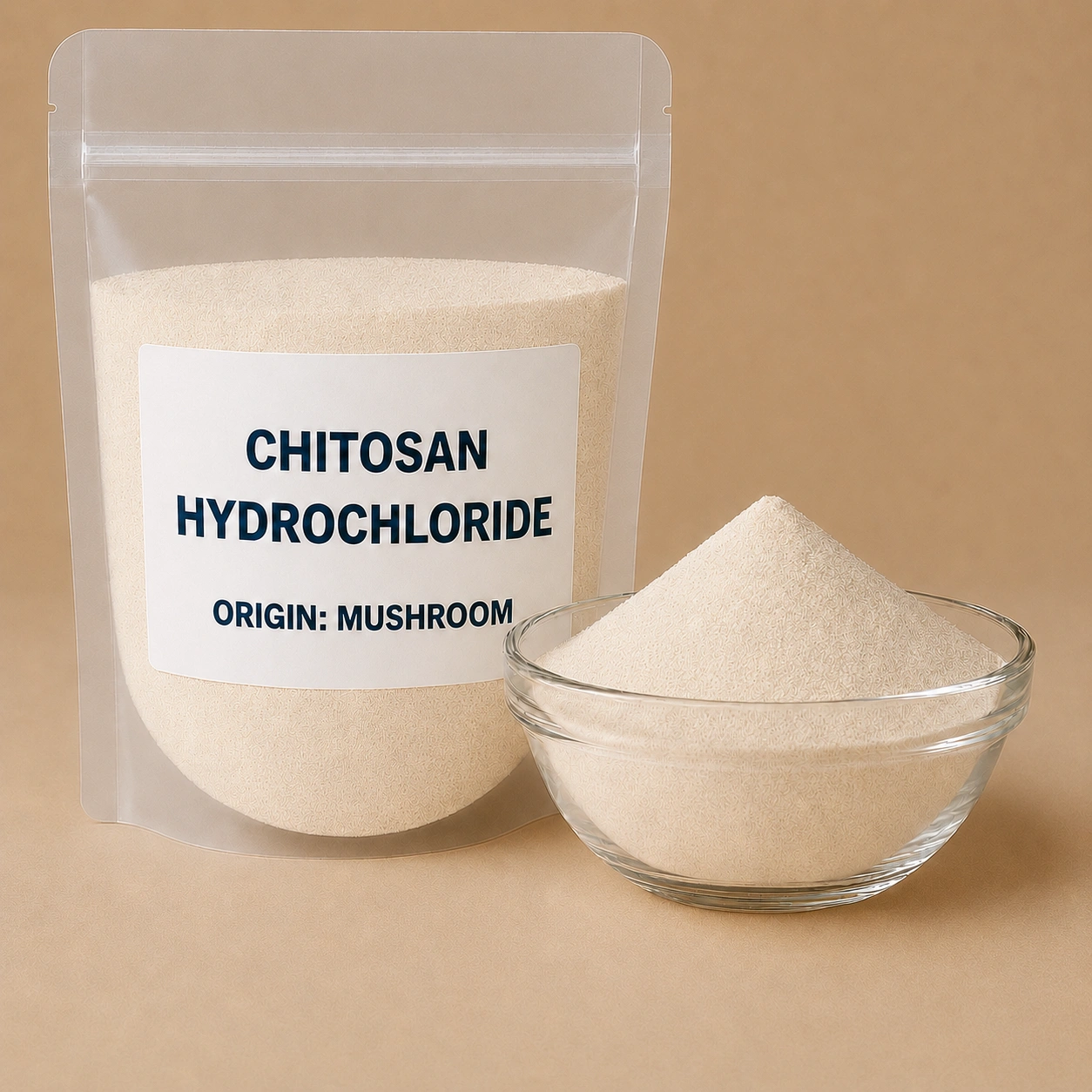
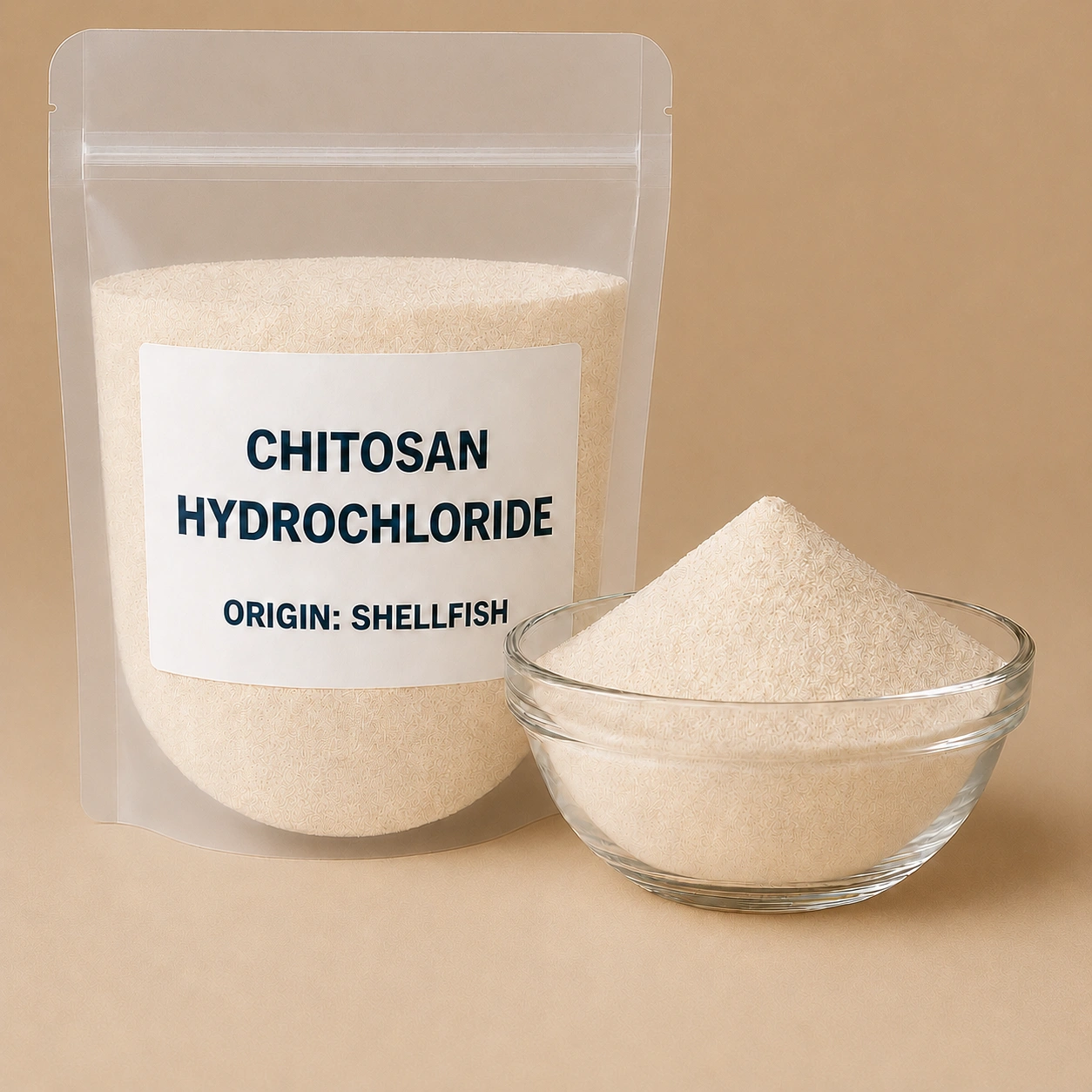
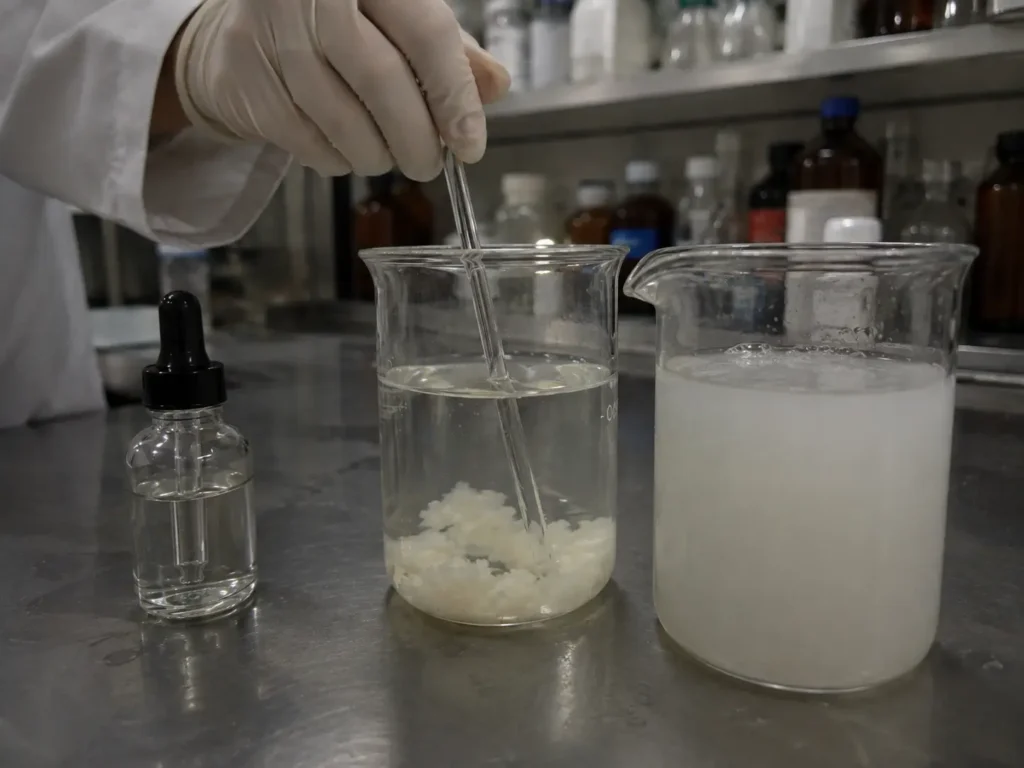
Both forms are chitosan same glucosamine backbone, same fundamental polymer chemistry. The difference is that chitosan hydrochloride has already been converted to a pre-protonated salt during manufacturing, while native chitosan is the unmodified polymer that needs an added acid to dissolve. That single distinction changes how each behaves in a formulation, but it doesn’t make one universally better than the other the right choice depends on your target pH, processing method, and application.
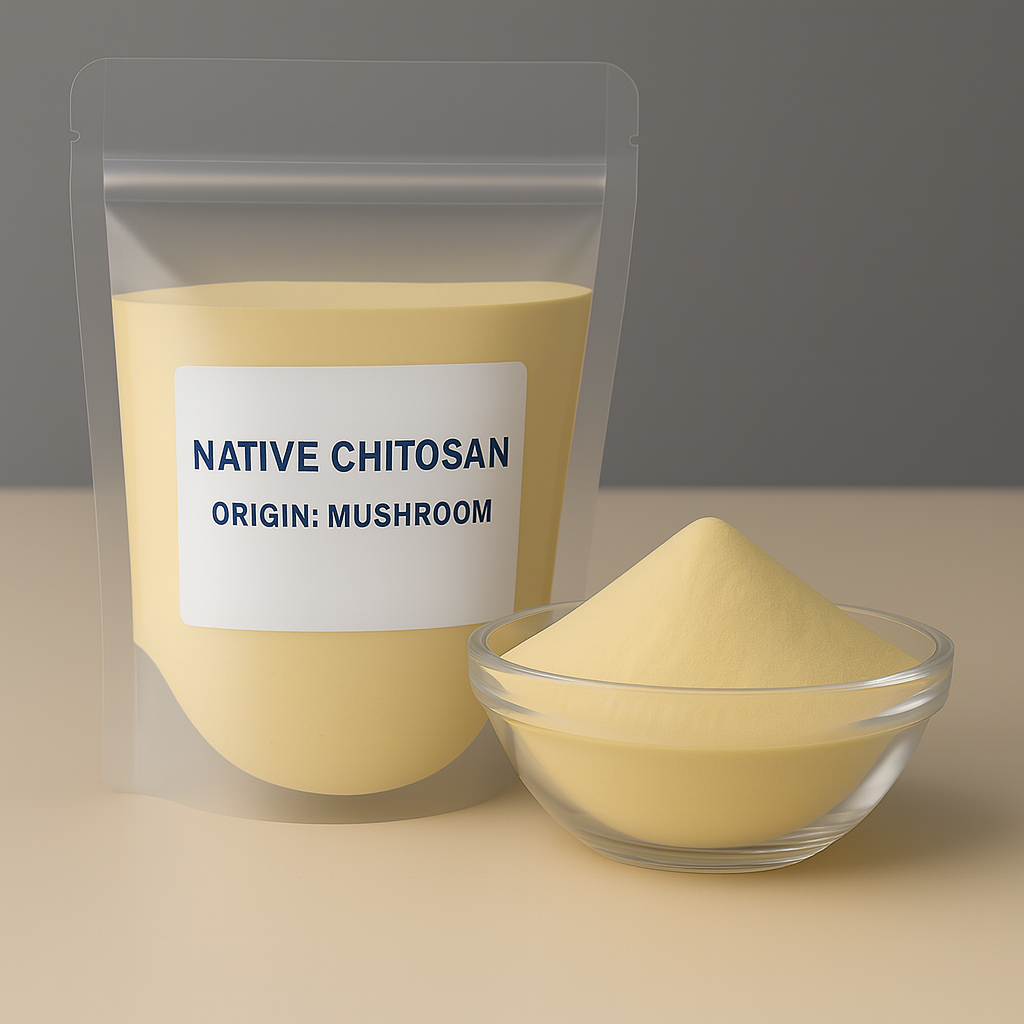
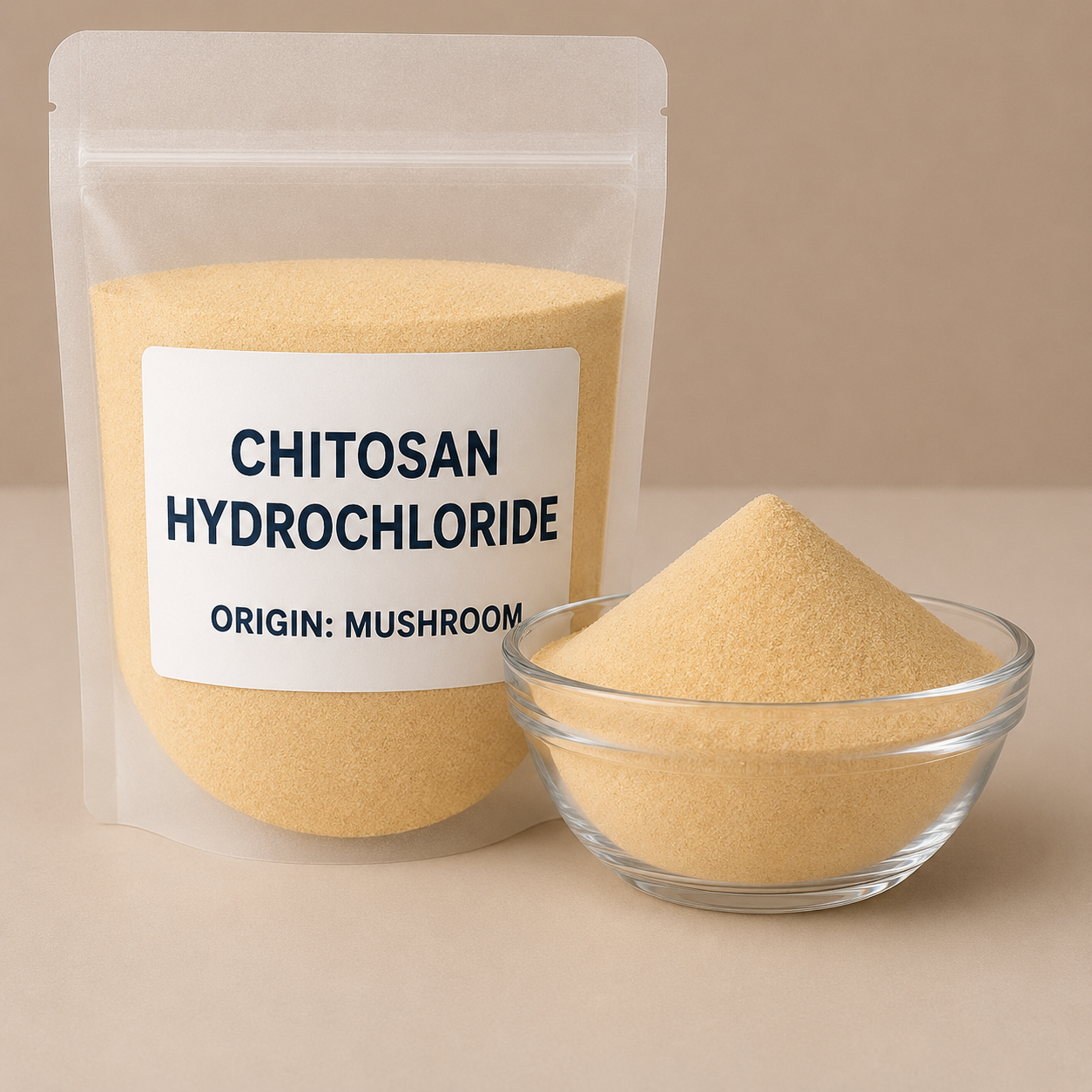
Need help choosing between Native Mushroom Chitosan and Mushroom Chitosan Hydrochloride? Compare the available Chitosan Hydrochloride and Native Chitosan products, request laboratory samples, or speak with our technical team about your formulation requirements.
The Core Difference, Explained Properly
Native chitosan’s amine groups are neutral until you add acid. Below roughly pH 6–6.5, enough of those groups become protonated to disrupt the polymer’s internal hydrogen bonding and let it dissolve. Above that range, it stays undissolved, regardless of stirring time or particle size.
Chitosan hydrochloride skips that step: the amine groups are already protonated as part of the hydrochloride salt, so the material goes into water without you having to introduce and manage a separate acid. It’s not a different polymer, it’s the same backbone, delivered in a form that’s already partway through the chemistry native chitosan requires you to do yourself.
That’s the mechanism. What it means in practice is more nuanced than “one dissolves, one doesn’t.”
Why This Difference Actually Matters in Formulation
“Native chitosan needs acid, HCl doesn’t” is true but incomplete. Several formulation-relevant consequences follow from it:
- Process complexity. Using native chitosan means selecting, adding, and controlling an acidifying agent as part of your process an extra variable to validate and document. Chitosan hydrochloride removes that step, simplifying process development, particularly for teams without established acid-handling protocols.
- Viscosity behavior. Research comparing chitosan solutions prepared with different acids has found HCl-acidified solutions can exhibit measurably lower viscosity than acetic acid solutions at equivalent concentration relevant if your formulation is sensitive to excess viscosity, though the practical effect depends on molecular weight and concentration.
- Compatibility with acid-sensitive components. If your formulation includes an active that degrades under acidic conditions, avoiding an added acid by using the pre-protonated salt form can be a genuine formulation advantage, not just a convenience.
- Molecular weight isn’t determined by salt form. Both forms are reported across wide, overlapping molecular weight ranges depending on source and processing. Choosing HCl doesn’t automatically give you a lower or higher molecular weight that’s a separate specification to confirm either way.
- DDA still governs charge behavior in both forms. DDA determines how many amine groups exist to be protonated, whether via added acid (native) or already done during manufacturing (HCl). A low-DDA batch behaves differently than a high-DDA batch regardless of salt form.
Factor-by-Factor Comparison
| Factor | Native Chitosan | Chitosan Hydrochloride | Why It Matters |
|---|---|---|---|
| Chemical form | Unmodified, free-base polymer | Pre-protonated hydrochloride salt | Determines whether an added acid is required |
| Dissolves at neutral pH | No | Yes, without added acid | Relevant for formulations that must stay near-neutral |
| Requires added acidifying agent | Yes | No | Fewer process variables to validate |
| Typical viscosity at equivalent concentration | Comparable or higher in acetic acid systems | Often lower, per comparative research | Relevant where excess viscosity is a formulation constraint |
| Molecular weight range | Wide, source/process-dependent | Wide, source/process-dependent — not determined by salt form | Confirm via COA regardless of form chosen |
| DDA relevance | Determines available amine sites for acid-based protonation | Determines available amine sites, already protonated during manufacture | Governs charge density and reactivity in both forms |
| Best suited for | Film-forming systems, coatings, already-acidic formulations | Aqueous systems requiring near-neutral pH, acid-sensitive actives | Matches material to your actual process chemistry |
| Cost at commodity grade | Generally lower | Often a modest premium for the added salt-formation step | Relevant for cost-sensitive, less pH-constrained applications |
This table reflects general polymer science and published research patterns, not confirmed Chitosan Global product specifications. Always verify exact values via the current Chitosan Hydrochloride or Native Chitosan product documentation.
Which Should You Choose?
Consider Native Chitosan when:
- Your formulation is already acidic, or acid addition doesn’t conflict with your process or actives
- You need chitosan’s film-forming behavior in a system built around acid-based solubility
- Cost efficiency is a priority and your process can accommodate acid handling
- You want a clean, unmodified starting material for your own in-house processing or further derivatization
Consider Chitosan Hydrochloride when:
- Your formulation must remain at or near neutral pH
- You’re working with an active ingredient or component that’s unstable under acidic conditions
- You want to simplify process development by removing a separate acidification step
- Lower solution viscosity at a given concentration is beneficial to your process
Neither choice is automatically correct — a formulation that would work equally well with either form should be decided on cost and process simplicity; one that has a hard pH constraint should be decided on that constraint first.
For a deeper look at water solubility specifically including the formulation variables that affect real-world performance beyond the salt form alone see our water-soluble mushroom chitosan guide. For the fuller picture of chitosan hydrochloride’s production and properties, see our Mushroom Chitosan Hydrochloride pillar. For native chitosan’s broader profile, see Native Mushroom Chitosan.
Application-Level Considerations
Drug delivery and pharmaceutical research — HCl form often preferred for aqueous process development with acid-sensitive actives; native chitosan remains relevant where an acidic delivery vehicle is already part of the system.
Cosmetics and personal care — HCl form fits neutral-pH aqueous formats (toners, serums); native chitosan suits acid-based or film-forming formulations.
Food and nutraceutical research — HCl form supports beverage/liquid supplement incorporation without an acidic carrier; native chitosan is common in fining and coating applications already using acidic conditions.
Agriculture — HCl form simplifies aqueous spray preparation; native chitosan remains widely used in established protocols.
Coatings and industrial aqueous systems — depends on whether the system’s existing pH already supports native chitosan’s dissolution or requires HCl’s near-neutral solubility.
Both forms can serve many of the same broad application categories the deciding factor is almost always the specific formulation’s pH and process constraints, not the category itself.
Don’t Choose by Name Alone: What to Actually Compare
“Native” and “hydrochloride” describe chemical form, not a complete specification. Before selecting either, compare:
- Source — fungal/mushroom origin, relevant to labeling and allergen positioning
- Degree of deacetylation (DDA)
- Molecular weight — confirm via COA rather than assuming based on form
- Viscosity — at a stated concentration and temperature
- Purity, including residual chloride (HCl form) or ash content (native form)
- Solubility — tested conditions and percentage
- pH behavior of the reconstituted solution
- Particle characteristics
- Certificate of Analysis (COA) and Safety Data Sheet (SDS)
- Intended application and its specific regulatory/documentation requirements
Frequently Asked Questions
What is the difference between chitosan hydrochloride and native chitosan? Chitosan hydrochloride is native chitosan converted into its pre-protonated hydrochloride salt form, making it water-soluble without added acid. Native chitosan is the unmodified polymer, requiring acid to dissolve.
Which form is more water soluble? Chitosan hydrochloride dissolves in water without added acid. Native chitosan only dissolves in acidic solution, typically below pH 6–6.5. “More soluble” depends on the solvent system being compared in acidic solution, both can dissolve.
Does native chitosan require acid to dissolve? Yes. Native chitosan’s amine groups must be protonated by an added acid (commonly acetic acid) to disrupt hydrogen bonding and allow dissolution.
Is chitosan HCl chemically different from native chitosan? It’s the same polymer backbone in salt form rather than a structurally different molecule the amine groups are protonated with hydrochloric acid during manufacturing rather than left in the free-base state.
Which form is better for aqueous formulations? It depends on the target pH. For formulations that must stay near neutral, chitosan hydrochloride is generally the more practical choice. For formulations already acidic, native chitosan works without modification.
Can native and HCl chitosan be used for the same applications? Often yes, at a broad category level (pharmaceutical, cosmetic, food, agricultural), but the specific formulation’s pH and process requirements determine which form actually performs as needed not the application category alone.
What specifications should I compare before buying either form? DDA, molecular weight, viscosity, purity, and solubility, confirmed via a batch-specific Certificate of Analysis regardless of whether you’re evaluating native or hydrochloride material.
Ready to Compare Both Forms Directly?
The fastest way to decide is testing both against your actual formulation rather than choosing based on general guidance alone.
Evaluate Mushroom Chitosan Hydrochloride | Explore Native Mushroom Chitosan | Ask Which Form Fits Your Application
You May Also Like
- All
- Microplastics
- Water Soluble
- All
- Native Chitosan
- Black Soldier Fly Chitosan
- Chitosan Oligosaccharide Hydrochloride
- Chitosan Oligosaccharide
- Chitosan Hydrochloride
- Carboxymethyl Chitosan
- Quaternary Chitosan
- Trimethyl Chitosan
- Sulphonated Chitosan
- Phosphorylated Chitosan
- Biochar
- Home Cleaning System
Get in Touch
Technical & Custom Solutions
Abhinav Chauhan, PhD – Application Scientist
Stephen Nice – Application Scientist