Outside the USA? Contact us for international shipping rates.

Need Help? Call Steve Nice

423-202-6145

Sulphonated Chitosan – Mushroom

  • High-purity sulphonated chitosan (mushroom-derived)
  • Advanced water-soluble chitosan derivative with strong anionic charge
  • Designed for heavy metal removal (lead, arsenic, cadmium, mercury)
  • High-efficiency chitosan flocculant for water treatment
  • Removes dyes, pollutants, and microplastics from water systems
  • Ideal for industrial wastewater, environmental remediation, and advanced materials
  • Available for manufacturers, labs, and industrial use
  • MOQ: 25 g sample (Free Shipping) | 1 kg (15% tariff + $60 FedEx shipping) | Bulk packs available. For larger orders, contact (steve@chitosanglobal.com)
Quantity Price (USD)
25g (Sample) $70
1 kg $200 / kg
100 kg – 500 kg $175 / kg

Get COA

Price range: $70.00 through $290.00

Major Credit Cards Accepted

Sulphonated Chitosan – Mushroom

  • High-purity sulphonated chitosan (mushroom-derived)
  • Advanced water-soluble chitosan derivative with strong anionic charge
  • Designed for heavy metal removal (lead, arsenic, cadmium, mercury)
  • High-efficiency chitosan flocculant for water treatment
  • Removes dyes, pollutants, and microplastics from water systems
  • Ideal for industrial wastewater, environmental remediation, and advanced materials
  • Available for manufacturers, labs, and industrial use
  • MOQ: 25 g sample (Free Shipping) | 1 kg (15% tariff + $60 FedEx shipping) | Bulk packs available. For larger orders, contact (steve@chitosanglobal.com)
Quantity Price (USD)
25g (Sample) $70
1 kg $200 / kg
100 kg – 500 kg $175 / kg

Get COA

Price range: $70.00 through $290.00

Major Credit Cards Accepted

Need Help? Call Steve Nice

423-202-6145

Description

Sulphonated Chitosan — Pharmaceutical Grade | Mushroom-Derived | Heparin-Mimetic Anionic Biopolymer

Vegan Origin | Fully Water-Soluble | Strong Anionic Charge | Biomedical, Pharmaceutical & Environmental Grade


Sulphonated chitosan also referred to as sulfated chitosan or sulfonated chitosan in the scientific literature is one of the most biologically active and structurally sophisticated derivatives of chitosan available. Through the introduction of sulfonate or sulfate ester groups (−SO₃H / −OSO₃H) onto the chitosan backbone, this modification transforms chitosan from a cationic biopolymer into a permanently anionic, water-soluble, heparin-mimetic macromolecule with a broad spectrum of pharmaceutical, biomedical, and environmental applications.

Our sulphonated chitosan is derived exclusively from oyster mushroom (Pleurotus ostreatus) chitin a vegan, shellfish-free, allergen-reduced source that eliminates the crustacean contamination concerns common to marine-derived chitosan products. This positions our product as the only commercially available mushroom-sourced sulphonated chitosan optimized for pharmaceutical and biomedical use.

Every batch is independently tested and supplied with a Certificate of Analysis (COA)

What Is Sulphonated Chitosan?

Sulphonated chitosan is produced by the chemical modification of chitosan through sulfonation or sulfation reactions, which introduce sulfonate groups (−SO₃H) or sulfate ester linkages (−OSO₃H) onto the chitosan polysaccharide backbone. The most selective and pharmaceutically relevant routes introduce these groups predominantly at the C3 and C6 hydroxyl positions (O-sulfonation), preserving the free amine groups and resulting in a product with tunable charge density, strong anionic character, and structural similarity to heparan sulfate the naturally occurring glycosaminoglycan that regulates blood coagulation, cell signaling, and tissue repair in the human body.

The result is a water-soluble, bioactive anionic polysaccharide that retains chitosan’s biodegradability and biocompatibility while gaining an entirely new property profile: anticoagulant activity, growth factor binding capacity, antiviral properties, and hemocompatibility.

Synonyms: Sulfated Chitosan | Sulfonated Chitosan | Chitosan Sulfate | O-Sulfonated Chitosan | N-Sulfonated Chitosan | Chitosan-SO₃H | SCS | CS-S


Technical Specifications

Parameter Specification
Chemical Class Anionic sulfated polysaccharide / modified chitosan
Source Material Oyster Mushroom (Pleurotus ostreatus) Chitin
Modification Type O-Sulfonation at C3-OH / C6-OH positions
Degree of Sulfonation (DS) 0.5 – 1.5 (standard); custom DS available
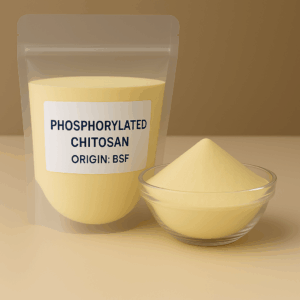
Appearance Off-white to pale yellow fine powder
Solubility Fully water-soluble across pH 1.0–12.0
Charge Permanent anionic (negative) at all pH
Zeta Potential (aqueous) −20 to −50 mV (varies with DS and MW)
Molecular Weight Low / Medium / High (specify on order)
Moisture Content ≤ 10%
Purity ≥ 90% (COA provided per batch)
Heavy Metals Tested and reported on COA
Grade Pharmaceutical / Research / Industrial / Environmental
Storage Cool (2–8°C), dry, sealed container; away from light
Shelf Life 24 months from date of manufacture
Shipping International — FedEx, DHL, air freight for bulk

Understanding Degree of Sulfonation (DS)

The Degree of Sulfonation describes the average number of sulfonate groups introduced per glucosamine unit (maximum theoretical DS = 3.0 for chitosan, considering C2-NH₂, C3-OH, C6-OH positions). DS is the single most important specification for sulphonated chitosan, directly governing:

  • Charge density and solubility: Higher DS = stronger negative charge, better aqueous solubility at all pH
  • Anticoagulant activity: Activity increases with DS, mimicking heparin more closely at DS > 1.0
  • Growth factor affinity: Intermediate DS (0.8–1.2) provides optimal binding to FGF-2, BMP-2, VEGF
  • Cytotoxicity window: Very high DS (>2.0) may reduce cell compatibility at elevated concentrations

Our standard product (DS 0.5–1.5) covers the optimal range for most pharmaceutical, biomedical, and research applications. Contact us for batches at specific DS values.


The Science Behind Sulphonated Chitosan: A Heparin-Mimetic Biopolymer

Heparin the most widely used clinical anticoagulant is a sulfated glycosaminoglycan with a complex, highly anionic structure that requires animal-derived manufacturing (predominantly porcine intestinal mucosa). Its clinical limitations include risk of heparin-induced thrombocytopenia (HIT), inconsistent purity from biological sources, and sourcing ethics concerns.

Sulphonated chitosan represents one of the most scientifically validated non-animal heparin substitutes available. Its structural analogy to heparan sulfate (the biosynthetically related endogenous glycosaminoglycan) enables it to:

Mechanism 1 — Anticoagulant Activity: Sulphonated chitosan activates antithrombin III (AT-III) and heparin cofactor II (HC-II) the same coagulation-regulatory proteins targeted by heparin through electrostatic interaction between its sulfonate groups and the positively charged binding sites on these serine protease inhibitors. This mechanism prolongs activated partial thromboplastin time (APTT) and prothrombin time (PT), demonstrating measurable anticoagulant efficacy in both in vitro and in vivo studies. A 2024 study published in Cureus confirmed sulphonated chitosan’s efficacy in preventing blood clot formation via this pathway, supporting its development as a novel anticoagulant alternative.

Mechanism 2 — Hemocompatibility (Antithrombogenic Surfaces): Unlike parent chitosan (which promotes platelet adhesion and aggregation due to its cationic charge), sulphonated chitosan’s negative charge repels negatively charged platelet membranes, dramatically reducing platelet adhesion. This makes sulphonated chitosan an ideal surface coating for blood-contacting medical devices including vascular grafts, cardiovascular implants, dialysis membranes, and stents. Research has shown that sulfonated chitosan-coated TiNi alloys demonstrate significantly improved blood compatibility compared to uncoated or standard chitosan-coated surfaces.

Mechanism 3 — Growth Factor Binding and Delivery: Heparan sulfate proteoglycans in the extracellular matrix naturally bind and protect growth factors including fibroblast growth factor 2 (FGF-2/bFGF), vascular endothelial growth factor (VEGF), and bone morphogenetic protein 2 (BMP-2), regulating their bioavailability and signaling. Sulphonated chitosan mimics this function binding these growth factors through sulfonate-mediated interactions, protecting them from enzymatic degradation, and releasing them in a sustained, controlled manner. Published studies in Frontiers in Bioengineering and Journal of Periodontology confirm that chitosan sulfate binds FGF-2 comparably to heparin, and that sulfonated chitosan oligosaccharide (SCOS) maintains bFGF conformation and promotes osteogenic differentiation in stem cell cultures.

Mechanism 4 — Antiviral Activity: The highly anionic surface of sulphonated chitosan interferes with the initial electrostatic attachment of enveloped viruses (HIV, HSV, influenza, SARS-CoV) to positively charged cell surface receptors. This “decoy receptor” mechanism is the same principle underlying FDA-approved antiviral sulfated polysaccharides like heparin sulfate analogs used in HIV research. Sulphonated chitosan has demonstrated antiviral activity against multiple enveloped viruses in cell culture models, positioning it as a functional ingredient for antiviral pharmaceutical formulations and medical device coatings.


Applications of Sulphonated Chitosan

1. Anticoagulant Biomaterials and Blood-Contacting Devices

Sulphonated chitosan is the only biodegradable, plant/fungal-derived biopolymer with demonstrated anticoagulant properties comparable to heparin at high degrees of sulfonation. Applications include:

  • Vascular graft coatings: Sulphonated chitosan surface modification of small-diameter vascular prostheses reduces thrombosis risk without systemic anticoagulant administration
  • Hemodialysis membrane coating: Reduces clotting during extracorporeal blood circuits
  • Cardiovascular implant surfaces: Stents, heart valve materials, and ventricular assist device components coated with sulphonated chitosan show reduced platelet adhesion and fibrinogen adsorption
  • Injectable anticoagulant formulations: For research applications exploring non-heparin coagulation management

2. Bone Tissue Engineering and Osteogenic Differentiation

Sulphonated chitosan demonstrates unique synergy with bone morphogenetic proteins particularly BMP-2 by binding to and stabilizing the protein’s active conformation, enhancing its osteoinductive signaling to bone marrow mesenchymal stem cells (BMSCs). Published work confirms that 2-N,6-O-sulfonated chitosan (26SCS) potentiates BMP-2 activity in a dose-dependent manner, up-regulating osteogenic differentiation markers including alkaline phosphatase (ALP), osteocalcin, and collagen I in BMSC cultures. Practical applications:

  • Bone scaffold surface functionalization (PDLLA, PCL, hydroxyapatite composites)
  • Injectable bone-filling materials for periodontal regeneration
  • Guided bone regeneration (GBR) membranes
  • Growth factor delivery systems for craniofacial and orthopedic repair

3. Neural Tissue Engineering and Nerve Regeneration

Among all sulfated chitosan derivatives, sulfonated forms show the strongest ability to direct neural differentiation promoting neurite outgrowth and neural progenitor cell specification through FGF-2 and growth factor signaling modulation. This makes sulphonated chitosan a valuable material for:

  • Neural scaffold fabrication (nerve guidance conduits)
  • Neural stem cell culture substrates
  • Spinal cord injury repair biomaterials
  • Peripheral nerve regeneration matrices

4. Growth Factor Delivery Platforms

Sulphonated chitosan’s high affinity for heparin-binding growth factors enables it to serve as a controlled growth factor delivery reservoir in tissue engineering constructs, hydrogels, and drug delivery particles. The sulfonate-growth factor interaction provides:

  • Protection from enzymatic degradation (extending growth factor half-life from minutes to days)
  • Sustained, gradient release at implant sites
  • Biomimetic presentation of growth factors to cell surface receptors
  • Reduced therapeutic dose requirements (more efficient use of expensive recombinant proteins)

Growth factors documented to bind sulphonated chitosan: FGF-2 (bFGF), VEGF, BMP-2, BMP-7, HGF, SDF-1α, EGF, IGF.

5. Wound Healing Biomaterials

Sulphonated chitosan-based dressings combine multiple wound healing mechanisms:

  • Antimicrobial activity — sulfonation preserves and enhances chitosan’s membrane-disrupting activity against bacterial biofilms
  • Hemocompatible hemostasis — unlike regular chitosan (which clots blood through cationic charge, potentially causing RBC aggregation), sulphonated chitosan supports coagulation without RBC hemolysis
  • Anti-inflammatory activity — sulfated polysaccharides modulate inflammatory cytokine cascades, reducing excessive inflammation in chronic wounds
  • Moist wound environment — hydrophilic nature maintains optimal wound moisture balance
  • Growth factor retention — binds and retains endogenous growth factors at the wound site, accelerating cellular repair

6. Drug Delivery Systems

The permanent anionic charge and water solubility of sulphonated chitosan open diverse drug delivery applications:

  • Polyelectrolyte complex (PEC) nanoparticles: Sulphonated chitosan (anionic) can form PEC nanoparticles with cationic polymers (regular chitosan, TMC, PLL) for dual-controlled drug release
  • Cationic drug binding: Electrostatic loading and controlled release of positively charged drugs including aminoglycosides, peptide drugs, and small molecule cationics
  • Protein/peptide delivery: Protection of growth factors and therapeutic proteins from gastrointestinal degradation
  • Anti-inflammatory drug systems: Controlled delivery of NSAIDs, steroids, and biologics to articular joints, peritoneum, or wound sites

7. Heavy Metal Removal and Water Treatment

Sulphonated chitosan’s strong anionic charge and dense sulfonate functionality make it a high-performance adsorbent for positively charged heavy metal cations. Performance characteristics:

  • Target metals: Lead (Pb²⁺), cadmium (Cd²⁺), mercury (Hg²⁺), arsenic (As³⁺/As⁵⁺), chromium (Cr⁶⁺), copper (Cu²⁺), zinc (Zn²⁺), nickel (Ni²⁺)
  • Adsorption mechanism: Electrostatic chelation and ion exchange at sulfonate and amine sites
  • Advantage over base chitosan: Full water solubility enables homogeneous solution-phase removal; can also be crosslinked into beads or membranes for column applications
  • pH working range: Effective across pH 3–9, unlike standard chitosan (limited to acidic pH)
  • Dye and microplastic removal: Cationic dye (methylene blue, crystal violet) adsorption; microplastic surface functionalization and flocculation
  • Flocculant for industrial wastewater: Mining effluents, electroplating wastewater, textile dyehouse effluents

8. Antiviral Pharmaceutical Applications

The antiviral mechanism of sulfated polysaccharides is well-documented. Sulphonated chitosan has demonstrated in vitro activity against:

  • HIV-1: Inhibits gp120-CD4 binding, blocking viral entry
  • Herpes simplex virus (HSV-1/HSV-2): Blocks heparan sulfate receptor binding
  • Influenza A/B: Neuraminidase inhibition and hemagglutinin binding interference
  • SARS-CoV and related coronaviruses: Spike protein-ACE2 interaction interference

These properties position sulphonated chitosan as a natural antiviral excipient for nasal sprays, topical formulations, and oral mucosal delivery systems targeting viral respiratory and sexually transmitted infections.

9. Cosmetic and Personal Care Applications

In cosmetic formulations, sulphonated chitosan functions as:

  • Anionic conditioning polymer: Hydrophilic surface conditioning on skin and hair
  • Anti-irritation agent: Sulfated polysaccharides soothe irritated skin through anti-inflammatory mechanisms
  • Anti-aging ingredient: Heparan sulfate mimetic activity supports hyaluronan synthesis and growth factor signaling in dermal fibroblasts
  • Water-binding humectant: Exceptional water retention properties at the skin surface
  • Film former: Protective transparent films for hair gloss and skin barrier formulations

10. Ion Exchange and Protein Purification

Sulphonated chitosan’s strong sulfonic acid groups function as cation exchange ligands for chromatography and protein purification:

  • Immobilized on beads or membranes for heparin-affinity chromatography
  • Capture of heparin-binding proteins (growth factors, antithrombin, lipoproteins)
  • Fractionation of cationic proteins from complex biological mixtures
  • Research-grade protein binding and elution studies

Why Mushroom-Derived Sulphonated Chitosan?

Conventional sulphonated chitosan is produced from crustacean (shrimp/crab) or squid-derived chitosan. Our sulphonated chitosan is produced from oyster mushroom (Pleurotus ostreatus) chitin — an entirely fungal, vegan source that offers important advantages:

Property Mushroom-Derived SCS Crustacean-Derived SCS
Shellfish allergen risk None — vegan origin Present (trace proteins)
Sustainable production Renewable substrate, no fishing Marine harvesting, seasonal variability
Heavy metal baseline Very low (controlled substrate) Variable (marine environment)
Batch consistency High (controlled farming) Variable (seasonal, geographic)
Vegan / halal / kosher Yes Limited
Regulatory positioning Clean label, vegan-certifiable Complex

For pharmaceutical developers, nutraceutical formulators, and cosmetic manufacturers requiring allergen-free, vegan-certified, sustainable-origin raw materials, mushroom-derived sulphonated chitosan provides a clear regulatory and commercial advantage.


Sulphonated Chitosan vs. Other Chitosan Derivatives

Property Sulphonated Chitosan Carboxymethyl Chitosan Trimethyl Chitosan (TMC) Regular Chitosan
Charge Permanent anionic (−) Anionic/amphoteric Permanent cationic (+) Conditionally cationic
Solubility pH 1–12 (excellent) pH 4–12 pH 1–9 pH < 6.5 only
Heparin-mimetic Yes — strong Weak No No
Anticoagulant Yes Limited No No
Hemocompatibility Excellent Good Limited Poor
Growth factor binding Excellent (FGF, BMP, VEGF) Moderate Poor Poor
Antiviral Yes Limited Limited Limited
Gene delivery Not suitable Not suitable Excellent Limited
Drug delivery Yes (cationic drugs) Yes (varied) Yes (anionic drugs) Basic
Heavy metal removal Excellent Good Poor Moderate
Tissue engineering Excellent (bone, neural) Good (wound) Moderate Good (basic)
Recommended For Biomedical, anticoagulant, bone, antiviral, water treatment Wound care, hydrogels, eye drops Drug delivery, vaccines, gene delivery Agriculture, food, basic pharma

Ordering, Bulk Supply and Custom Specifications

We supply sulphonated chitosan from laboratory samples through industrial-scale bulk orders, with flexible customization options for pharmaceutical and research applications:

Standard Supply:

  • 25g Sample — $70.00, free shipping. Ideal for initial screening, FTIR verification, and application feasibility testing.
  • 1 kg — $200/kg. Pre-clinical research, formulation development, and pilot batches.
  • 100–500 kg — $175/kg. Commercial production and long-term B2B partnerships.

Custom Specifications Available:

  • Target degree of sulfonation (DS 0.3, 0.5, 0.8, 1.0, 1.2, 1.5, 2.0)
  • Specific molecular weight fractions (low: <50 kDa; medium: 50–200 kDa; high: >200 kDa)
  • Crosslinked bead or membrane form for water treatment applications
  • Reduced endotoxin / low bioburden grades for injectable research
  • Blended formulations with complementary chitosan derivatives

Documents provided with every order:

  • Certificate of Analysis (COA) degree of sulfonation, moisture, appearance, solubility, purity
  • Safety Data Sheet (SDS/MSDS)
  • Batch-specific FTIR spectrum available on request

Request a Quote — B2B, Bulk & Custom Orders

We work directly with pharmaceutical companies, biotechnology firms, medical device manufacturers, universities, CROs, and industrial manufacturers. Our B2B services include:

  • Bulk pricing for commercial-scale manufacturing
  • Custom specification synthesis — state your target DS, MW, and application; we will confirm feasibility and quote
  • OEM supply — white-label sulphonated chitosan for finished product manufacturers
  • Distribution partnerships — regional exclusivity available for high-volume distributors
  • R&D technical support — formulation guidance for pharmaceutical and biomedical applications
  • NDA/MNDA signing for IP-sensitive projects before specification sharing

Email: steve@chitosanglobal.com Phone: +1 423-202-6145 Shipping: Worldwide

Fast response guaranteed typically within 24 business hours. Technical data sheets and custom quotations available on request.


Frequently Asked Questions

1. What is sulphonated chitosan and how is it different from regular chitosan?

Sulphonated chitosan (also written sulfated or sulfonated chitosan) is a chemically modified form of chitosan in which sulfonate groups (−SO₃H) or sulfate ester groups (−OSO₃H) are introduced onto the chitosan backbone primarily at the C3 and C6 hydroxyl positions. This transformation changes chitosan from a cationic polymer (positively charged, soluble only in acid) into a permanently anionic polymer (negatively charged, fully water-soluble at all physiologically relevant pH values). The result is a heparin-mimetic biopolymer with anticoagulant, hemocompatible, and growth factor-binding properties that regular chitosan entirely lacks.

2. What is the degree of sulfonation, and why does it matter?

The degree of sulfonation (DS) measures the average number of sulfonate groups per glucosamine monomer unit. A DS of 1.0 means one sulfonate group per sugar unit on average. DS governs: solubility (higher DS = better water solubility), anticoagulant activity (higher DS = stronger heparin-mimetic effect), growth factor binding affinity, surface charge density (zeta potential), and cytotoxicity profile. For most pharmaceutical and biomedical applications, a DS of 0.8–1.5 provides the best balance of bioactivity and biocompatibility. Contact our technical team to confirm the right DS for your specific application.

3. Is sulphonated chitosan the same as heparin?

No — but it is structurally analogous to heparan sulfate, the endogenous glycosaminoglycan related to heparin. Sulphonated chitosan shares key features: anionic charge, sulfonate groups, and polysaccharide backbone. It activates the same anticoagulant proteins (antithrombin III, heparin cofactor II) that heparin activates, and binds many of the same heparin-binding growth factors. However, sulphonated chitosan is biodegradable, non-animal-derived, structurally simpler, and does not cause heparin-induced thrombocytopenia (HIT). It is not an approved clinical anticoagulant but is an active research area and validated experimental anticoagulant material.

4. What is the anticoagulant mechanism of sulphonated chitosan?

Sulphonated chitosan activates antithrombin III (AT-III) and heparin cofactor II (HC-II) serine protease inhibitors that block thrombin and Factor Xa in the coagulation cascade through electrostatic binding between the polymer’s sulfonate groups and positively charged amino acids in the binding pockets of these inhibitors. This prolongs activated partial thromboplastin time (APTT) and prothrombin time (PT) in a DS-dependent manner. A 2024 PubMed study confirmed sulphonated chitosan’s anticoagulant efficacy in both APTT and PT assays, supporting its development as a non-animal-derived anticoagulant alternative.

5. Can sulphonated chitosan be used as a heparin substitute or heparin mimetic?

Sulphonated chitosan is extensively studied as a heparin mimetic not as a direct clinical replacement for heparin in anticoagulation therapy (which requires regulatory approval), but as a functional substitute in biomedical research, biomaterial surface coatings, growth factor delivery systems, and experimental antithrombotic formulations. Its structural similarity to heparan sulfate makes it particularly valuable for in vitro studies of coagulation, cell-biomaterial interactions, and growth factor biology where heparin is conventionally used as a reference material.

6. What growth factors does sulphonated chitosan bind?

Sulphonated chitosan binds a broad range of heparin-binding growth factors through sulfonate-mediated electrostatic interactions. Documented binding includes: FGF-2 (basic fibroblast growth factor / bFGF), FGF-1 (acidic FGF), VEGF (vascular endothelial growth factor), BMP-2 (bone morphogenetic protein 2), BMP-7, HGF (hepatocyte growth factor), SDF-1α (stromal cell-derived factor), EGF (epidermal growth factor), and NGF (nerve growth factor). These interactions protect growth factors from enzymatic degradation and modulate their signaling activity in a concentration- and DS-dependent manner.

7. What heavy metals does sulphonated chitosan remove from water?

Sulphonated chitosan removes a wide range of heavy metal cations through electrostatic chelation and ion exchange at its sulfonate groups and residual amine sites. Documented targets include: lead (Pb²⁺), cadmium (Cd²⁺), mercury (Hg²⁺), arsenic (As³⁺/As⁵⁺), chromium (Cr⁶⁺), copper (Cu²⁺), zinc (Zn²⁺), nickel (Ni²⁺), and cobalt (Co²⁺). Its advantage over unmodified chitosan is the full aqueous solubility and anionic character, enabling effective removal across pH 3–9 rather than only in acidic conditions.

8. What is the difference between sulphonated chitosan and carboxymethyl chitosan?

Both are anionic, water-soluble chitosan derivatives, but they differ significantly in their functional group chemistry and applications. Sulphonated chitosan has sulfonate/sulfate groups with strong negative charge at all pH giving it heparin-mimetic, anticoagulant, and growth factor-binding properties ideal for biomedical use. Carboxymethyl chitosan (CMC) has carboxymethyl groups with weaker negative charge (pKa ~3.5–4.0) giving it better hydrogel-forming properties for wound dressings and eye drops. For blood-contact devices and bone tissue engineering, sulphonated chitosan significantly outperforms CMC.

9. Is sulphonated chitosan safe? What is its biocompatibility profile?

Sulphonated chitosan is considered biocompatible at moderate concentrations in the documented literature. Cytotoxicity is DS-dependent: low to moderate DS (0.5–1.5) formulations are non-toxic to most mammalian cell lines at concentrations up to 1 mg/mL. At high DS (>2.0) and high concentrations, mild cytotoxicity has been reported consistent with the structure-activity relationship seen with heparin and other highly charged polyanions. Hemolysis studies show sulphonated chitosan has significantly lower hemolytic activity than parent cationic chitosan, and its modified forms (amphiphilic sulfonated chitosan) show excellent hemocompatibility in red blood cell aggregation and platelet adhesion assays.

10. Can sulphonated chitosan be used in tissue engineering scaffolds?

Yes, sulphonated chitosan is particularly valuable for bone, cartilage, and neural tissue engineering scaffolds. It is incorporated into scaffold matrices as a coating, blended component, or crosslinked hydrogel to: (a) enhance scaffold hydrophilicity and cell adhesion, (b) provide sustained delivery of osteogenic and chondrogenic growth factors, (c) improve scaffold hemocompatibility for vascularized tissue engineering, and (d) direct stem cell differentiation through sulfonate group-mediated signaling. Published studies confirm SCS-functionalized PDLLA membranes significantly enhance MC3T3-E1 osteoblast proliferation and osteogenic differentiation compared to unfunctionalized controls.

11. What is the antiviral activity of sulphonated chitosan?

Sulphonated chitosan exerts antiviral activity primarily through competitive inhibition of viral attachment to cell surface heparan sulfate receptors a mechanism required for the initial binding step of many enveloped viruses including HIV-1, HSV-1/2, influenza A/B, and coronaviruses. The highly anionic sulfonate groups act as a structural decoy, occupying viral surface proteins (gp120, hemagglutinin, spike protein) before they can engage cellular receptors. This mechanism is the basis of sulfated polysaccharide antiviral research and positions sulphonated chitosan as a candidate ingredient for antiviral nasal sprays, topical microbicides, and mucosal drug delivery formulations.

12. How is sulphonated chitosan characterized analytically?

Standard analytical characterization of sulphonated chitosan includes: FTIR spectroscopy (confirming sulfonyl S=O stretch at ~1200 cm⁻¹ and S-O stretch at ~1000 cm⁻¹), ¹H NMR (quantifying DS via integration ratios), elemental analysis (sulfur content determination for DS calculation), conductometric titration (free acid group quantification), zeta potential measurement (confirming anionic surface charge), GPC/SEC (molecular weight distribution), and solubility testing across pH 1–12. Our COA provides FTIR confirmation and DS value for every batch.

13. What is the difference between mushroom-derived and crustacean-derived sulphonated chitosan?

The starting chitosan source affects allergen profile, sustainability, and batch consistency but not the chemical properties of the final sulphonated product when produced to equivalent DS and MW specifications. Mushroom-derived sulphonated chitosan (our product) is free of shellfish allergen proteins a critical advantage for pharmaceutical, nutraceutical, and cosmetic applications where allergen-free certification is required. Mushroom chitin is produced through controlled indoor cultivation with highly consistent substrate composition, yielding more reproducible inter-batch chitosan parameters than marine-harvested crustacean shells.

14. How should sulphonated chitosan be stored?

Store in a sealed container at 2–8°C in a dry environment (relative humidity <60%), away from light and moisture. The sulfonated groups are stable under these conditions. Avoid prolonged exposure to temperatures above 40°C, which can cause gradual hydrolysis of sulfonate ester linkages at very high temperatures. Hygroscopic powder may clump if exposed to humidity store desiccant sachets with the product if humidity is unavoidable. Under recommended conditions, shelf life is 24 months. Aqueous solutions should be prepared fresh or stored at 4°C and used within 2–4 weeks.

15. Can sulphonated chitosan be crosslinked into beads or membranes for water treatment?

Yes. Sulphonated chitosan can be crosslinked using glutaraldehyde, epichlorohydrin, or tripolyphosphate (TPP) to form beads, membranes, or fibrous mats with significantly improved mechanical stability for water treatment columns and filtration systems. Crosslinked sulphonated chitosan beads can be packed into fixed-bed columns for continuous heavy metal removal from industrial effluents, with regeneration capacity for multiple cycles using dilute acid washing. This form factor is available as a custom product contact us with your application specifications.

16. What industries buy sulphonated chitosan in bulk?

The primary bulk buyers of sulphonated chitosan are: pharmaceutical companies (for anticoagulant biomaterial research and drug delivery development); medical device manufacturers (for blood-contacting device surface coatings); biotechnology companies (for growth factor delivery systems and stem cell culture tools); universities and CROs (for tissue engineering, hemostasis, and antiviral research); water treatment companies (for heavy metal removal from mining, electroplating, and textile effluents); and cosmetic manufacturers (for heparan sulfate-mimetic skin conditioning and anti-aging active ingredients).

17. Is there a difference between “sulphonated” and “sulfated” chitosan?

In commercial and supplier contexts, the terms are often used interchangeably to describe chitosan bearing sulfur-containing anionic groups. Technically, sulfated chitosan specifically refers to chitosan with sulfate ester linkages (−OSO₃H, formed by sulfation of hydroxyl groups), while sulfonated chitosan refers to direct C-S bond sulfonate groups (−SO₃H) more typical of aromatic sulfonation chemistry. In the chitosan literature, both “sulfated” and “sulfonated” derivatives are covered under the term “sulfonated and sulfated chitosan derivatives” (Dimassi et al., Carbohydrate Polymers, 2018). Our product employs O-sulfonation chemistry, producing primarily sulfate ester linkages at the C3/C6 hydroxyl positions, consistent with the most widely studied pharmaceutical and biomedical chitosan sulfates.

18. Can I get a custom degree of sulfonation for my research project?

Yes. We offer custom DS batches for pharmaceutical research, formulation development, and comparative studies. Common custom specifications include DS 0.3 (low charge density), DS 0.5–0.8 (moderate, growth factor binding optimal), DS 1.0–1.2 (anticoagulant range), and DS 1.5–2.0 (high charge density, antiviral range). Minimum order for custom DS synthesis is typically 100g. Characterization data (FTIR, elemental analysis, DS confirmation) is provided with each custom batch. Please contact steve@chitosanglobal.com with your target DS, intended application, and quantity requirement.


Related Products


Scientific References

  1. Dimassi, S. et al. (2018). Sulfonated and sulfated chitosan derivatives for biomedical applications: A review. Carbohydrate Polymers, 202, 382–396.
  2. Poolakkal Sajith, M. et al. (2024). Anticoagulant Protective Effects of Sulfated Chitosan Derived From the Internal Bone of Spineless Cuttlefish (Sepiella inermis). Cureus, 16(7):e64558.
  3. Kong, M. et al. (2021). Synergistic effect between 2-N,6-O-sulfonated chitosan and bone morphogenetic protein-2. PubMed PMID: 33858564.
  4. Li, X. et al. (2020). Sulfonated chitosan oligosaccharide alleviates the inhibitory effect of bFGF on osteogenic differentiation of human periodontal ligament stem cells. Journal of Periodontology.
  5. Tsao, C.T. et al. (2018). Synthesis, physicochemical characterization and biological evaluation of chitosan sulfate as heparan sulfate mimics. ScienceDirect, Carbohydrate Polymers.
  6. Hassan, S. et al. (2024). Bioinspired chitosan based functionalization of biomedical implant surfaces for enhanced hemocompatibility, antioxidation and anticoagulation potential. RSC Advances.

For application-specific consultation, contact steve@chitosanglobal.com or call +1 423-202-6145.

Additional information

Weight

25g, 1kg

Grade

Industrial, Pharmaceutical

Molecular Weight

200–500 kDa