
Carboxymethyl Chitosan Supplier for Samples, R&D & Bulk Supply
No Products Found!
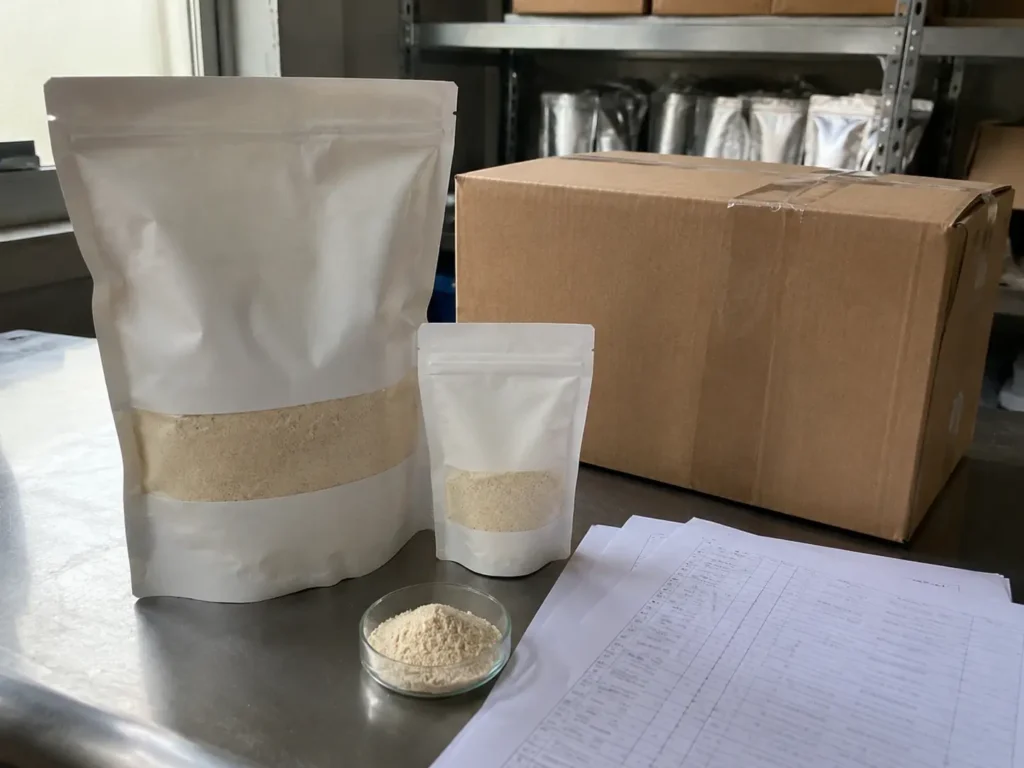
Finding a carboxymethyl chitosan supplier is easy.
Finding the right material with the source, molecular characteristics, documentation, grade, and quantity your project actually requires is more important.
Chitosan Global supplies Carboxymethyl Chitosan (CMC/CMCS) for research, formulation development, pilot testing, and commercial purchasing, with mushroom, shellfish, and other source options available across the broader CMC portfolio. Current catalog information includes applications across food, agriculture, pharmaceutical research, cosmetics, and industrial formulation.
For buyers specifically seeking a fungal source, Mushroom Carboxymethyl Chitosan is available from 25 g sample quantities through bulk supply, with technical documentation available for qualification.
Need to Qualify CMC Before a Bulk Order?
Start with the material not a large purchasing commitment.
25 g Sample → Review COA → Bench Test → Pilot → Bulk Quote
Order a 25 g Carboxymethyl Chitosan Sample
For larger requirements, request the current specification, COA, lead time, shipping terms, and volume quotation before ordering.
What Should You Expect From a CMC Supplier?
For a commodity ingredient, price may dominate supplier selection.
Carboxymethyl chitosan is different.
CMC is a modified polymer, and two powders carrying the same general product name may not necessarily provide identical performance.
A technical buyer may need to know:
- What is the biological source?
- What type of CMC is supplied?
- What is the molecular weight?
- What degree of substitution is specified?
- How does the material behave in water?
- What is its viscosity?
- Which grade is available?
- Is a batch COA available?
- Can a sample be tested before scale-up?
- Can the supplier support commercial quantities after qualification?
That changes the buying process from:
Find CMC → Compare Price → Order
to:
Define Requirement → Compare Specification → Review Documentation → Test Sample → Qualify Material → Scale Supply
That second process is much safer for formulation and procurement teams.
Start With the Specification, Not the Price per Kilogram
Price matters but only after you know that two materials are technically comparable.
Imagine Supplier A offers CMC at a lower price per kilogram than Supplier B.
If the products differ in molecular weight, degree of substitution, viscosity, source, purity, or solution behavior, you may not actually be comparing equivalent materials.
For CMC procurement, consider these parameters first:
| Supplier Check | Why It Matters |
|---|---|
| Origin | Mushroom, shellfish, or another biological source may matter to the project |
| CMC Type | Different substitution patterns can produce different properties |
| Molecular Weight | Can influence viscosity and formulation behavior |
| Degree of Substitution (DS) | Important characteristic of carboxymethyl modification |
| DDA | Provides additional information about the parent chitosan structure |
| Solubility | Critical for water-based formulation |
| Viscosity | Relevant to processing, coatings, films, and hydrogels |
| Purity | Should match the intended application requirements |
| Moisture / Ash | Useful quality-control parameters |
| Grade | Food, cosmetic, agricultural, pharmaceutical research, or industrial requirements can differ |
| COA | Provides batch-specific qualification data |
| Sample Availability | Allows evaluation before a larger purchase |
| Bulk Availability | Important when moving from R&D to commercial production |
The current Mushroom CMC product listing, for example, publishes parameters including source, molecular weight, degree of substitution, solubility, moisture, and ash, while also offering COA access. Buyers should verify the current batch documentation before relying on these values for qualification.
Choose the CMC Source That Fits Your Project
“Carboxymethyl chitosan” describes the derivative, but not necessarily its biological origin.
Chitosan Global’s current catalog includes CMC from multiple source categories, allowing buyers to evaluate sourcing alongside technical requirements.
Mushroom Carboxymethyl Chitosan
Mushroom-derived CMC may be appropriate when a project specifically requires a fungal or non-crustacean chitosan source.
This can be relevant for:
- fungal biomaterial research;
- non-crustacean formulation development;
- source-specific product requirements;
- food and cosmetic R&D;
- hydrogel development;
- pharmaceutical research; and
- alternative raw-material sourcing.
For properties, chemistry, and application context, see the Mushroom Carboxymethyl Chitosan technical guide.
For direct purchasing and current product specifications, use the Mushroom Carboxymethyl Chitosan product page.
Shellfish Carboxymethyl Chitosan
Crustacean-derived CMC provides another sourcing route for projects where shellfish origin is acceptable.
Current Chitosan Global catalog information also lists shellfish-origin Carboxymethyl Chitosan, providing buyers with an alternative source rather than forcing every project into a single raw-material origin.
When comparing mushroom and shellfish CMC, avoid selecting by origin alone.
Compare the actual specifications and documentation relevant to your intended application.
Buying Water-Soluble CMC? Ask a Better Question
Many buyers arrive looking specifically for a water-soluble chitosan supplier.
That requirement is useful, but it is still too broad.
Instead of asking only:
“Is your CMC water soluble?”
ask:
“Does this grade provide the solution behavior required under my formulation conditions?”
CMC water behavior can be influenced by its structure and by the formulation environment.
Relevant variables may include:
pH + Concentration + MW + Degree of Substitution + Ionic Strength + Other Ingredients
This becomes particularly important when moving from a simple water test to a finished formulation containing salts, proteins, surfactants, buffers, active ingredients, or other polymers.
For formulation-specific guidance, see Water-Soluble Carboxymethyl Chitosan.
For the underlying chemistry, see Why Carboxymethyl Chitosan Is Water Soluble.
From a 25 g Sample to Commercial Supply
One advantage of a staged purchasing process is that the quantity can increase as technical confidence increases.
Stage 1 — 25 g Sample
The first objective is not production.
It is qualification.
A small sample can help an R&D team evaluate basic characteristics such as:
- powder handling;
- hydration;
- dissolution;
- solution appearance;
- viscosity behavior;
- pH compatibility; and
- compatibility with the intended formulation.
Chitosan Global currently offers a 25 g sample option for Mushroom Carboxymethyl Chitosan.
Stage 2 — Review the COA
A successful preliminary test should be connected to material documentation.
The Certificate of Analysis helps establish which batch was evaluated and which reported parameters apply to it.
This becomes especially important if your development team later needs to reproduce the same formulation at a larger scale.
Sample performance without specification data is difficult to qualify.
Stage 3 — Pilot Quantity
Once the material performs acceptably in initial bench work, the next step may be a larger quantity for pilot-scale evaluation.
This is where differences in:
- mixing equipment;
- batch volume;
- shear;
- temperature;
- hydration time; and
- processing sequence
can become more visible.
Pilot evaluation helps bridge the gap between a successful beaker experiment and commercial manufacturing.
Stage 4 — Bulk Carboxymethyl Chitosan
After technical qualification, procurement can shift toward commercial factors such as:
- required annual volume;
- packaging;
- batch consistency;
- current price;
- lead time;
- shipping;
- import requirements;
- documentation; and
- reorder planning.
Chitosan Global’s current catalog supports laboratory samples as well as commercial and wholesale purchasing.
For current larger-volume pricing, use the Chitosan wholesale pricing resource or request a quotation based on your required quantity.
COA Before Scale-Up: Why It Matters
A generic technical data sheet describes a product category or specification.
A batch-specific COA describes the actual lot being supplied.
For technical procurement, this distinction matters.
Depending on the product and grade, buyers may want documentation for parameters such as:
- appearance;
- source;
- molecular weight;
- degree of substitution;
- DDA;
- moisture;
- ash;
- purity;
- solubility; and
- other grade-specific tests.
Not every parameter is necessarily included on every COA, so buyers should define their critical acceptance criteria before requesting a quotation.
The current Mushroom CMC listing states that COA documentation is available during the quotation/order process.
Best practice: qualify the specification and documentation before committing to production volume.
Which Grade of CMC Do You Need?
A material being described as “carboxymethyl chitosan” does not automatically establish suitability for every market.
The intended application should determine the grade and documentation required.
Food Development
Food-related projects may evaluate CMC for coatings, films, preservation systems, or other food-technology research.
Regulatory suitability should be assessed for the specific product, intended use, dosage, market, and jurisdiction rather than inferred solely from published CMC research.
For application research, see Carboxymethyl Chitosan for Food Preservation.
Cosmetic Formulation
Cosmetic buyers may prioritize characteristics such as aqueous compatibility, film formation, viscosity, source, purity, and interaction with other formulation ingredients.
Pharmaceutical and Biomedical R&D
CMC is extensively researched in drug-delivery and hydrogel systems, but a material being studied for biomedical applications does not automatically make every commercial grade approved for pharmaceutical or medical use.
For technical research context, see Carboxymethyl Chitosan for Drug Delivery and Carboxymethyl Chitosan for Hydrogels.
Agriculture & Industrial Formulation
Agricultural and industrial projects may have different purity, performance, documentation, and cost requirements from biomedical research.
This is why specifying the application when requesting a quote can help identify a more appropriate material.
CMC vs Chitosan Hydrochloride: Don’t Source by Solubility Alone
A buyer needing water-compatible chitosan may encounter both Carboxymethyl Chitosan and Chitosan Hydrochloride.
They are not the same material.
CMC contains introduced carboxymethyl functionality, while chitosan hydrochloride is a salt form of chitosan.
Both may be considered when improved aqueous handling is needed, but their chemistry, ionic behavior, and formulation performance can differ.
If your procurement specification currently says only “water-soluble chitosan,” determine which derivative the formulation actually requires before ordering.
See Carboxymethyl Chitosan vs Chitosan Hydrochloride.
What Information Should You Send With a CMC RFQ?
A vague request such as:
“Please send your CMC price.”
may produce a price, but it does not necessarily produce the right material quotation.
A stronger RFQ identifies the technical and commercial requirements.
Consider including:
Application: What are you developing?
Origin: Mushroom, shellfish, or open to alternatives?
Grade: Food, cosmetic, agricultural, industrial, or research requirement?
Molecular Weight: Is a particular range required?
Degree of Substitution: Is there a minimum or target DS?
Solubility: What aqueous conditions matter?
Quantity: Sample, 1 kg, pilot quantity, 100 kg, or larger?
Destination: Where will the material be shipped?
Documentation: COA, SDS, or other required documents?
Timeline: When is the material required?
Providing this information helps turn a generic price request into a technically useful quotation.
Avoid These 5 CMC Sourcing Mistakes
1. Comparing Only Price per Kilogram
Lower price does not necessarily mean better value if the specifications differ.
2. Assuming Every CMC Is Identical
Source, molecular characteristics, substitution, purity, and processing can differ.
3. Ordering Bulk Before Testing
A sample is much less expensive than discovering incompatibility after purchasing production volume.
4. Treating Published Research as a Product Specification
A paper may describe a different CMC material from the one you are purchasing.
5. Ignoring Batch Documentation
For repeatable formulation work, connect the tested material to its actual specification and COA.
Why Source Carboxymethyl Chitosan Through Chitosan Global?
Chitosan Global’s current catalog is structured around more than one chitosan source or derivative. It includes raw chitosan materials and specialty derivatives across mushroom, shellfish, and Black Soldier Fly origins, with sample and bulk purchasing pathways.
For Carboxymethyl Chitosan buyers, the practical advantages are:
Multiple Source Options
Evaluate mushroom and other available CMC origins rather than being limited to one source.
25 g Sample Availability
Begin with bench-scale evaluation before moving into commercial quantities.
Batch Documentation
Request COA information when qualifying material.
R&D to Bulk Pathway
Move from sample testing to larger purchasing after technical validation.
Multiple Application Grades
Current catalog information identifies CMC options for food, agriculture, pharmaceutical research, cosmetics, and industrial applications.
Technical Selection Resources
Use the broader CMC content library to compare chemistry, solubility, applications, and material alternatives before purchasing.
Request a Carboxymethyl Chitosan Sample or Bulk Quote
If you are evaluating CMC for a new formulation, start by defining the specification you actually need.
For mushroom-origin material:
Order a 25 g Mushroom Carboxymethyl Chitosan Sample
For technical background before purchasing:
Explore the Mushroom Carboxymethyl Chitosan Guide
For commercial quantities:
Review Current Chitosan Wholesale Pricing
Recommended buying path:
25 G SAMPLE → COA REVIEW → FORMULATION TEST → PILOT → BULK QUOTE
Frequently Asked Questions
Where can I buy Carboxymethyl Chitosan?
Chitosan Global supplies CMC for research, formulation, and commercial purchasing. For fungal-origin material, current product details and sample options are available on the Mushroom Carboxymethyl Chitosan product page.
Can I order a 25 g CMC sample before buying bulk?
Yes. The current Mushroom CMC listing includes a 25 g sample option, allowing buyers to conduct initial formulation testing before larger purchasing.
Is bulk Carboxymethyl Chitosan available?
Yes. Chitosan Global’s current product and wholesale catalog includes bulk/wholesale CMC supply pathways. Because pricing and logistics can change, request a current quotation for your required volume and destination.
What specifications should I request from a CMC supplier?
Depending on the application, important parameters may include biological source, molecular weight, degree of substitution, DDA, solubility, viscosity, purity, moisture, ash, grade, and batch documentation.
Can I request a COA before placing a bulk order?
The current Mushroom CMC product listing states that COA documentation is available at the quotation/order stage.
Is mushroom CMC different from shellfish CMC?
The primary difference is biological source, but individual grades may also differ in specifications. Compare the actual COA and technical requirements rather than assuming materials are equivalent based only on the derivative name.
Is CMC suitable for drug delivery or hydrogels?
CMC is extensively studied in these research areas. However, published biomedical research does not automatically establish that a particular commercial grade is approved for pharmaceutical or medical use. See CMC for Drug Delivery and CMC for Hydrogels for application-specific discussion.
How should I request bulk pricing?
Provide the intended application, required grade/specification, quantity, destination, and documentation requirements. This allows the quotation to reflect the material and logistics required for your project.
You May Also Like
- All
- Native Chitosan
- Phosphorylated Chitosan
- Sulphonated Chitosan
- Quaternary Chitosan
- Chitosan Oligosaccharide Hydrochloride
- Chitosan Hydrochloride
- Carboxymethyl Chitosan
- Chitosan Oligosaccharide
Get in Touch
Technical & Custom Solutions
Abhinav Chauhan, PhD – Application Scientist
Stephen Nice – Application Scientist