
Shellfish CMCS for Drug Delivery: Why This Water-Soluble Chitosan Derivative Is Being Studied as a Carrier
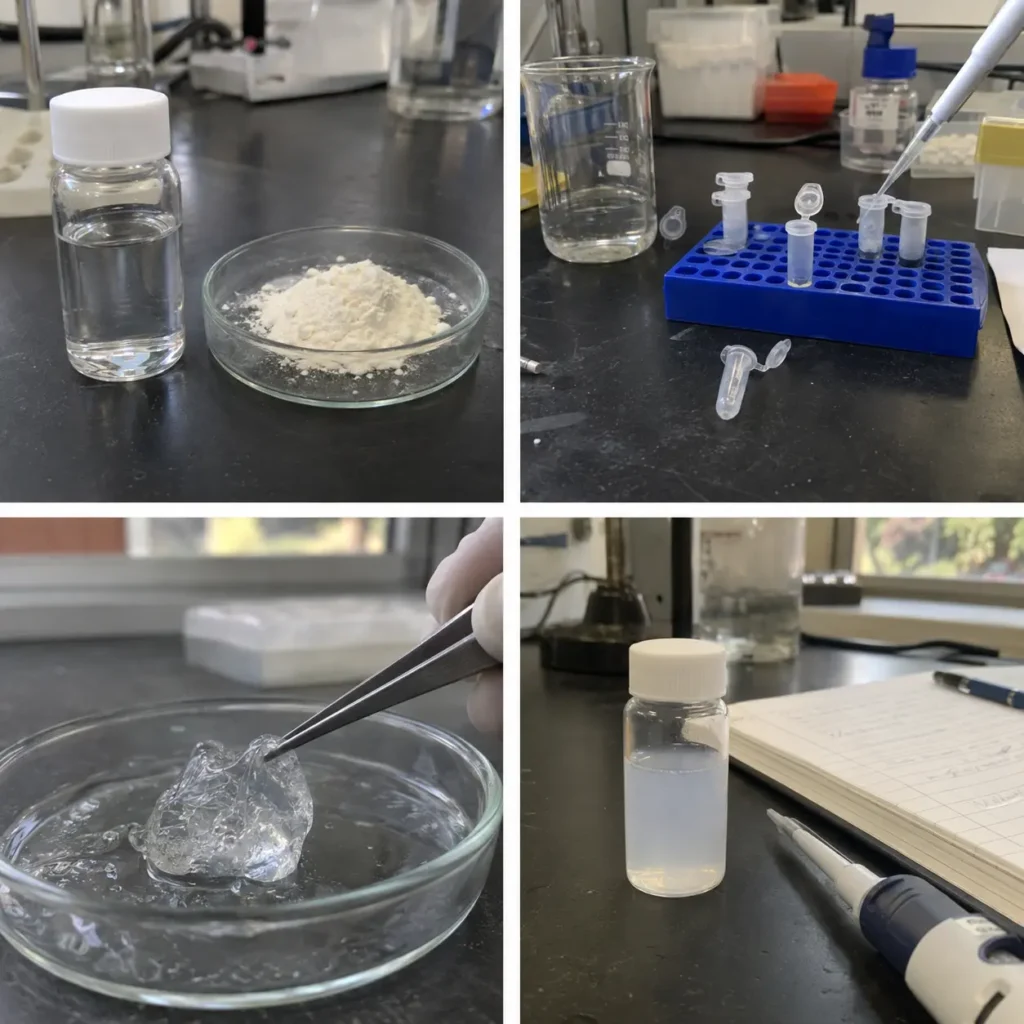
A drug molecule can be powerful and still fail as a formulation. Why? Because the active ingredient is only one part of the problem. A delivery system may also need to control: how the drug is dispersed; how it interacts with water; how quickly it is released; whether it remains stable; whether it reaches the intended environment; how the carrier behaves around biological tissues. That is where polymer science becomes important. Shellfish Carboxymethyl Chitosan (CMCS) is being studied as one such polymer platform. CMCS is a water-soluble derivative of chitosan produced by introducing carboxymethyl groups into the polymer backbone. Compared with native chitosan, this modification improves aqueous solubility and creates additional functional groups that researchers can use when designing nanoparticles, hydrogels, films, microparticles, and controlled-release systems. Reviews published in 2023–2026 continue to identify CMCS as a promising material for drug and bioactive delivery research. But there is an important distinction: Shellfish CMCS is not itself a finished drug-delivery system. It is a material researchers can use to build one. Testing Shellfish CMCS for a Delivery-System Project? Published studies can help you select a starting strategy, but your formulation still needs the actual material. View Shellfish Carboxymethyl Chitosan & Order a 25 g Sample A practical R&D route is: Review Specification → Request COA → Test 25 g → Build Carrier → Characterize → Optimize → Pilot This is much safer than assuming a CMCS grade from a journal article will behave identically to the commercial grade in your laboratory. Why Modify Chitosan for Drug Delivery? Native chitosan already has an extensive history in drug-delivery research. Its major limitation is solubility. Native chitosan generally dissolves under acidic conditions but has poor aqueous solubility around neutral and physiological pH. That can restrict its use in systems where researchers need a polymer that remains processable in broader aqueous environments. Carboxymethylation changes this behavior. By introducing carboxymethyl groups, CMCS gains improved aqueous compatibility while retaining useful polymer characteristics associated with chitosan. A simplified comparison is: Native ChitosanAcid-dependent dissolution → narrower aqueous processing window Carboxymethyl ChitosanBroader aqueous solubility → more flexible carrier design That doesn’t mean CMCS is automatically better. It means it gives researchers a different set of formulation options. For the chemistry behind the difference, read Why Carboxymethyl Chitosan Is Water Soluble. Think of CMCS as a Construction Material A useful way to understand CMCS in drug delivery is to stop thinking of it as a “drug-delivery ingredient.” Think of it instead as a construction material for carriers. Researchers can use CMCS to help build different structures: CMCS → Nanoparticle CMCS → Hydrogel CMCS → Microparticle CMCS → Film CMCS → Polymer Complex Each structure can behave differently. And each one may be designed around a different delivery problem. That is why simply asking: “Is CMCS good for drug delivery?” is too broad. A better question is: “Which CMCS-based carrier architecture fits the active compound and release profile we need?” CMCS Nanoparticles: Small Carrier, Many Variables Nanoparticles are one of the most researched CMCS delivery formats. At nanoscale dimensions, researchers can investigate carriers designed to: encapsulate an active; interact with charged compounds; protect sensitive molecules; modify release; change surface characteristics; support additional targeting functionality. Reviews of CMCS-based drug delivery discuss nanoparticles and other nano/micro systems for controlled and targeted delivery research. But nanoparticle performance depends on far more than the polymer name. Researchers may need to characterize: particle size; size distribution; zeta potential; loading capacity; encapsulation efficiency; stability; release behavior. Changing the CMCS grade can alter several of those parameters. Hydrogels: When the Carrier Becomes a Water-Rich Network Hydrogels solve a different problem. Instead of creating discrete particles, the polymer forms a three-dimensional network capable of holding large amounts of water. CMCS is particularly interesting here because its functional groups can participate in different crosslinking and network-forming strategies. A hydrogel can potentially hold an active compound inside that hydrated matrix. The formulation can then be designed around: swelling; network density; diffusion; erosion; degradation; drug-polymer interactions. Scientific reviews identify CMCS hydrogels as important platforms in drug delivery, wound-related materials, and tissue-engineering research. The key point: CMCS does not create controlled release automatically. The entire gel architecture determines how a compound moves through the system. Controlled Release Is a Design Problem “Controlled release” is often used too casually. A polymer does not become a controlled-release system simply because it swells in water. Drug release from a CMCS-based carrier can potentially be influenced by: diffusion; polymer swelling; crosslink density; matrix degradation; drug-polymer interaction; environmental pH; ionic strength. Imagine two CMCS hydrogels containing the same drug. One has a loose network. The other is densely crosslinked. The same drug may leave those two matrices at very different rates. So the real research question is: How do we design the CMCS carrier so that release matches the intended profile? Why pH Matters More Than Many Formulators Expect CMCS contains ionizable functional groups. That means pH can influence more than solubility. It can also affect: polymer charge; swelling; polymer conformation; drug-polymer interaction; complex formation; release behavior. This is one reason CMCS appears frequently in pH-responsive delivery research. But pH-responsive does not mean automatically site-specific. A carrier must be designed and experimentally validated to show useful response under the required physiological or formulation conditions. Can CMCS Carry Hydrophobic Drugs? This is an interesting area because many drug candidates have limited water solubility. Earlier CMCS reviews discuss the use of carboxymethyl chitosan-based formulations for hydrophobic drug loading and targeted delivery. However, CMCS alone does not magically make every hydrophobic drug soluble. Researchers may need: nanoparticles; polymer conjugates; amphiphilic modifications; secondary polymers; surfactants; other carrier components. Again, the useful concept is: CMCS can become part of the carrier architecture. The finished system not the raw powder determines whether a difficult active can be delivered effectively. Drugs Are Not the Only Payloads Modern delivery research goes beyond conventional small-molecule drugs. A 2025 review of chitosan and CMCS delivery systems discusses applications involving: drugs; proteins; genes; other bioactive agents. Each payload creates a
Benefits of Shellfish Carboxymethyl Chitosan: What Changes When Chitosan Becomes CMCS?
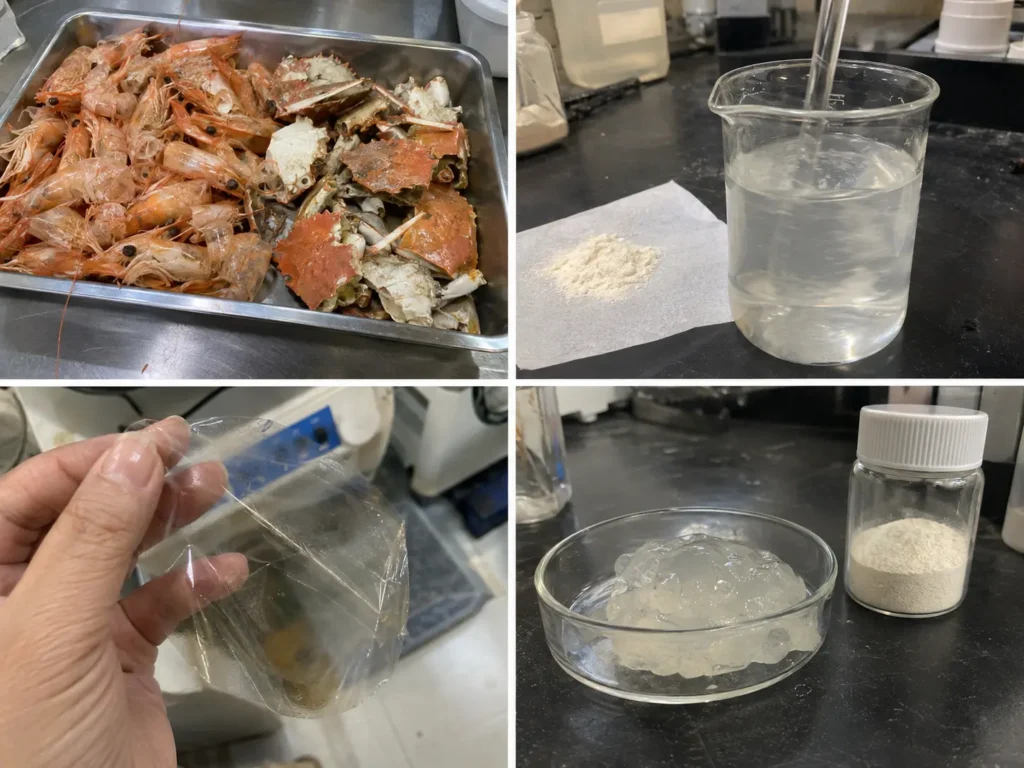
Sometimes the biggest improvement in a material comes from changing one frustrating property. For native shellfish chitosan, that property is often solubility. Chitosan is a versatile natural polymer, but conventional grades generally need acidic conditions to dissolve effectively. That can add another processing step exactly where a formulator would prefer simplicity. Carboxymethylation changes the equation. By introducing carboxymethyl groups into the chitosan structure, manufacturers create Carboxymethyl Chitosan (CMCS) a derivative with broader aqueous compatibility and additional functional groups. But water solubility is only the first benefit. The modification can also make CMCS interesting for films, coatings, hydrogels, delivery matrices, food-packaging research, cosmetics, and other water-based polymer systems. Scientific reviews have highlighted CMCS for its aqueous solubility, film-forming potential, moisture-related properties, biocompatibility, and investigated biological activities. So instead of asking: “What are the benefits of chitosan?” A more useful question for a formulator is: “What does carboxymethylation allow me to do that native chitosan may make difficult?” Want to See How Shellfish CMCS Performs in Your Formulation? Research can tell you what a polymer is capable of. A sample tells you what happens in your formulation. Chitosan Global currently lists its Shellfish Carboxymethyl Chitosan as a water-soluble food-grade CMCS with a Degree of Substitution ≥80%, DDA ≥90%, and 25 g sample availability. View Shellfish Carboxymethyl Chitosan & Order a 25 g Sample Review Specification → Check COA → Test 25 g → Validate → Scale Benefit #1: Water Becomes Much More Useful This is arguably the defining practical advantage of CMCS. Native chitosan has limited solubility around neutral pH and is commonly dissolved using dilute acidic solutions. Carboxymethyl modification can significantly broaden aqueous solubility, although the precise behavior depends on the degree and pattern of substitution. Why does that matter? Because easier aqueous processing can potentially mean: fewer acid-dependent formulation steps; easier incorporation into water-based systems; greater flexibility when combining CMCS with other ingredients; access to applications where native chitosan’s solubility is inconvenient. Think of it this way: Native Chitosan:Polymer → Acidic Medium → Dissolution → Formulation Suitable CMCS Grade:Polymer → Aqueous System → Formulation That difference may look small on paper. At the formulation bench, it can change the entire workflow. For the chemistry behind this behavior, read Why Carboxymethyl Chitosan Is Water Soluble. Benefit #2: More Functional Chemistry on the Same Polymer Backbone CMCS is not simply chitosan that happens to dissolve better. Carboxymethylation introduces additional carboxymethyl functionality while the polymer retains other functional groups associated with the chitosan backbone. That creates more opportunities for molecular interactions. Depending on the CMCS structure and formulation environment, those functional groups may participate in interactions with: water; ions; polymers; proteins; active compounds; crosslinking systems. This is one reason CMCS appears in such diverse research fields. The modification doesn’t just solve a solubility problem. It expands the polymer’s formulation toolbox. Benefit #3: A Strong Candidate for Films and Coatings Imagine trying to create a thin functional coating. You need a polymer that can be processed into the system, spread across a surface, and form a useful matrix after application. CMCS has attracted considerable attention here. Recent scientific reviews describe CMCS as a promising matrix for degradable food-packaging films and coatings, including composite systems incorporating other polymers, plant extracts, nanoparticles, or functional ingredients. This makes CMCS interesting for research involving: edible coatings; biodegradable films; active packaging; composite films; surface coatings; functional polymer layers. The important word is matrix. CMCS does not have to do everything alone. Its value may come from creating a polymer framework in which other components can operate. For the application-specific science, explore Shellfish CMCS for Food Preservation. Benefit #4: It Can Work as Part of a Team A polymer’s usefulness is not determined only by what it can do alone. Sometimes the bigger question is: What can we build with it? Research on CMCS-based food packaging, for example, includes combinations with other biopolymers, active compounds, plant extracts, nanoparticles, and crosslinking systems. A 2024 review noted the compatibility of CMCS with different polymers and additives in the development of multifunctional packaging films. This opens interesting formulation possibilities: CMCS + another polymer CMCS + active compound CMCS + crosslinker CMCS + functional additive Rather than treating Shellfish CMCS as a finished solution, formulators can evaluate it as a building block. That is a much more useful way to think about the material. Benefit #5: Moisture Interaction Can Be Useful Water interaction is not only about whether a powder dissolves. Once a polymer becomes part of a film, gel, coating, cosmetic system, or biomaterial, its relationship with moisture becomes part of its performance. Scientific reviews of carboxymethyl chitosan have reported moisture absorption and retention characteristics, with these properties contributing to research interest in cosmetics and biomedical materials. Depending on the application, formulators may therefore investigate CMCS for: moisture-management systems; hydrogels; hydrated polymer matrices; cosmetic formulations; film and coating systems. But moisture behavior is not universally “better.” Too much water uptake may be undesirable in some applications. That is why the real benefit is tunable formulation potential, not a blanket claim that more moisture retention is always preferable. Benefit #6: Interesting Hydrogel Potential Add water compatibility, functional groups, polymer interactions, and crosslinking possibilities together, and another application becomes obvious: hydrogels. CMCS has been extensively investigated as a component of hydrogel systems for biomedical and delivery research. Reviews discuss its use in wound-healing, tissue-engineering, and drug-delivery materials. From a materials perspective, researchers may evaluate CMCS hydrogels for characteristics such as: swelling; water retention; mechanical behavior; crosslinking; encapsulation; controlled release. These are research areas, not claims that every commercial CMCS powder is approved for medical use. For a focused look at delivery-system research, see Shellfish CMCS for Drug Delivery. Benefit #7: Antimicrobial Research Adds Another Dimension Chitosan is well known in scientific literature for antimicrobial research, and carboxymethyl derivatives have also been investigated for antibacterial and antifungal activity. Reviews of CMCS materials discuss antibacterial and antifungal properties across biomedical and food-related systems. This is particularly interesting when CMCS is being considered for: active packaging; coatings;
Shellfish CMCS vs BSF CMCS: Marine or Insect-Derived Carboxymethyl Chitosan?
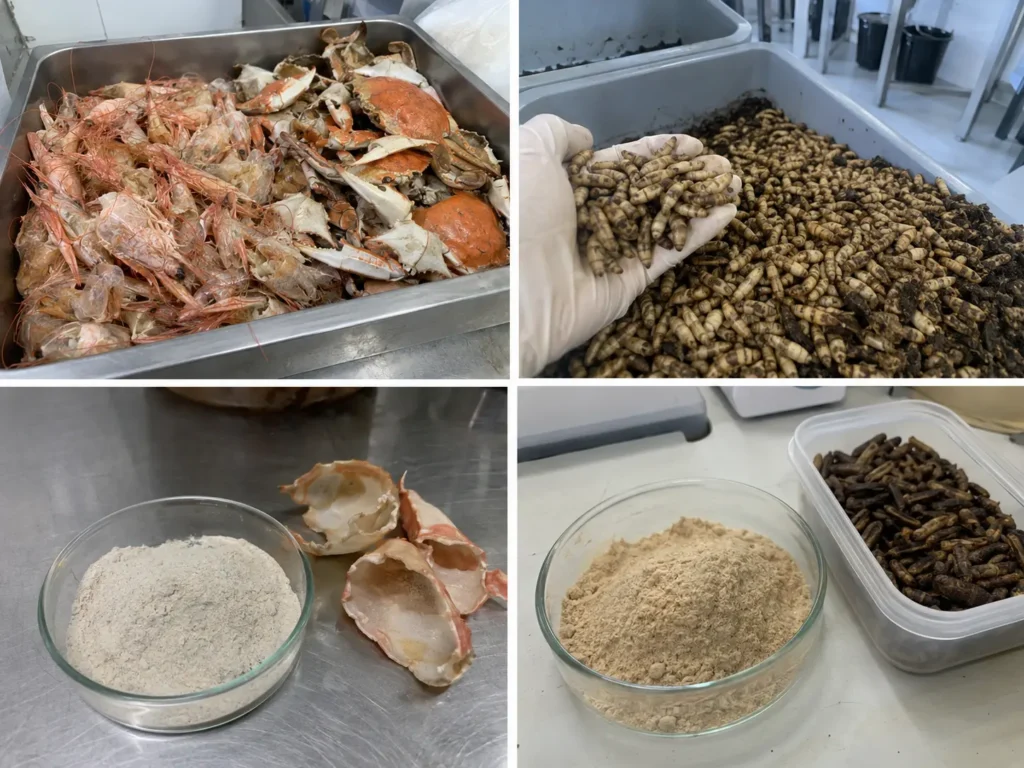
Two Carboxymethyl Chitosan powders can look almost identical. Both may be off-white powders. Both may be designed for aqueous processing. Both may carry the same general derivative name: Carboxymethyl Chitosan (CMCS). Yet their raw materials come from completely different biological systems. Shellfish CMCS begins with crustacean chitin, typically from shrimp, crab, or related marine shell material. BSF CMCS begins with chitin obtained from the Black Soldier Fly, Hermetia illucens. That difference creates an interesting sourcing decision for formulators and procurement teams: Should you choose an established marine chitin supply chain—or evaluate an insect-derived alternative? The answer should not be based on novelty, sustainability marketing, or origin alone. A serious comparison needs to look at: source + specification + documentation + formulation performance + supply + cost. Already Comparing Shellfish and BSF CMCS? Start with the actual materials. View Shellfish Carboxymethyl Chitosan & 25 g Sample View Black Soldier Fly Carboxymethyl Chitosan Then compare current specifications and COAs before testing both materials under the same conditions. Compare → Request COAs → Test Samples → Evaluate → Select → Scale Shellfish CMCS vs BSF CMCS at a Glance Factor Shellfish CMCS BSF CMCS Biological Source Marine crustacean Black Soldier Fly Typical Feedstock Shrimp/crab shell material Hermetia illucens biomass/cuticle Animal Derived Yes Yes insect derived Vegan No No Shellfish Origin Yes No Derivative Carboxymethyl Chitosan Carboxymethyl Chitosan Key Technical Variables DS, DDA, MW, purity, viscosity DS, DDA, MW, purity, viscosity Supply Chain Mature marine chitin industry Emerging insect-biomaterial sector Commercial Positioning Established, generally economical Specialty / emerging source Best Choice Application dependent Application dependent The most important row is the last one. Origin helps define the sourcing story. Specification determines whether the polymer actually fits the formulation. Two Very Different Starting Points The difference begins long before carboxymethylation. Shellfish CMCS Pathway Crustacean Shell Material → Chitin → Chitosan → Carboxymethylation → Shellfish CMCS Shellfish chitin is associated with a mature global seafood-processing supply chain. Shrimp, crab, and related shell material can provide chitin-rich feedstock that is converted into chitosan and then modified into specialty derivatives such as CMCS. For deeper source context, see Marine Carboxymethyl Chitosan. BSF CMCS Pathway Black Soldier Fly Biomass → Chitin → Chitosan → Carboxymethylation → BSF CMCS The Black Soldier Fly is increasingly being investigated as an alternative insect source of chitin and chitosan. Unlike marine crustacean processing, insect farming can operate in more controlled terrestrial production environments. But that does not automatically make every BSF CMCS batch purer, safer, or technically superior. Those questions still require actual analytical data. Does Source Change the Chemistry of CMCS? After carboxymethylation, both materials belong to the same broad derivative family. But they should not automatically be assumed to be identical. Final CMCS characteristics can vary according to: Degree of Substitution; Degree of Deacetylation; molecular weight; molecular-weight distribution; substitution pattern; purity; viscosity; moisture; ash; manufacturing process. The source can influence the starting chitin/chitosan, but the modification and purification process also strongly influence the finished derivative. This creates an important rule: Source is not a substitute for specification. Two Shellfish CMCS grades can differ from each other. Two BSF CMCS grades can differ from each other. And a Shellfish CMCS and BSF CMCS with closely matched specifications may sometimes behave more similarly than two poorly matched grades from the same origin. Which Is More Water Soluble? You cannot answer this reliably from “shellfish” versus “BSF.” Carboxymethylation is the main modification responsible for the improved aqueous behavior associated with CMCS. Actual solubility can depend on: DS + substitution pattern + MW + concentration + pH + ionic strength Both current Chitosan Global product pages position their respective CMCS grades as water-soluble materials, but the product-specific documentation should be reviewed before treating the values as interchangeable. For the underlying mechanism, see Why Carboxymethyl Chitosan Is Water Soluble. Shellfish CMCS: Why Buyers Still Choose the Established Route A newer biological source is not automatically a reason to abandon a mature one. Shellfish CMCS may make sense when: crustacean origin is acceptable; the formulation already uses marine chitosan derivatives; an established supply chain matters; cost is a major purchasing factor; required specifications are readily available; existing R&D has already qualified a marine grade. The broader Chitosan Global catalog currently positions shellfish materials as the most economical of the three major source families, while BSF materials occupy a more specialty/premium position. For sourcing details, see Shellfish Carboxymethyl Chitosan Supplier. Why Is BSF CMCS Attracting Attention? BSF CMCS is interesting largely because it opens another route to chitosan. Black Soldier Fly production can offer: controlled rearing environments; terrestrial rather than marine sourcing; alternative chitin feedstock; potential traceability advantages in tightly controlled production systems; diversification away from crustacean supply chains. These features can be commercially interesting. But careful wording matters. It would be inaccurate to say: BSF CMCS is always purer. or: BSF CMCS always has lower heavy metals. or: BSF CMCS is automatically more sustainable. Those claims require batch-specific analytical evidence or direct lifecycle comparisons. BSF origin creates potential sourcing advantages. It does not guarantee every technical advantage. Is BSF CMCS Vegan? No. Black Soldier Fly is an insect. Therefore, BSF-derived chitosan is animal-derived and should not be described as vegan. This is an important distinction because some current product descriptions online incorrectly group shellfish-free and vegan as if they were the same thing. They are not. Shellfish CMCS Animal-derived and shellfish-derived. BSF CMCS Animal-derived but not shellfish-derived. Mushroom CMCS Fungal-derived and potentially relevant where a non-animal source is required. If vegan sourcing is the requirement, Mushroom CMCS is the more logical comparison. What About Shellfish-Allergen Considerations? For projects specifically avoiding shellfish-derived raw materials, BSF CMCS offers a clear origin difference. It does not come from shrimp or crab. However, avoid automatically calling the material “allergen-safe.” Regulatory and allergen considerations can depend on: final material; residual proteins; manufacturing controls; intended market; labeling requirements; application. A safer commercial statement is: BSF CMCS is non-shellfish-derived. If allergen status is critical, request appropriate supplier documentation rather than relying on the
Carboxymethyl Chitosan for Food Preservation: From Fresh Produce to Smarter Food Packaging
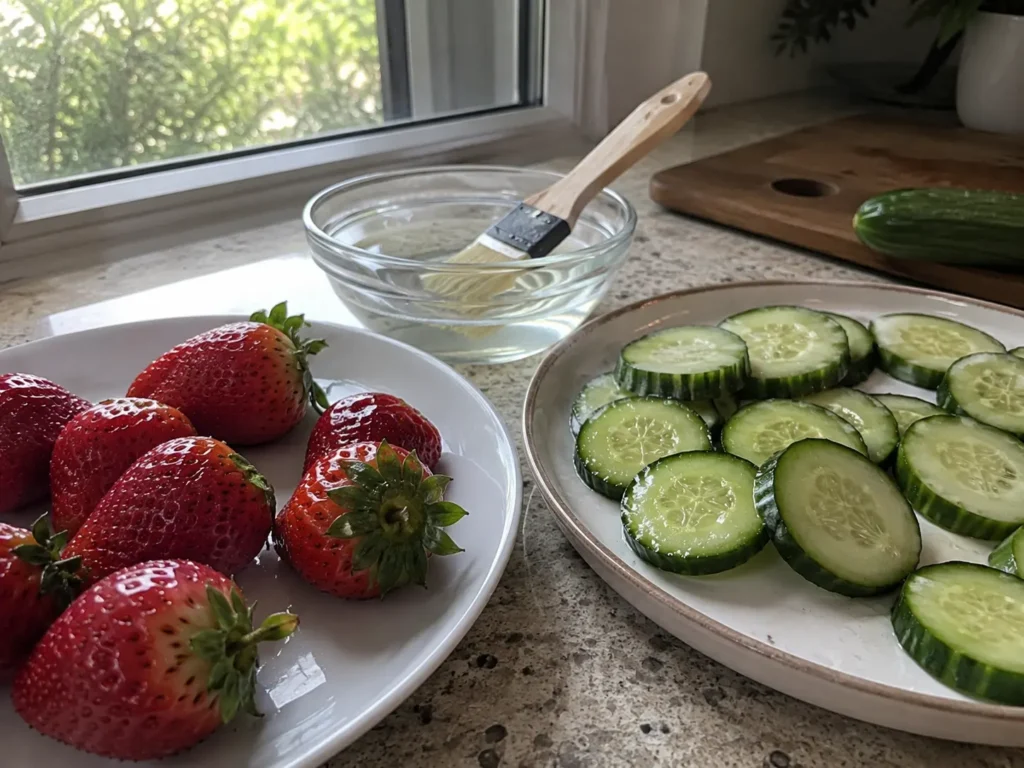
A strawberry does not suddenly spoil. An apple does not lose freshness in one moment. A piece of seafood does not change quality all at once. Food deterioration usually happens gradually through moisture loss, oxygen exposure, microbial activity, oxidation, temperature, and storage conditions. That is exactly why food scientists are interested in materials that can create a thin protective environment around food without relying only on conventional plastic packaging. One material being actively studied for this purpose is Carboxymethyl Chitosan (CMC or CMCS). CMC is a modified form of chitosan designed to provide broader water compatibility and additional functional groups. These properties make it particularly interesting for research involving: edible coatings; biodegradable films; active packaging; fresh produce preservation; seafood and poultry packaging; composite food films; and smart packaging systems. But the interesting part is not simply that “CMC forms films.” The real question is: Can CMC help create a better micro-environment around food during storage? That is where food-preservation research becomes much more interesting. Developing a Food Coating or Packaging Film? If you are testing Carboxymethyl Chitosan for a coating, film, or packaging formulation, begin with the actual material rather than relying only on published studies. Order a 25 g Mushroom Carboxymethyl Chitosan Sample Start small, review the current specification and available COA, then evaluate CMC under your own food, storage, and formulation conditions. For a broader material overview, visit the Mushroom Carboxymethyl Chitosan guide. Imagine a Thin Invisible Layer Around Fresh Food Think about a freshly picked strawberry. Its surface is exposed to: moisture loss, oxygen, handling, microorganisms, temperature changes, and the surrounding atmosphere. Now imagine placing an extremely thin polymer coating over that surface. The coating is not intended to make the strawberry permanent. Instead, researchers investigate whether it can slow some of the processes that reduce quality during storage. That is the basic idea behind edible-coating research. Carboxymethyl Chitosan is interesting because it can be formulated into water-based systems and applied as part of that thin protective layer. Depending on the complete formulation, researchers may evaluate whether the coating helps influence: moisture exchange; surface drying; oxygen exposure; texture loss; microbial growth; color changes; and overall storage quality. The coating essentially becomes a controlled interface between the food and its environment. Why Modify Chitosan in the First Place? Native chitosan has already been widely studied for food coatings. So why use Carboxymethyl Chitosan? One reason is processing. Native chitosan generally needs an acidic environment to dissolve properly. For some formulations, that is perfectly acceptable. For others, acid-dependent processing may complicate: ingredient compatibility; pH control; coating preparation; sensitive additives; or manufacturing workflow. Carboxymethylation changes the polymer structure. By introducing carboxymethyl groups, CMC can provide broader aqueous solubility and different ionic behavior. In practical terms, this can make CMC easier to investigate in some water-based coating and film systems. Want to understand the chemistry? Read Why Carboxymethyl Chitosan Is Water Soluble. For formulation-focused information, see Water-Soluble Carboxymethyl Chitosan. Three Ways CMC Enters Food-Preservation Research Instead of thinking of CMC as one finished preservation product, think of it as a polymer platform. Researchers can build different systems around it. 1. Edible Coatings The liquid coating is applied directly to the surface of food. It may be sprayed, dipped, brushed, or otherwise deposited depending on the research process. After drying, a thin polymer layer remains. The objective is often to modify the interaction between the food and surrounding environment. 2. Packaging Films CMC can also be incorporated into a separate film. Instead of coating the food directly, researchers create a flexible polymer layer that can potentially be used as part of packaging. The challenge here becomes more demanding. The film must not simply exist—it may need acceptable: strength; flexibility; moisture behavior; gas-barrier properties; appearance; handling; and stability. 3. Active or Composite Packaging This is where things become especially interesting. CMC can be combined with other materials to create multifunctional packaging. For example: CMC + another polymer + plasticizer + active ingredient Now the packaging is no longer just a barrier. The system may be designed to provide additional functionality. Why Pure CMC Is Often Only the Starting Point One polymer rarely does everything perfectly. A material may form a good film but be brittle. Another may improve flexibility but have poor moisture resistance. Another component may provide antimicrobial or antioxidant functionality. That is why food-packaging researchers often develop composite systems. A simplified formulation could look like: CMC provides the polymer matrix another biopolymer adjusts structure or mechanical behavior plasticizer improves flexibility functional ingredient adds a specific active property The final film is therefore better understood as an engineered system. This is important because claims like “CMC extends shelf life” can oversimplify what actually happened in a study. Often, the performance comes from the complete formulation, not from CMC alone. Fresh Fruit Is One of the Most Visual Applications Fruit preservation is easy to understand because quality changes are visible. Take strawberries. During storage, researchers might observe: surface moisture loss; softening; visible microbial growth; color change; weight loss. A coating experiment may compare: Uncoated fruit versus CMC-containing coated fruit under the same storage conditions. Researchers can then measure whether the coating formulation changes the rate of deterioration. Similar approaches have been explored with different fruits and vegetables. But there is an important lesson here: A coating that works well on one fruit cannot automatically be assumed to work equally well on another. Strawberries, apples, tomatoes, cucumbers, and citrus fruits all have different: surfaces; respiration rates; moisture characteristics; storage requirements. The food itself becomes part of the formulation problem. Vegetables Create a Different Preservation Challenge Vegetables can lose quality through dehydration, respiration, texture changes, and microbial spoilage. A thin coating may be investigated as a way to modify moisture and gas exchange around the surface. Researchers may track factors such as: weight loss; firmness; visual quality; color; microbial counts; storage time. This is why food preservation cannot be reduced to one number like: “CMC increases shelf life by X days.” The result depends
Carboxymethyl Chitosan for Drug Delivery: How CMC Is Used in Delivery-System Research

Drug delivery is rarely just about selecting an active ingredient. Researchers also need a carrier system that can help incorporate the active, survive the intended formulation environment, interact appropriately with other materials, and release its payload according to the experimental design. This is one reason Carboxymethyl Chitosan (CMC or CMCS) has attracted significant interest in drug-delivery research. CMC is a chemically modified chitosan derivative containing carboxymethyl functionality. Compared with native chitosan, this modification can provide broader aqueous solubility while introducing additional ionizable groups that can be useful when designing polymer-based delivery systems. Researchers have investigated CMC in systems including: nanoparticles; microparticles; hydrogels; films; polymer complexes; conjugated carriers; and controlled-release matrices. However, successful drug delivery depends on much more than choosing a polymer labeled “CMC.” Molecular weight, degree and pattern of substitution, DDA, pH, polymer concentration, crosslinking method, drug chemistry and other formulation components can all influence performance. This guide explains why CMC is studied as a drug-delivery material and what formulation teams should evaluate before selecting a commercial grade. Evaluating CMC for Drug-Delivery Research? Start with the actual material rather than scaling directly from a literature formulation. Review the current specification and batch documentation, then evaluate a small quantity under your experimental conditions. Order a 25 g Mushroom Carboxymethyl Chitosan Sample For a broader material overview, see the Mushroom Carboxymethyl Chitosan guide. Why Modify Chitosan for Drug Delivery? Native chitosan has been extensively investigated as a biomaterial and drug-delivery polymer. But it has a practical limitation: native chitosan generally has poor solubility around neutral and physiological pH. Its amino groups become protonated under acidic conditions, helping the polymer dissolve. As pH increases, this protonation decreases and aqueous solubility becomes more limited. Carboxymethylation changes the polymer by introducing carboxymethyl functionality. The resulting CMC can provide broader aqueous solubility than native chitosan, depending on its structure and degree of substitution. For drug-delivery researchers, this can create a different formulation starting point. Instead of asking: “How do we force native chitosan into this aqueous system?” the question becomes: “Can a carboxymethyl derivative provide the polymer behavior this delivery platform requires?” For the chemistry behind this difference, read Why Carboxymethyl Chitosan Is Water Soluble. What Makes CMC Interesting as a Drug Carrier? There is no single property responsible for CMC’s research interest. Several characteristics work together. 1. Broader Aqueous Solubility Drug-delivery systems are frequently developed in water-based environments. CMC’s improved aqueous processability compared with native chitosan can make it easier to investigate in systems where strongly acidic dissolution conditions would be inconvenient. This does not mean every CMC behaves identically at every pH. Solubility can depend on: degree of substitution; substitution pattern; molecular weight; DDA; concentration; pH; ionic strength; and other formulation ingredients. See Water-Soluble Carboxymethyl Chitosan for practical formulation considerations. 2. CMC Contains Multiple Functional Groups CMC contains functionality inherited from chitosan along with introduced carboxymethyl groups. Depending on the specific CMC structure and pH, amino and carboxyl groups can participate in different interactions. These groups can be relevant when researchers are designing: polymer-polymer interactions; ionic complexes; crosslinked networks; drug-polymer associations; surface modifications; or further chemical functionalization. This makes CMC more than simply a “water-soluble version of chitosan.” It is a modified polymer with a different chemical toolkit. 3. Amphoteric Behavior CMC can contain both acidic and basic ionizable groups. This gives it amphoteric characteristics. Its charge behavior can therefore change as pH changes. That matters because charge can affect: polymer conformation; interactions with active compounds; interactions with other polymers; particle formation; swelling; adsorption; and release behavior. For a drug-delivery scientist, pH is therefore not simply a solubility setting. It can become part of the carrier-design strategy. What Types of Drug-Delivery Systems Use CMC? Scientific literature has explored CMC across several delivery formats. The important distinction is that these are research platforms, not interchangeable commercial dosage forms. CMC Nanoparticles Nanoparticle systems are one of the most frequently discussed areas of polymeric drug-delivery research. CMC can be incorporated into nanoscale carriers through different formulation approaches, sometimes in combination with other polymers or functional materials. Researchers investigate nanoparticle systems because particle characteristics can influence how an active compound is: incorporated; protected; dispersed; transported; released; or presented to a target environment. CMC Microparticles CMC has also been investigated in microparticle-based delivery systems. Compared with nanoparticles, microparticles operate at a larger dimensional scale, but many of the same formulation questions remain. Researchers may evaluate: particle formation; loading efficiency; polymer concentration; swelling; matrix stability; release kinetics; and interaction with the surrounding medium. The appropriate CMC characteristics depend on the intended system. A material selected for easy dissolution is not automatically optimized for particle formation or controlled release. CMC Hydrogels for Drug Delivery Hydrogels are another major area of CMC research. A hydrogel is a three-dimensional polymer network capable of retaining a substantial amount of water. For drug-delivery research, an active compound can be incorporated into or associated with this hydrated network. The polymer network can then influence how the active moves through the material. CMC provides multiple functional groups that can participate in different network-forming strategies. Researchers have investigated: chemically crosslinked CMC hydrogels; physically associated networks; ionic systems; composite hydrogels; injectable research systems; stimuli-responsive matrices; and controlled-release platforms. Hydrogel performance can depend heavily on: polymer concentration; molecular weight; degree of substitution; crosslinker; crosslink density; pH; swelling; pore structure; and interactions with the incorporated compound. For the hydrogel-specific discussion, see Carboxymethyl Chitosan for Hydrogels. Films and Membranes as Delivery Matrices Not every drug-delivery system needs to be a particle or injectable material. CMC can also be investigated as part of films and membrane-like polymer systems. A compound can potentially be incorporated into a polymer matrix and released as water enters the material or the matrix changes over time. Researchers may examine characteristics such as: film thickness; mechanical properties; moisture uptake; swelling; active distribution; polymer compatibility; and release behavior. CMC may also be combined with other polymers rather than used alone. The resulting material therefore reflects the behavior of the complete polymer system, not CMC in isolation. Polymer Complexes
Why Is Carboxymethyl Chitosan Water Soluble? The Chemistry Behind CMC
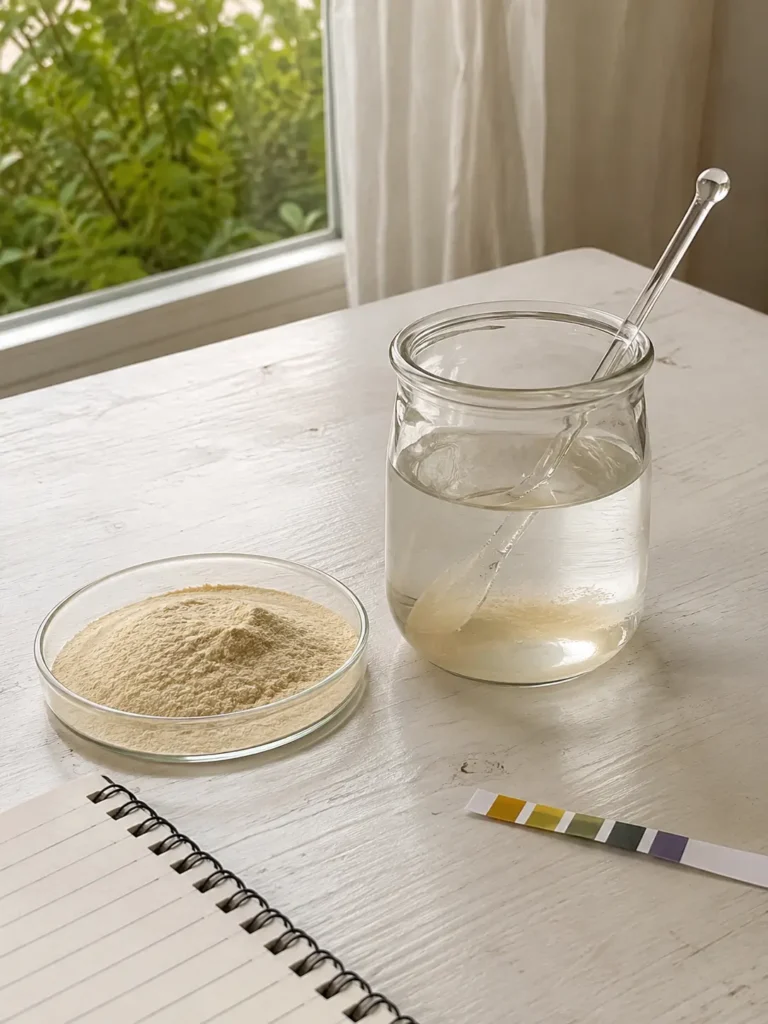
Native chitosan has many useful properties, but one characteristic creates a recurring formulation challenge: it does not readily dissolve in neutral water. Carboxymethyl Chitosan (CMC or CMCS) changes that behavior through a relatively small but important modification of the chitosan polymer. Carboxymethyl groups are introduced onto the chitosan structure. These groups increase hydrophilicity, add ionizable functionality, and change how the polymer interacts with water across different pH conditions. The result is a chitosan derivative that can provide much broader aqueous solubility than native chitosan. But the chemistry is more interesting than simply saying: “CMC is water soluble.” The actual solubility of a CMC material can depend on where carboxymethyl groups are attached, how extensively the polymer is substituted, pH, molecular characteristics, and the surrounding solution. Understanding those variables helps explain why different CMC grades do not always behave identically. Want to Test Water-Soluble Mushroom CMC? Understanding the chemistry is useful. Testing the actual grade is more important for formulation work. Chitosan Global’s Mushroom Carboxymethyl Chitosan is offered for aqueous formulation evaluation, with 25 g samples available for initial bench testing. Order a 25 g Mushroom Carboxymethyl Chitosan Sample For the broader material overview, visit the Mushroom Carboxymethyl Chitosan guide. First, Why Is Native Chitosan Difficult to Dissolve in Neutral Water? To understand why CMC behaves differently, start with native chitosan. Chitosan contains amino groups along its polymer backbone. Under sufficiently acidic conditions, these amino groups can become protonated: –NH₂ → –NH₃⁺ That positive charge increases interaction with the aqueous environment and allows chitosan to dissolve under appropriate acidic conditions. As pH increases, however, the amino groups become progressively deprotonated. The polymer loses much of the charge that supported its aqueous solubility. That is why native chitosan is commonly prepared using dilute acidic solutions rather than simply being added to neutral water. This behavior is not a manufacturing defect. It is part of the chemistry of native chitosan. Carboxymethylation changes that chemistry. What Does Carboxymethylation Add to Chitosan? Carboxymethyl Chitosan is produced by introducing carboxymethyl groups into the chitosan structure. A carboxymethyl group contains: –CH₂–COOH The important part for water behavior is the carboxyl functionality. Depending on pH, carboxyl groups can dissociate: –COOH ⇌ –COO⁻ + H⁺ Now compare the functional landscape. Native Chitosan Main ionizable functionality: Amino groups → –NH₂ / –NH₃⁺ Carboxymethyl Chitosan Contains both: Amino groups → –NH₂ / –NH₃⁺ and Carboxyl groups → –COOH / –COO⁻ That addition fundamentally changes the polymer’s interaction with water. Three Reasons Carboxymethylation Improves Water Solubility CMC’s aqueous behavior can be understood through three connected effects. 1. Carboxymethyl Groups Increase Hydrophilicity Water interacts most readily with chemical structures capable of favorable polar and ionic interactions. Introducing carboxymethyl groups adds additional hydrophilic functionality to the chitosan chain. This increases the polymer’s affinity for an aqueous environment. Instead of relying primarily on protonated amino groups under acidic conditions, the modified polymer now has additional sites capable of interacting strongly with water. This is one reason CMC can remain aqueous under conditions where native chitosan becomes difficult to dissolve. 2. Carboxyl Groups Can Become Negatively Charged As the pH rises, carboxyl groups can lose protons and exist in their ionized –COO⁻ form. These charged groups interact strongly with water. They can also increase electrostatic repulsion between sections of the polymer chain. That matters because polymer chains that associate tightly with one another can become difficult for water to separate and hydrate. Introducing ionized groups can help reduce those associations under suitable conditions and favor hydration of the polymer. 3. CMC Gains Amphoteric Character Carboxymethyl Chitosan is particularly interesting because it contains both acidic and basic functional groups. The amino groups can accept protons. The carboxyl groups can lose protons. CMC can therefore behave as an amphoteric polymer, with its net ionic character changing according to environmental conditions. Published reviews describe this amphoteric behavior as one of the defining differences between CMC and native chitosan. That helps explain why its pH-solubility profile can be considerably broader—but also why it should not be treated as completely pH-independent. The Location of the Carboxymethyl Group Matters “Carboxymethyl Chitosan” is actually a family of related structures rather than one perfectly uniform molecule. Carboxymethylation can occur at different reactive sites on the chitosan chain. This produces three commonly discussed categories. O-Carboxymethyl Chitosan (O-CMC) Carboxymethyl substitution occurs primarily on hydroxyl groups. The amino functionality is retained to a greater extent. N-Carboxymethyl Chitosan (N-CMC) Carboxymethyl groups are introduced through amino sites. This changes the amino functionality more directly. N,O-Carboxymethyl Chitosan (N,O-CMC) Substitution occurs at both nitrogen and oxygen sites. This creates a different balance of amino and carboxyl functionality. Why does this matter? Because the number and location of ionizable groups influence charge behavior and aqueous solubility. Therefore, two materials both labeled “CMC” may have different solution characteristics. Degree of Substitution: A Small Number With a Big Effect Another important concept is the Degree of Substitution (DS). DS describes the extent to which carboxymethyl groups have been introduced into the polymer. Think of the chitosan chain as having many possible modification sites. A lower level of substitution leaves more of the polymer behaving like the original chitosan. A higher level of appropriate substitution introduces more carboxymethyl functionality. This can influence: hydrophilicity; ionic character; pH response; intermolecular interactions; water solubility; and formulation behavior. Published research specifically identifies carboxymethylation degree as an important factor governing CMC water solubility at different pH values. This leads to an important sourcing rule: Do not evaluate CMC from the product name alone. When DS is relevant to your application, review the specification or batch documentation. Is Carboxymethyl Chitosan Soluble at Every pH? Not necessarily. This is where oversimplified descriptions of CMC can become misleading. CMC generally offers broader aqueous solubility than native chitosan, but individual CMC materials can have different pH-solubility profiles. Why? Because the charge state of the polymer changes with pH. At Lower pH Amino groups are more likely to be protonated: –NH₃⁺ Carboxyl groups are more likely to remain: –COOH As pH Increases Amino groups
Carboxymethyl Chitosan vs Native Chitosan: When Is Modification Actually Worth It?
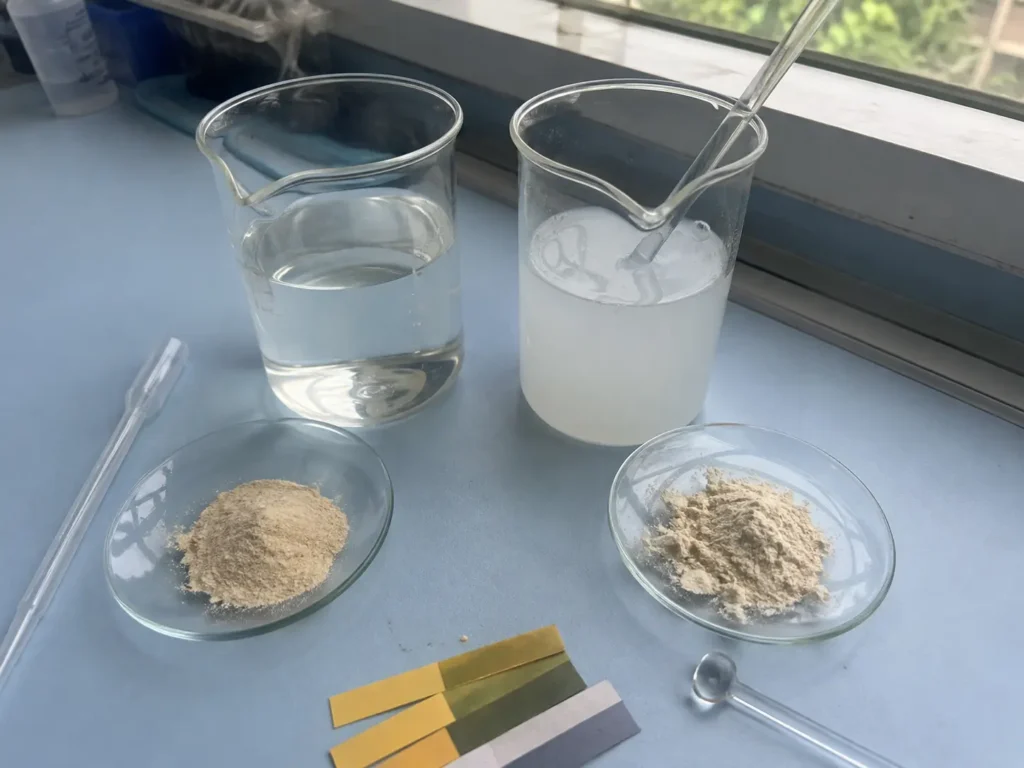
Native chitosan is where the material starts. Carboxymethyl Chitosan (CMC) is what happens when that starting polymer is deliberately modified to solve different formulation problems. That makes the choice between Carboxymethyl Chitosan vs Native Chitosan more interesting than a simple comparison of two powders. The real question is: Does your formulation actually need the additional functionality of CMC—or can native chitosan already do the job? For some applications, native chitosan is the simpler and more appropriate material. For others, its acid-dependent solubility becomes a processing limitation, and carboxymethylation can open a different formulation route. This guide compares the two materials from a practical selection perspective: chemistry, solubility, processing, charge behavior, formulation requirements, applications, and sourcing. Testing CMC for a New Formulation? If neutral-water processing is one of the reasons you are considering CMC, test the actual material before moving to production volume. Start with a 25 g Mushroom Carboxymethyl Chitosan sample, review the current specification and COA, then evaluate it under your formulation conditions. Order a 25 g Mushroom Carboxymethyl Chitosan Sample For the complete CMC overview, see the Mushroom Carboxymethyl Chitosan pillar guide. Start With the Polymer: What Changes During Carboxymethylation? Native chitosan is produced by deacetylating chitin. Its polymer chain contains amino and hydroxyl groups that contribute to the characteristic behavior of chitosan. Carboxymethyl Chitosan starts with that chitosan structure but introduces carboxymethyl groups through additional chemical modification. In simplified form: Chitin → Deacetylation → Native Chitosan Then: Native Chitosan → Carboxymethylation → Carboxymethyl Chitosan This extra step does more than change the product name. It alters the polymer’s functional-group profile and can substantially change how the material behaves in an aqueous formulation. So CMC should not simply be considered “better chitosan.” It is a different derivative designed for different formulation requirements. Carboxymethyl Chitosan vs Native Chitosan at a Glance Factor Native Chitosan Carboxymethyl Chitosan Polymer Form Base/unmodified chitosan Chemically modified chitosan derivative Key Groups Primarily amino and hydroxyl groups Amino, hydroxyl and introduced carboxymethyl functionality Neutral-Water Solubility Generally limited Broader aqueous solubility for appropriately specified grades Typical Dissolution Route Usually requires dilute acidic conditions Can allow direct aqueous processing depending on grade Ionic Character Primarily cationic when amino groups are protonated Amphoteric behavior from amino and carboxyl functionality Important Specifications DDA, MW, viscosity, purity DS, substitution pattern, MW, DDA, viscosity, purity Processing Complexity Acid dissolution may be required Can simplify some water-based formulation workflows Cost/Processing Generally simpler derivative state Additional chemical modification required Material Selection Useful when conventional chitosan behavior fits Useful when added water compatibility/functionality is required The table describes general material differences. Actual performance should always be confirmed from the specification and batch documentation of the grade being evaluated. The Biggest Practical Difference: What Happens When the Powder Meets Water? This is often where the decision begins. Imagine two beakers on an R&D bench. One contains purified water and Native Chitosan. The other contains purified water and an appropriately specified Carboxymethyl Chitosan grade. The difference can become immediately relevant. Native Chitosan Native chitosan is generally not directly soluble in neutral water. Its amino groups become protonated under acidic conditions, which enables dissolution. Formulators therefore commonly use dilute organic or mineral acid systems when preparing native chitosan solutions. A simplified workflow may look like: Native Chitosan → Acidified Water → Mixing/Hydration → Dissolution → Further Formulation This is not necessarily a disadvantage. If your process already operates under compatible acidic conditions, native chitosan may work perfectly well. Carboxymethyl Chitosan Carboxymethylation introduces additional hydrophilic and ionizable groups into the polymer. Appropriately specified CMC grades can therefore offer much broader aqueous processability than native chitosan. The workflow can become: CMC → Water → Hydration/Dissolution → Formulation For a detailed formulation discussion, read Water-Soluble Carboxymethyl Chitosan. For the underlying mechanism, see Why Carboxymethyl Chitosan Is Water Soluble. But Is Easier Water Solubility Enough Reason to Choose CMC? Not always. This is an important purchasing distinction. If your formulation already contains an acidic aqueous phase and native chitosan dissolves successfully, changing to CMC may introduce complexity without solving a meaningful problem. Ask: Does acid interfere with another ingredient? If yes, broader aqueous processability may make CMC worth investigating. Must the finished formulation remain near neutral pH? CMC may offer an advantage depending on the grade and complete formulation. Does the process already use acidic conditions? Native chitosan may remain entirely practical. Do you specifically need carboxyl functionality? Then CMC provides something native chitosan does not. Are you changing materials only because “water soluble” sounds better? That alone is not enough. The best derivative is the one that removes a real formulation constraint. Charge Behavior: CMC Is Not Simply Soluble Native Chitosan Water solubility receives most of the attention, but functional-group chemistry may be more important. Native chitosan contains amino groups that can become protonated. Under appropriate acidic conditions, this gives chitosan its characteristic cationic behavior. Carboxymethyl Chitosan introduces carboxyl-containing groups while retaining other functional groups from the chitosan backbone. As pH changes, these different groups can ionize differently. CMC can therefore exhibit amphoteric behavior. That matters when the polymer is expected to interact with: another charged polymer; proteins; ions; active compounds; crosslinkers; particles; surfaces; or biological molecules in research systems. If those interactions are central to your application, selecting between CMC and native chitosan becomes a polymer-functionality decision, not just a solubility decision. When Native Chitosan May Be the Smarter Choice Derivative development often creates a temptation to assume that greater modification means greater performance. That is not how material selection works. Native chitosan can remain the better starting point in several situations. 1. Your Process Already Works Under Acidic Conditions If acidification is compatible with the formulation and manufacturing process, native chitosan’s dissolution requirements may not create a significant obstacle. Why pay for functionality you do not need? 2. You Specifically Need Conventional Chitosan Chemistry Some applications and established formulations are designed around the protonated amino functionality of native chitosan. Changing the polymer may alter those interactions. 3. You Are Reproducing Existing Research If a validated research protocol
Carboxymethyl Chitosan vs Chitosan Hydrochloride: Which Water-Soluble Chitosan Should You Choose?
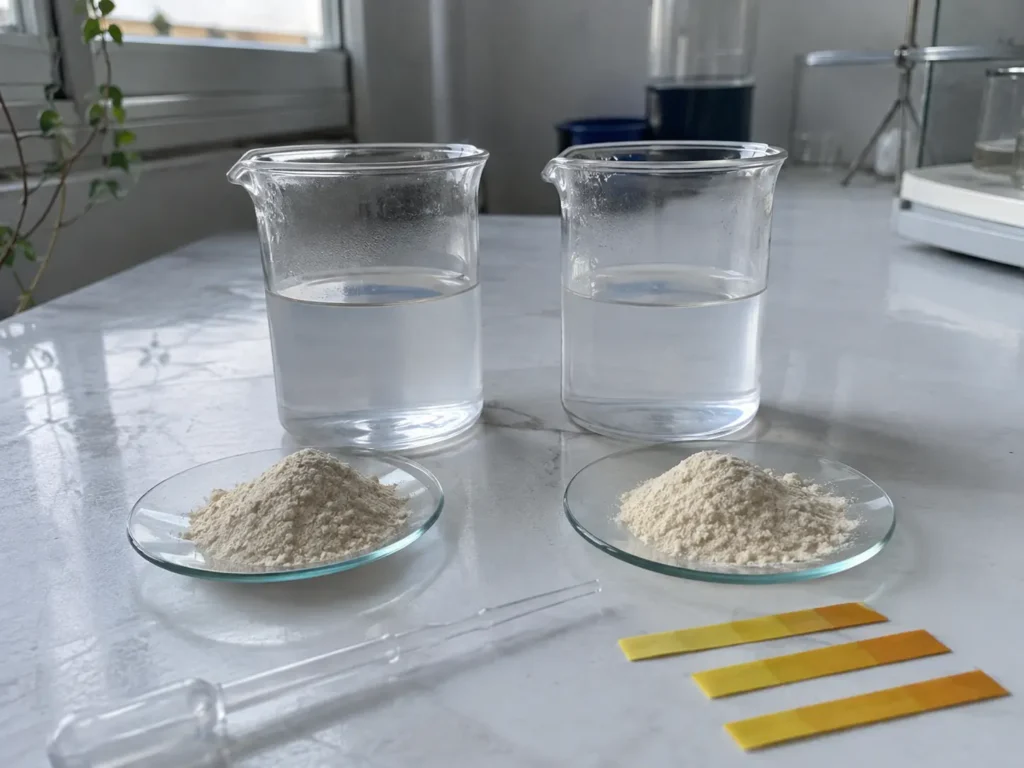
When native chitosan does not fit an aqueous formulation, two alternatives often appear on the shortlist: Carboxymethyl Chitosan (CMC) and Chitosan Hydrochloride (Chitosan HCl). Both can make chitosan easier to work with in water-based systems, but choosing between them based only on “water solubility” misses the most important difference. Carboxymethyl Chitosan changes the functionality of the polymer. Chitosan Hydrochloride changes chitosan into a salt form. That distinction affects charge behavior, formulation interactions, processing, and ultimately which derivative makes more sense for a particular application. This comparison is designed to help formulators, researchers, and technical buyers decide which material deserves the first bench test. Already Comparing Materials? Test Before You Scale Specifications can narrow the choice, but your formulation should make the final decision. For mushroom-derived CMC, review the current specification and start with a 25 g laboratory sample before moving to pilot or bulk quantities. View Mushroom Carboxymethyl Chitosan & Order a 25 g Sample You can also review the Mushroom Carboxymethyl Chitosan technical guide for broader information on the derivative. The Difference in One Minute The easiest way to distinguish these materials is to ask what happened to the original chitosan molecule? Carboxymethyl Chitosan CMC is produced by introducing carboxymethyl groups into chitosan. Depending on the synthesis route, substitution can occur at amino and/or hydroxyl sites. The resulting polymer contains both amino and carboxyl functionality, giving CMC an amphoteric character and broader aqueous behavior than native chitosan. Chitosan Hydrochloride Chitosan HCl takes a different route. Instead of introducing carboxymethyl groups, chitosan is converted into its hydrochloride salt. Protonation of amino groups improves aqueous handling compared with native chitosan. The underlying distinction is therefore: CMC = chemically functionalized chitosan derivative Chitosan HCl = hydrochloride salt of chitosan That difference is more useful for material selection than simply labeling both products “water-soluble chitosan.” CMC vs Chitosan HCl: Quick Comparison Property Carboxymethyl Chitosan Chitosan Hydrochloride Material Type Carboxymethylated chitosan derivative Hydrochloride salt of chitosan Key Functional Groups Amino + introduced carboxymethyl groups Protonated amino groups associated with HCl Charge Character Amphoteric; behavior varies with pH and substitution Predominantly cationic under relevant aqueous conditions Aqueous Processing Designed for broader water compatibility Easier aqueous handling than native chitosan Need for Separate Acid Dissolution Often avoided with appropriately specified grades Generally avoided because chitosan is supplied as the HCl salt Important Selection Variables DS, substitution pattern, MW, DDA, pH, viscosity DDA, MW, concentration, pH, viscosity Common Research Direction Hydrogels, delivery matrices, films, coatings, food materials Cationic formulations, delivery research, cosmetics, agriculture, coatings Best Selection Method Specification + COA + formulation test Specification + COA + formulation test The table is a selection guide rather than a universal specification. Commercial grades can differ considerably. The Real Decision: Do You Need Solubility or New Functionality? This is where the comparison becomes useful. Suppose your problem is simple: “Native chitosan requires an acidic dissolution step, but I need easier incorporation into an aqueous formulation.” A Chitosan Hydrochloride grade may deserve evaluation because converting chitosan to its HCl salt addresses that processing constraint without introducing the carboxymethyl functionality characteristic of CMC. Now consider a different requirement: “I need an aqueous chitosan derivative with amino and carboxyl functionality for a hydrogel, polymer network, coating, or delivery matrix.” In that case, Carboxymethyl Chitosan may be the more logical material to investigate. So the first decision should not be: Which one dissolves better? It should be: What polymer behavior does the finished system require after dissolution? Water Solubility: Similar Goal, Different Chemistry Both materials are considered when native chitosan’s limited neutral-water solubility becomes inconvenient. But they reach improved aqueous processability through different chemical routes. How CMC Approaches the Problem Carboxymethyl groups increase hydrophilic and ionizable functionality within the chitosan structure. The degree and position of substitution can influence the resulting polymer’s aqueous behavior. This is why “CMC” should not be treated as one perfectly uniform material. For a formulation-focused discussion, see Water-Soluble Carboxymethyl Chitosan. If you want the chemistry behind the behavior, read Why Carboxymethyl Chitosan Is Water Soluble. How Chitosan HCl Approaches the Problem Chitosan Hydrochloride is supplied with the amino groups protonated as the hydrochloride salt, making aqueous incorporation easier than with conventional native chitosan. It can therefore be useful when the formulator wants to retain a strongly cationic chitosan character while avoiding a separate acid-dissolution step. However, “water soluble” should never be interpreted as “behaves identically in every formulation.” Concentration, molecular weight, pH, ionic strength, and interacting ingredients still matter. Charge Behavior May Be the Bigger Difference For many formulations, charge matters more than the initial dissolution step. CMC contains amino and carboxyl functionality. As environmental pH changes, the ionization of those groups can change. That gives the polymer amphoteric behavior and creates opportunities for pH-responsive interactions, complex formation, and polymer-network design. Chitosan HCl retains the amino-based cationic character associated with protonated chitosan. This distinction can become important when the formulation also contains: negatively charged polymers; proteins; surfactants; salts; active compounds; crosslinking agents; or other ionic ingredients. A material that dissolves beautifully in pure water can behave very differently once it encounters the rest of the formulation. Do not select the derivative from a solubility test alone. When Carboxymethyl Chitosan May Be the Better Starting Point CMC deserves consideration when the carboxymethyl functionality itself contributes to the formulation strategy. 1. Hydrogel Development Carboxymethyl Chitosan has been widely investigated as a building block for hydrogel systems. Its functional groups provide multiple possibilities for polymer interactions and crosslinking strategies, while aqueous processability can make hydrogel preparation more convenient. Researchers evaluate CMC-based hydrogels for properties such as swelling, mechanical behavior, adhesion, encapsulation, and controlled release. Explore this application in Carboxymethyl Chitosan for Hydrogels. 2. Drug-Delivery Research CMC has also been investigated in polymeric delivery systems, including hydrogels, nanoparticles, and other carrier architectures. The attraction is not simply that it enters water. Its functional groups can participate in interactions that are useful when designing a delivery matrix. Read the dedicated Carboxymethyl Chitosan for Drug Delivery guide for the research context. 3. Films