
Chitosan Oligosaccharide Hydrochloride AG: What the Charge Density, Molecular Weight, and Deacetylation Numbers on a Spec Sheet Actually Mean for Your Formulation
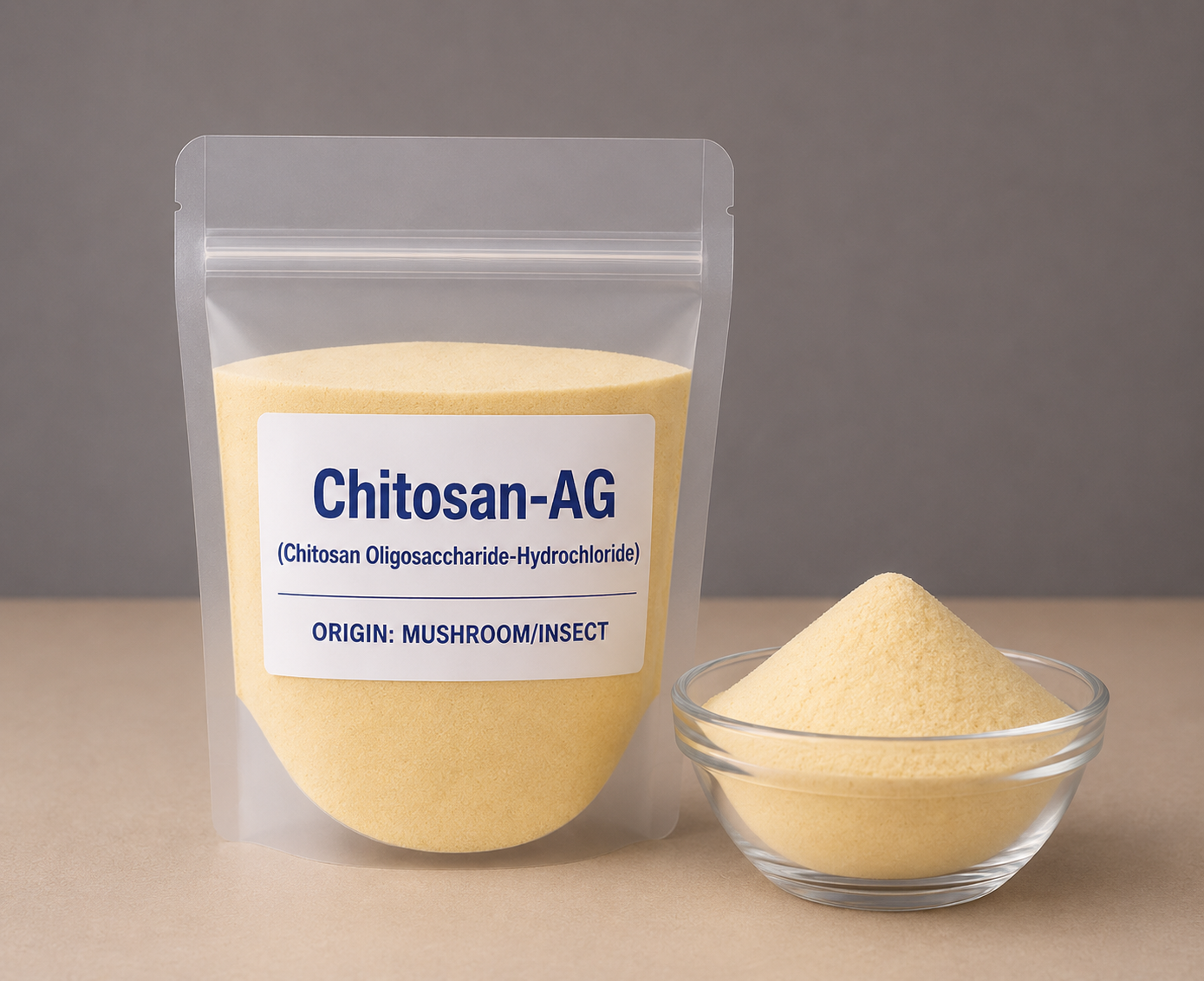
Most technical data sheets for agricultural chitosan give you five numbers molecular weight, degree of deacetylation, charge density, pH, solubility and leave you to figure out what they mean for tank-mix stability, uptake speed, or field performance. This guide fills that gap. It’s a practical, evidence-based reference on Chitosan Oligosaccharide Hydrochloride (Chitosan AG), the salt-form, low-molecular-weight chitosan oligosaccharide used in biostimulants, seed treatments, and crop protection formulations. If you want to see how a specific batch behaves before you commit to a formulation run, you can buy a 25 g laboratory sample from our Shop and evaluate it against your own tank-mix and dosing protocol before scaling up.
Everything below is written for the people who actually have to make chitosan work in a product: agronomists selecting an input, formulation scientists building a spray or seed-coat blend, feed and biostimulant manufacturers writing specifications, and procurement teams trying to compare suppliers on something more rigorous than a marketing claim.
- All
- Chitosan Oligosaccharide Hydrochloride
1. First, Decode the Spec Sheet: What “COS-HCl” Actually Is
Chitosan Oligosaccharide Hydrochloride is not a separate raw material. it’s a specific processing state of chitin. The lineage matters, because each step changes what the molecule can do.
Chitin (found in crustacean shells, insect exoskeletons, and fungal cell walls) is deacetylated with alkali to produce chitosan, a long-chain polymer that is only soluble in dilute acid. Chitosan is then hydrolyzed enzymatically or chemically into much shorter chains: chitosan oligosaccharide (COS), typically defined as chains under roughly 3,000–3,900 Da, corresponding to a degree of polymerization of about 2–20 glucosamine units COS has low molecular weight (Mw), higher degree of deacetylation (DD), higher degree of polymerization (DP), less viscous and complete water solubility compared to its parent biomaterials. That shift from polymer to oligomer is what unlocks full water solubility, higher cationic charge density, and easier absorption by plant tissue.
The hydrochloride designation refers to how the amine groups on the glucosamine backbone are salted with hydrochloric acid rather than acetic, lactic, or citric acid. Chitosan’s cationic behavior comes from protonation of its free amine (–NH₂) groups; the resulting polymer forms water-soluble salts with acids such as HCl, acetic acid, and glycolic acid. The HCl salt form is prized in agricultural formulation because it dissolves rapidly and cleanly in water without the residual odor of acetic acid-based chitosan, which matters when the material is going into a spray tank or a seed-coating slurry that will sit in equipment for hours.
Chitosan AG at a glance:
| Parameter | Typical Specification |
|---|---|
| Molecular weight | < 3,000 Da (low-molecular-weight oligomer) |
| Degree of deacetylation (DDA) | ≥ 90% |
| Charge density (zeta potential) | ≈ +70 mV |
| pH (1% solution) | 5.0–6.5 |
| Solubility | Fully water-soluble |
| Salt form | Hydrochloride |
| Available origin | Mushroom or insect chitin |
If your formulation needs the full documentation behind these numbers, every batch ships with a Certificate of Analysis and MSDS available on the product page so you can verify specs before committing to a production run.
2. Why Charge Density Is the Number Formulators Should Actually Watch
Of all the numbers on a COS spec sheet, charge density (zeta potential) gets the least attention and probably deserves the most. Here’s why it matters mechanistically.
Microbial cell membranes and fungal spore surfaces carry a net negative charge. So do the outer layers of many plant cell walls. A chitosan oligosaccharide with a strong positive charge roughly +70 mV in the hydrochloride form interacts electrostatically with both, which is the physical basis for two of its most-cited functions: membrane disruption in target pathogens, and receptor-level recognition at the plant cell surface.
On the plant side, this recognition event is well documented in the plant immunology literature. Plants carry pattern-recognition receptors (PRRs) that detect conserved microbial signatures PAMPs such as flg22, elf18, lipopolysaccharide, and oligosaccharides are potent plant immunity elicitors that initiate pattern-triggered immunity (PTI) and enhance plant innate resistance. Chitosan oligosaccharide fits this pattern: the polysaccharide chitosan is one of the most effective resistance stimulators, and the most common working model suggests induction of nonspecific PAMP recognition, an immune system involving a number of interrelated signaling cascades. Structurally, it behaves as an archetypal general elicitor and typical fungal MAMP that induces defense responses across a broad host range, including plants, insects, mice, and humans.
What follows recognition isn’t a one-time reaction it’s priming. Elicitor-induced resistance involves fine regulation of multiple biological processes, including transcriptional, metabolic, physiological, and epigenetic reprogramming, and the immune system in elicitor-pretreated plants can be temporarily and even trans-generationally adjusted to a “primed state”. Primed plants activate defense responses more rapidly and more strongly when pathogens actually attack, compared to untreated plants. This is the scientific basis for using COS as a preventive input rather than a curative one it’s most valuable applied before disease pressure arrives, which has direct implications for spray-timing decisions discussed in Section 6.
A caveat worth building into your formulation notes: elicitor activity is not simply “more charge, more effect.” COS activity depends on molecular structure the degree of polymerization, the fraction of acetylation, and even the pattern of acetylation can dramatically alter COS efficacy, and small differences in acetyl content can switch a plant response from defense activation to no effect at all. This is precisely why batch-to-batch consistency in DDA and molecular weight distribution not just the headline charge-density number is worth verifying with a COA rather than assumed from a product name.
3. Molecular Weight and DDA: The Two Dials That Actually Control Performance
If charge density explains how COS interacts with cells, molecular weight and degree of deacetylation explain how much of it gets there and how strongly it acts once it arrives.
Molecular weight controls uptake and mobility. High molecular weight, high viscosity, and poor solubility at physiological pH restrict chitosan’s practical use, and intestinal (or in the plant context, tissue-level) absorption of low-molecular-weight chitosan is significantly better than that of high-molecular-weight chitosan. This is the same reason pharmaceutical researchers hydrolyze chitosan before using it in delivery systems, and it’s the reason agricultural formulators favor sub-3,000 Da material for foliar and seed applications where fast tissue penetration is the goal.
Degree of deacetylation controls both solubility and charge. Solubility of hydrolyzed chitosan is governed in large part by the degree of deacetylation of the polymer more free amine groups mean more sites available for protonation, which is what drives water solubility and cationic charge simultaneously. It’s also why commercial COS is deliberately hydrolyzed to a higher DDA than the chitosan it came from: compared to chitosan and chitin, COS has lower molecular weight, lower degree of polymerization, higher degree of deacetylation, less viscosity, and more solubility, along with better tissue absorbability and biodegradability.
Neither variable acts alone, and research on this is more nuanced than most spec sheets suggest. In one detailed structural study, chitosan oligosaccharides fractionated by molecular weight and DDA showed materially different behavior depending on both variables simultaneously, not either one independently a mixture dominated by trimers through pentamers (DDA up to 100%) behaved differently from a heavier fraction containing hexamers through pentadecamers at roughly 87.5% DDA. Elsewhere, in a growth-promotion study on rice, the best results were obtained for an oligomer with 80% degree of deacetylation applied at 40 mg/L a lower DDA than the ≥90% typical of agriculture-grade Chitosan AG, illustrating that “higher DDA is always better” is an oversimplification and that crop- and application-specific validation matters more than chasing the highest number on a spec sheet.
The practical takeaway for buyers: treat MW, DDA, and charge density as a linked system, not three independent marketing bullet points. A COA that reports all three and reports them consistently between batches is a stronger signal of a controlled, scalable process than any single headline spec.
4. Chitosan Polymer vs. Chitosan Oligosaccharide vs. COS-Hydrochloride
Buyers new to the category often assume “chitosan” is a single ingredient. In practice, it’s a spectrum, and where a product sits on that spectrum determines what it’s good for.
| Property | High-MW Chitosan (Polymer) | Chitosan Oligosaccharide (COS) | COS Hydrochloride (Chitosan AG) |
|---|---|---|---|
| Typical MW | 4–2,000 kDa | < 10 kDa | < 3,000 Da |
| Water solubility | Only in dilute acid | Water-soluble | Fully water-soluble at neutral-ish pH |
| Viscosity | High | Low | Very low |
| Typical DDA | 66–95% | Often >85% | ≥90% |
| Uptake speed | Slow, surface-limited | Fast | Fast |
| Best-suited use | Film coatings, soil conditioning, slow-release matrices | Foliar/seed/root biostimulant, elicitor | Foliar/seed/root, tank-mix-sensitive formulations, spray systems requiring rapid, complete dissolution |
| Formulation risk | Can gel or precipitate; acidic pH may stress sensitive crops | Generally low phytotoxicity | Low phytotoxicity; salt form dissolves cleanly without residual acid odor |
Independent comparisons back this pattern up: foliar application of chitosan oligosaccharide at 50–200 ppm induces systemic acquired resistance by activating defense-related enzymes such as chitinase and peroxidase, and unlike acidic chitosan liquid which can cause phytotoxicity at higher concentrations COS is closer to pH-neutral and safer for sensitive crops. For a deeper technical comparison of oligosaccharide and higher-molecular-weight formats including where blending the two can outperform either alone see our related resource on Chitosan for Agriculture and Plant Protection Systems.
5. Two Raw Material Origins, One Molecule: Mushroom vs. Insect Chitosan AG
Chitosan AG is available sourced from mushroom (fungal) chitin or insect chitin, and the choice is not cosmetic it affects regulatory positioning, supply consistency, and go-to-market story.
Fungal-derived chitosan is extracted from mycelial cell walls rather than crustacean shells, and it is increasingly positioned as a premium, allergen-conscious alternative. Mushroom chitosan has a more uniform structure, better-defined properties, and lower heavy-metal content compared to shellfish chitosan, and because it doesn’t touch crustacean biomass at any stage, it carries no risk of triggering shellfish allergies and is suitable for vegan and vegetarian formulation claims. Fungal biomass is also cultivated in controlled environments rather than harvested seasonally, which supports more predictable year-round supply.
Insect-derived chitosan, typically from black soldier fly or other farmed insect biomass, is a newer but fast-growing feedstock category. Regulatory tailwinds are real: approval of insect-derived chitin under the EU Novel Food Regulation framework is expected to reshape global supply chains and raw material pricing, and insect sourcing is scaling quickly enough that industry analysts project it will account for a meaningful share of source-segment demand, driven partly by growing EU regulatory acceptance.
Decision framework:
| If your priority is… | Consider… |
|---|---|
| Vegan/allergen-free label claims for downstream retail products | Mushroom origin |
| Consistent, non-seasonal raw material supply | Either both are cultivated/farmed, not wild-harvested |
| Lowest landed cost at scale | Compare current quotes pricing between origins shifts with feedstock markets |
| Matching an existing insect-protein or circular-economy supply chain narrative | Insect origin |
| EU market entry timeline | Confirm current Novel Food regulatory status for your specific target country |
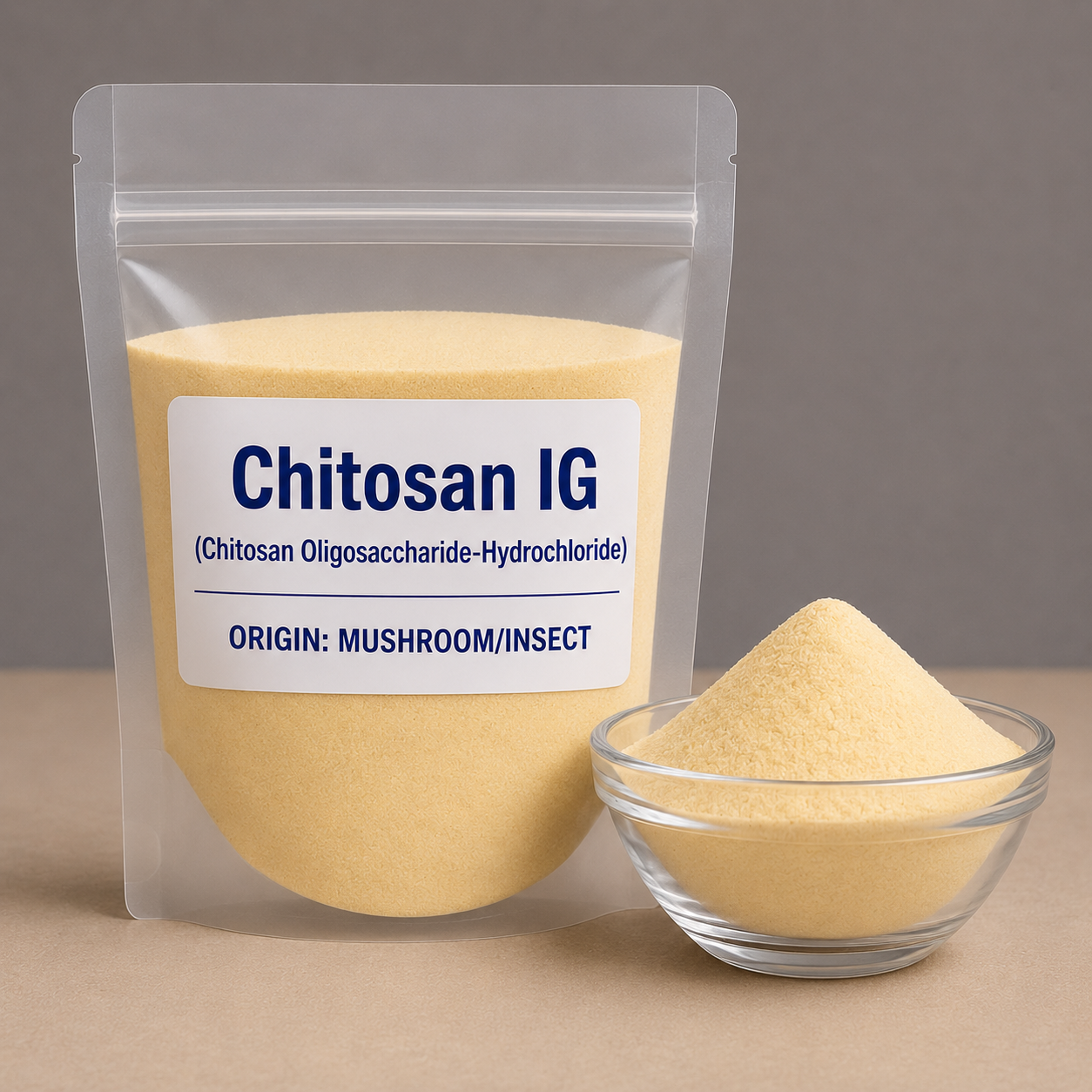
Both origins meet the same ≥90% DDA / ~70 mV charge density / <3,000 Da specification for Chitosan AG the functional chemistry is equivalent; the sourcing story and documentation trail are what differ. You can compare both source options directly on the product page, and if your formulation calls for an even higher-charge-density variant, our Chitosan IG grade is worth comparing side by side.
6. What COS Actually Does Inside a Plant — Three Distinct Mechanisms
It’s easy to see “biostimulant, elicitor, and growth promoter” listed together and assume they’re the same mechanism described three ways. They’re not. COS operates through at least three distinguishable pathways, and understanding which one you’re targeting should drive your dosing and timing strategy.
Mechanism 1: Defense priming (elicitor activity)
As covered in Section 2, COS is recognized by plant pattern-recognition receptors and triggers salicylic acid and jasmonic acid signaling cascades. This activates production of pathogenesis-related (PR) proteins and defense enzymes defensive enzyme activity and phenolic accumulation increase following oligochitosan treatment, and inducible defense responses include cell wall reinforcement through lignin deposition, the hypersensitive response, phytoalexin biosynthesis, and elevated activity of enzymes such as phenylalanine ammonia lyase, polyphenol oxidase, peroxidase, chitinase, and glucanase. Field-level results reflect this: in one cross-trial comparison, foliar COS sprays reduced gray mold (Botrytis cinerea) on tomatoes by roughly 30% in trials across China and Brazil, and reduced powdery mildew on cucumbers by roughly 25% in Mediterranean greenhouse trials.
Mechanism 2: Direct growth and metabolic stimulation
Independent of pathogen pressure, COS measurably shifts hormone balance and cell division activity. In one nanoparticle-primed seed trial on soybean, chitosan-based priming increased final germination percentage, peak germination percentage, vigor index, seedling biomass, hypocotyl length, and radical length while decreasing mean germination time and this was linked to up-regulated gibberellic-acid-related gene expression alongside down-regulated abscisic-acid-related gene expression. On ryegrass seed specifically, COS treatment has been shown to increase the germination index by 33.5% and the vitality index by 59.5%.
Mechanism 3: Abiotic stress mitigation
COS also modulates how plants respond to drought, salinity, and temperature stress, largely through the same hormone-signaling machinery that governs germination timing. This is the mechanistic basis for using COS in stress-prone growing regions rather than only in disease-prone ones, and it’s part of why field data on COS spans everything from tropical rice paddies to Mediterranean drought trials.
7. Dosing Chitosan AG: A Practical Field Reference
Published dose-response data for chitosan and COS varies by an order of magnitude across studies which is exactly why generic “use X ppm” advice from a data sheet is a starting point, not a finished protocol. The ranges below summarize what’s documented in the literature; validate against your own crop, formulation, and local conditions before scaling to a full field program.
Foliar spray
| Study / Context | Concentration | Result |
|---|---|---|
| Okra, fruit yield | 25–125 ppm | 25 ppm produced the highest fruit yield increase (27.9% over control); gains were not statistically significant above 100 ppm |
| Rice, growth & yield | 100 / 300 / 500 ppm | 500 ppm combined with conventional fertilization produced the greatest gains in plant height, tiller number, dry matter, leaf area index, and chlorophyll content |
| Vegetable crops (review) | 100 ppm | 100 ppm foliar chitosan produced the best results across multiple vegetable growth parameters reviewed |
| Maize, early growth | 50–125 ppm | The two highest tested concentrations produced the greatest seed yields |
| Chitosan Global spec | 50–100 ppm | Standard starting range for Chitosan AG foliar programs (see product page for full protocol) |
Seed treatment
| Study / Context | Concentration | Result |
|---|---|---|
| Lentil, priming | 0.5–2.0% chitosan / 50–300 ppm nano-chitosan | 0.5% chitosan priming significantly improved seedling growth, hydrolytic enzyme activity, and vigor indices versus non-primed seed |
| Lettuce, priming | 0.01–1 mg/mL | earlier germination and increased root branching observed at 0.1 mg/mL, with fresh-weight gains of 100% and 67% at 24 and 38 days after sowing |
| Wheat, seed treatment | 60–1,000 µg/g seed | optimal results were obtained at 250 µg chitosan per gram of seed, with stem diameter enhanced by roughly 10% |
| Chitosan Global spec | 0.2–0.5% solution | Standard starting range for Chitosan AG seed treatment |
Soil application
Recommended starting rate: 1–2 kg/ha, aimed primarily at improving root-zone microbial balance and nutrient cycling rather than delivering a direct foliar-style dose. Soil-applied COS works over a longer timescale than foliar or seed applications, so results are typically measured across a full growing season rather than in the first weeks after application.
A practical note on the spread in the data above: dose-response studies use different chitosan formats (polymer vs. oligomer), different molecular weights, different crops, and different measurement endpoints which is exactly why the numbers don’t converge on one “correct” figure. The consistent pattern across nearly all of them is a mid-range optimum: very low doses under-deliver, and doses far above ~500 ppm foliar or ~1% seed treatment rarely produce proportional additional benefit and can occasionally reduce it. Small-plot trials at 2–3 concentrations bracketing the ranges above are the fastest way to find your product’s specific optimum.
Need a dosing protocol matched to your exact crop and delivery system? Our technical team can help contact us to request formulation guidance alongside your sample order.
8. Formulation Compatibility and Handling Notes
Because Chitosan AG is a cationic polymer, tank-mix chemistry matters more than with many other biostimulant inputs.
- pH stability: Chitosan AG is stable and fully soluble in the mildly acidic-to-neutral range (pH 5.0–6.5 as a 1% solution). Strongly alkaline tank-mix partners can deprotonate the amine groups and cause the polymer to fall out of solution this is the same underlying chemistry that makes chitosan hydrochloride precipitate in neutral-to-alkaline environments due to deprotonation of the amino groups, becoming turbid if pH is raised to neutral. Screen alkaline fertilizers and adjuvants before committing to a tank mix.
- Storage: Store the dry powder in a cool, dry environment away from moisture; typical shelf life is 24 months unopened.
- Dispersion: COS-HCl dissolves rapidly with standard agitation no pre-dissolving in acid is required, unlike free-base high-molecular-weight chitosan.
- Compatibility testing: As with any cationic ingredient, jar-test new tank-mix combinations (especially anionic surfactants or highly alkaline micronutrient chelates) before full-batch production.
9. Beyond the Field: The Same Molecule Class in Animal Nutrition
Because Chitosan AG and its close relatives are simply different processing grades of the same chitosan oligosaccharide chemistry, the underlying mode of action cationic membrane interaction plus immune-pathway activation carries over into livestock and aquaculture nutrition, where COS is increasingly used as a gut-health and natural antibiotic-alternative additive. If animal nutrition or feed-grade sourcing is part of your product line, our related resources cover chitosan oligosaccharide in poultry feed, chitosan as a feed additive for pig growth performance, chitosan for shrimp immunity in aquaculture, and the broader case for natural alternatives to antibiotics in feed and improving feed conversion ratio (FCR) naturally with chitosan.
10. Market Context: Why Demand for This Molecule Class Is Accelerating
Independent market analysts consistently point to the same three growth drivers behind rising COS demand: expanding organic and biostimulant-compatible farming regulation, diversification of raw material sourcing beyond crustacean shells, and increasing peer-reviewed evidence supporting its bioactivity. Growers are adopting chitosan-based biostimulants and crop protection solutions at an increasing rate, particularly in organic-certified horticulture, while feedstock diversification historically dominated by marine chitin is increasingly shifting toward insect-derived chitin as a fast-growing alternative source. Regionally, China has been identified as the fastest-growing country market for chitosan oligosaccharides, combining established marine chitosan processing infrastructure with rapidly expanding domestic biostimulant and functional food application markets.
For formulators and procurement teams, the practical implication is straightforward: this is not a niche specialty input on a shrinking curve it’s a category with active investment in supply diversification (mushroom and insect sourcing specifically), which is good news for long-term price and supply stability if you’re building it into a multi-year product roadmap.
11. Frequently Asked Questions
Is Chitosan Oligosaccharide Hydrochloride the same thing as regular chitosan? No. Chitosan is the parent polymer larger, only soluble in dilute acid. Chitosan Oligosaccharide Hydrochloride is a hydrolyzed, low-molecular-weight (<3,000 Da) fragment of that polymer, salted with hydrochloric acid, which makes it fully water-soluble and more readily absorbed by plant tissue than the parent polymer.
Why does the hydrochloride form matter specifically? The salt form determines how cleanly the material dissolves and how stable that solution is across a working pH range. HCl is a common, well-characterized counter-ion that supports rapid dissolution without the residual odor associated with acetic-acid-based chitosan solutions.
Is mushroom-origin or insect-origin Chitosan AG more effective? Functionally, both meet the same specification (≥90% DDA, ~70 mV charge density, <3,000 Da), so the chemistry performs equivalently in most applications. The choice is typically driven by label claims (vegan/allergen-free positioning favors mushroom origin), regulatory pathway (insect chitin has specific EU Novel Food considerations), and current sourcing economics.
What’s the right dose for my crop? Published research spans roughly 25–500 ppm for foliar applications and 0.2–2% for seed treatments, with most crops showing a mid-range optimum rather than a “more is better” response. Because response curves vary by crop and formulation, a small bracketed field trial at 2–3 concentrations is the most reliable way to confirm your specific optimum our technical team can help design one.
Can Chitosan AG replace synthetic fungicides or fertilizers outright? No, it functions as a biostimulant and defense-priming agent, not a direct substitute for fertility or curative disease control. It’s most effective as a preventive, integrated input applied before disease pressure arrives, alongside (not instead of) a standard nutrition and IPM program.
How should I store it, and what’s the shelf life? Store the dry powder in a cool, dry location away from moisture. Typical shelf life is 24 months unopened.
Where to Go From Here
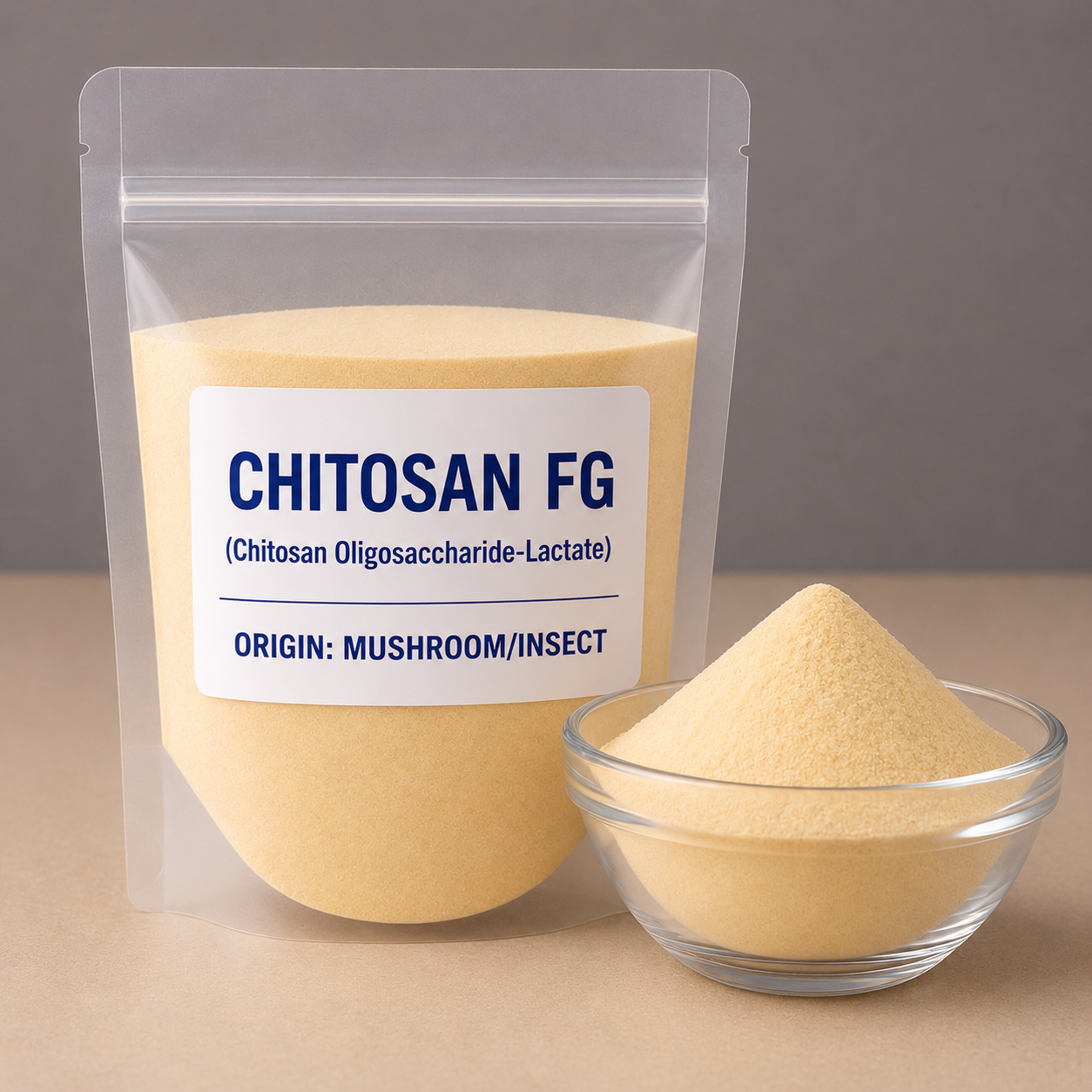
If the chemistry and dosing evidence above line up with what your formulation needs, the fastest way to validate it is in your own tank mix or seed-coating line not on a spec sheet. You can order a 25 g laboratory sample from our Shop, download the current COA to check batch-level specs before you order, or request bulk pricing and a custom quote if you’re already scaling past sample volume. For side-by-side comparisons against related grades, see Chitosan Oligosaccharide Hydrochloride (Chitosan IG), Chitosan FG, Chitosan 36-AS, and Chitosan 36-WS or contact our technical team directly with your formulation and dosing questions.
You May Also Like
- All
- Chitosan Oligosaccharide Hydrochloride
Get in Touch
Technical & Custom Solutions
Abhinav Chauhan, PhD – Application Scientist
Stephen Nice – Application Scientist