
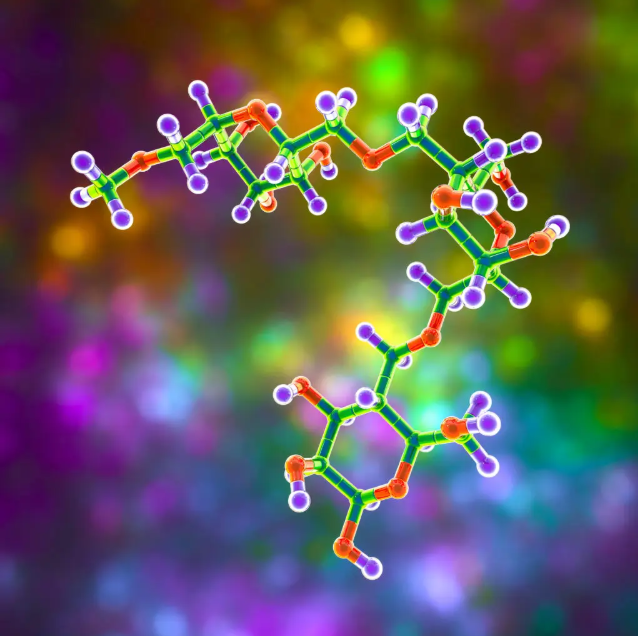
Advanced Bioactives in Cosmetics
Melanin, Chitosan & Antimicrobial Peptides
Overview
Emerging cosmetic formulations are harnessing nature-derived, biofunctional materials that offer multifunctional skin benefits. Among the most promising are melanin, chitosan and its derivatives, and antimicrobial peptides (AMPs). These components represent a significant shift towards “clean beauty” solutions that do not compromise on efficacy.
Each material offers unique properties: melanin for photoprotection and antioxidation; chitosan for bioadhesion, hydration, and skin lightening; and AMPs for targeted antimicrobial and regenerative effects. Together, they form a powerful, synergistic toolkit for next-generation cosmetics aimed at anti-pigmentation, skin protection, and bioactive delivery. The combination enables the development of self-preserving, skin-shielding, and regeneratively active formulations—the future of sustainable, high-performance cosmetics.
1. Melanin: UV Filtering and Anti-Pigmentation Barrier
Mechanism & Benefits
- Broad-spectrum UV absorption: Melanin and its analogs dissipate UV energy as heat, preventing DNA damage and overproduction in the skin.
- Antioxidant action: Neutralizes free radicals generated by sun exposure and pollution, reducing oxidative stress that exacerbates aging.
- Skin tone modulation: External application of melanin-like nanoparticles absorbs UV before it reaches melanocytes.
Formulation Strategies
- Incorporation as nano-dispersed melanin in creams and gels to avoid skin
- Stabilization using chitosan matrices or encapsulation in polymeric
- Highly effective in day creams, sunscreens, and urban market
2. Chitosan & Derivatives: Skin Hydration, Barrier, and Whitening
Mechanism & Benefits
- Film-forming, cationic polymer: Binds electrostatically to skin, forming a breathable, moisturizing layer that reduces Transepidermal Water Loss (TEWL).
- Depigmenting action: Inhibits melanogenesis by downregulating tyrosinase and blocking melanosome transfer.
- Antimicrobial and wound healing: Acts as a biocompatible barrier while controlling skin
Functional Derivatives & Applications
- Carboxymethyl chitosan (CMCS): Water-soluble, ideal for
- Chitosan oligosaccharides (COS): Low MW, skin-penetrative,
- Quaternary chitosan: Enhances substantivity and antimicrobial
- Used as delivery vehicles (nanoparticles, hydrogels) for actives like niacinamide or
3. Antimicrobial Peptides (AMPs): Microbiome Defense
Mechanism & Benefits
- Membrane-targeting: Cationic amphipathic peptides disrupt pathogen membranes without harming host cells.
- Broad-spectrum activity: Effective against acnes, S. aureus, and Malassezia.
- Skin renewal: Promotes collagen synthesis and reduces oxidative
Formulation Innovations
- Encapsulation in chitosan or liposomes improves
- Dual-function capability as bioactives and preservatives, aligning with clean-label
BSF (Black Soldier Fly) & Insect-Source Chitosan Pricing
The following pricing analysis highlights the cost-effectiveness of insect-derived bioactives. All prices reflect the highest wholesale rates for premium grades suitable for cosmetic applications.
Mycelium Chitosan Pricing
Prices per kg based on Deacetylation Degree (DDA)
|
Molecular Weight |
>85% DDA |
>90% DDA |
>95% DDA |
|
100 – 110 kDa |
$89 |
$101 |
$109 |
|
< 50 kDa |
$105 |
$117 |
$125 |
|
< 10 kDa |
$122 |
$134 |
$142 |
Volume Discounts (Orders >200kg): 200kg (10%), 500kg (20%), 1000kg (25%)
Hermetia (Insect) Chitosan Pricing
Prices per kg based on Deacetylation Degree (DDA)
|
Molecular Weight |
>85% DDA |
>90% DDA |
>95% DDA |
|
> 200 kDa |
$79 |
$87 |
$93 |
|
< 200 kDa |
$95 |
$104 |
$110 |
|
< 10 kDa |
$112 |
$121 |
$140 |
Volume Discounts (Orders >200kg): 200kg (10%), 500kg (20%), 1000kg (25%)
Promecens Chitonova Series Pricing
High-grade standardized products (Mushroom / Insect Source)
|
Product Name |
Grade / Type |
Price per kg (1–499 kg) |
|
Chitonova-70 IG |
Industrial Grade |
$78 |
|
Chitonova-70 TRC |
Time Release Coating |
$78 |
|
Chitonova-60 FG |
Food Grade |
$84 |
|
Chitonova-36 AS |
Acid Soluble |
$26 |
|
Chitonova-36 WS |
Water Soluble |
$32 |
Note: Prices decrease for bulk orders (500kg+ and 1000kg+ tiers available).
Promecens Advanced Chitosan Derivatives (BSF/Insect Source)
Advanced derivatives offer enhanced solubility and functional properties critical for sophisticated cosmetic formulations (e.g., serums, hydrogels). The following table outlines the premium pricing for 1kg sample quantities.
|
Product Derivative |
Highest Price (1kg MOQ) |
Functional Application Note |
|
Sulphonated Chitosan |
$200.00 |
High anionic activity, specialized binding |
|
Trimethyl Chitosan |
$185.00 |
Enhanced permeation, cationic properties |
|
Phosphorylated Chitosan |
$180.00 |
Tissue engineering scaffolds, mineralization |
|
Quaternary Chitosan |
$175.00 |
Strong antimicrobial, conditioning agent |
|
Carboxymethyl Chitosan |
$155.00 |
Water-soluble, excellent moisture retention |
|
Chitosan Oligosaccharide-HCl |
$90.00 |
Deep skin penetration, bioactive delivery |
Comparative Analysis: Source Economics
The table below demonstrates the significant economic advantage of utilizing BSF/Insect-derived chitosan over traditional Mushroom sources for key cosmetic derivatives.
|
Product Category |
BSF / Insect Source (Price/kg) |
Mushroom Source (Price/kg) |
Cost Variance |
|
Carboxymethyl Chitosan (Premium Soluble Grade) |
$155.00 |
$345.00 |
~55% Savings |
|
Chitosan Oligosaccharide (Bioactive Grade) |
$90.00 |
$117.00 |
~23% Savings |
Conclusion
The integration of melanin, chitosan derivatives, and antimicrobial peptides represents a bioinspired cosmeceutical triad offering comprehensive solutions for skin health. The market data clearly indicate that BSF (Black Soldier Fly) and insect-derived sources provide a scientifically robust and economically superior alternative to traditional fungal sources, particularly for high-value derivatives like Carboxymethyl Chitosan.
Their natural origin, biocompatibility, and multifunctionality make them ideal candidates for next-generation skincare. By leveraging these advanced bioactives, formulators can develop self-preserving, skin-shielding, and regeneratively active products that align with the future of sustainable, high-performance cosmetics.