
Chitosan vs Alum Water Treatment – Which Coagulant is Better for Modern Water Systems?
Natural vs Chemical Water Treatment Water treatment industries are increasingly shifting toward sustainable and efficient solutions, and the comparison between chitosan vs alum water treatment has become a critical topic. While alum (aluminum sulfate) has been widely used as a traditional coagulant, chitosan, a natural biopolymer, is emerging as a superior alternative in many applications. Chitosan is widely studied and used in modern water treatment systems due to its biodegradable and non-toxic properties. But which one is actually better? What is Alum in Water Treatment? Alum (aluminum sulfate) is a chemical coagulant used to: Remove suspended particles Clarify water Reduce turbidity Advantages: Low cost Widely available Proven effectiveness Limitations: Produces large amounts of sludge Alters water pH significantly Potential residual aluminum concerns Requires additional chemical dosing What is Chitosan in Water Treatment? Chitosan is a natural, biodegradable polymer derived from chitin and used as a high-performance flocculant and coagulant. Advantages: Natural and eco-friendly Strong positive charge (zeta potential) enhances particle removal Produces less sludge Works effectively across wide pH ranges Non-toxic and biodegradable This makes chitosan flocculant water treatment highly attractive for modern industries. Chitosan vs Alum – Side-by-Side Comparison Feature Chitosan Alum Source Natural (biopolymer) Chemical (aluminum sulfate) Environmental Impact Eco-friendly Chemical residue Sludge Production Low High pH Adjustment Minimal Significant Toxicity Non-toxic Potential concerns Efficiency High (low dose needed) Moderate Cost Slightly higher upfront Lower upfront Conclusion: Chitosan offers better performance and sustainability, while alum is cheaper but less eco-friendly. How Chitosan Works Better Than Alum Charge Neutralization & Floc Formation Chitosan has a strong positive charge that binds effectively with negatively charged contaminants. Polymer Bridging Mechanism It creates larger, denser flocs, which settle faster compared to alum. Lower Chemical Dependency Unlike alum, chitosan often reduces the need for additional chemicals. Applications Where Chitosan Outperforms Alum Industrial wastewater treatment Food and beverage processing Microplastic removal systems Heavy metal removal Oil and dye wastewater treatment Especially useful where eco-friendly compliance is required Why Industries Are Switching to Chitosan Increasing environmental regulations Demand for sustainable solutions Reduced sludge disposal cost Improved water quality standards Chitosan aligns with green chemistry and sustainability goals Which One Should You Choose? Choose Alum if: Budget is very limited Basic water clarification is required Choose Chitosan if: You need high efficiency You want eco-friendly treatment You aim to reduce sludge and chemicals You are targeting industrial or export standards For modern systems, chitosan is the better long-term solution Related Applications Explore how chitosan works as a natural flocculant in water treatment Learn how heavy metals can be removed using chitosan-based solutions Discover eco-friendly microplastic removal methods Understand natural coagulants for wastewater treatment Looking for Chitosan for Water Treatment? We supply industrial-grade chitosan for water treatment applications, including: High-performance flocculant grade Customized molecular weight options Bulk supply for industrial use Ideal for wastewater plants, manufacturers, and environmental solutionsConsistent quality and scalable production Contact us for bulk pricing and technical support FAQs – Chitosan vs Alum Water Treatment Is chitosan better than alum? Yes, in most cases, chitosan provides higher efficiency, lower sludge, and better environmental safety. Why is alum still used? Alum is cheaper and widely available, making it suitable for basic applications. Is chitosan safe for water treatment? Yes, it is biodegradable, non-toxic, and safe for environmental use. Which is safer for drinking water? Chitosan is safer due to non-toxic nature Does chitosan reduce sludge? Yes, significantly less sludge than alum
Chitosan in Cosmetics – Natural Polymer for Skin Care, Hair Care & Advanced Beauty Formulations
Why Chitosan is Transforming the Cosmetics Industry The cosmetics industry is rapidly shifting toward natural, clean-label, and bioactive ingredients, and chitosan in cosmetics is becoming a key innovation. Known for its biocompatibility, antimicrobial properties, and film-forming ability, chitosan is widely used in modern skin care, hair care, and personal care formulations. As consumers demand safer and eco-friendly products, brands are replacing synthetic ingredients with chitosan-based cosmetic solutions. What is Chitosan and Why is it Used in Cosmetics? Chitosan is a natural biopolymer derived from chitin, commonly used across food, pharmaceutical, and cosmetic industries. In cosmetics, it is valued for: Strong antibacterial and antifungal activity Excellent film-forming and moisture retention properties High compatibility with skin and hair This makes chitosan in cosmetics applications highly effective and versatile. Below is a quick overview of how chitosan is used across different industries. Application Use Case Industry Water Treatment Natural flocculant for wastewater purification Industrial Food Edible coating for extending food shelf life Food Cosmetics Skin care benefits using chitosan Beauty Agriculture Biopesticide Farming Medical Drug delivery Healthcare Key Functional Properties in Cosmetic Formulations Natural antimicrobial cosmetic ingredient Forms a protective film on skin and hair Enhances hydration and moisture retention Improves texture and stability of formulations Biodegradable and non-toxic Ideal for clean beauty and natural cosmetic products Skin Care Applications of Chitosan Moisturizing & Hydration Chitosan helps retain moisture on the skin surface, making it ideal for creams and serums. Anti-Aging & Skin Protection Reduces oxidative stress Protects against environmental damage Supports skin barrier function Antibacterial Skin Care Used in acne and sensitive skin formulations due to its antimicrobial properties. Widely used in natural skin care and dermatological products Hair Care Applications (Shampoo, Conditioner & Styling) Chitosan is extensively used in hair care products: Chitosan shampoo for scalp protection Hair conditioners for smoothness and detangling Styling products for frizz control and hold Benefits: Improves hair strength and elasticity Reduces frizz and static Enhances shine and softness Makes chitosan-based hair care products highly effective Advanced Cosmetic Applications Controlled release systems for active ingredients Anti-pollution skin protection Bioactive delivery in serums and gels Natural stabilizer in emulsions Used in high-performance cosmetic formulations Why Cosmetic Brands Are Using Chitosan The demand for chitosan in cosmetics is growing due to: Clean beauty movement Demand for natural cosmetic ingredients Shift toward biodegradable formulations Consumer awareness about skin safety Chitosan fits perfectly into eco-friendly cosmetic trends Types of Chitosan Used in Cosmetics Carboxymethyl chitosan (CMCS) → water-soluble, ideal for creams and gels Chitosan oligosaccharide → high bioactivity and absorption Quaternary chitosan → strong antimicrobial and conditioning effects These are widely used in cosmetic-grade chitosan formulations Related Applications Across Industries Chitosan is a multi-industry material used in: Natural edible coating solutions for food preservation Methods to extend shelf life using chitosan Food preservation techniques using biodegradable polymers Explore water treatment and agricultural applications Looking for Cosmetic-Grade Chitosan Supply? If you are developing skin care, hair care, or personal care products, we supply: Cosmetic-grade chitosan (multiple derivatives) Carboxymethyl chitosan (water-soluble) Chitosan oligosaccharide Quaternary chitosan for advanced formulations Bulk supply for cosmetic manufacturersConsistent quality & scalable productionCustom solutions for formulations Ideal for cosmetic brands, labs, and product developers Contact Us FAQs – Chitosan in Cosmetics Is chitosan safe for skin? Yes, chitosan is biocompatible, non-toxic, and safe for cosmetic use. What is chitosan used for in cosmetics? It is used for hydration, antimicrobial protection, film formation, and active delivery systems. Is chitosan good for hair? Yes, it improves hair strength, shine, moisture retention, and scalp health.
Chitosan in Food Industry Applications – Natural Preservation, Edible Coating & Shelf Life Extension

Why Chitosan is Transforming the Food Industry The global food industry is rapidly shifting toward natural, safe, and sustainable ingredients, and chitosan in food industry applications is becoming a key solution. Derived from natural sources, chitosan is widely used as a food preservative, edible coating, and shelf life extension agent. With growing concerns over synthetic additives, manufacturers are now adopting chitosan-based solutions to improve food quality, safety, and longevity. What is Chitosan and Why is it Used in Food? Chitosan is a natural biopolymer derived from chitin and is known for its: Strong antimicrobial and antifungal properties Excellent film-forming ability Biodegradable and non-toxic nature These properties make it highly suitable for food-grade applications, especially in chitosan edible coating, food preservation, and shelf life extension systems. Below is a quick overview of how chitosan is used across different industries. Application Use Case Industry Water Treatment natural flocculant for wastewater treatment Industrial Food chitosan edible coating for food preservation Food Cosmetics chitosan for skin care benefits Beauty Agriculture Biopesticide Farming Medical Drug delivery Healthcare Key Functional Properties in Food Applications Natural antibacterial food preservative Forms a protective film for edible coatings Reduces moisture loss and oxidation Extends freshness and storage stability Safe for food contact and consumption This makes chitosan in food industry applications highly versatile and effective. Major Applications of Chitosan in the Food Industry Chitosan Edible Coating One of the most important uses is chitosan edible coating, where it is applied to fruits, vegetables, and food surfaces. Creates a breathable protective layer Reduces spoilage and contamination Maintains texture and freshness Widely used for fresh produce, meat, and seafood Chitosan Shelf Life Extension Chitosan shelf life extension is critical for food supply chains and export industries. Slows microbial growth Delays ripening and decay Enhances storage and transportation efficiency Ideal for exporters and food distributors Chitosan Food Preservative As a natural alternative to synthetic additives, chitosan food preservative is gaining popularity. Controls bacteria and fungi Reduces chemical preservatives Supports clean-label food production Perfect for organic and natural food brands Beverage Clarification & Processing Chitosan is used in beverages like wine, juice, and beer: Removes impurities and particles Improves clarity and stability Acts as a natural flocculant Enhances product quality without chemicals Antimicrobial Food Packaging Chitosan is incorporated into packaging materials: Prevents microbial contamination Extends product shelf life Supports biodegradable packaging solutions Aligns with sustainable food trends Why Food Manufacturers Are Using Chitosan The demand for chitosan in food industry applications is growing because: Consumers prefer natural food preservatives Regulations are limiting synthetic additives Demand for clean-label and organic food is increasing Sustainability is becoming a priority Chitosan meets all these requirements. Types of Chitosan Used in Food Applications Manufacturers use different forms depending on the application: Carboxymethyl chitosan (CMCS) → water-soluble, ideal for coatings Chitosan oligosaccharide → high bioactivity Chitosan hydrochloride → enhanced solubility These are widely used in food-grade chitosan solutions Related Applications Across Industries Chitosan is a multi-functional material used in: Explore water purification using natural flocculants Learn about agricultural biopesticide applications Discover cosmetic and pharmaceutical uses of chitosan This makes chitosan a high-value industrial biopolymer Looking for Food-Grade Chitosan Supply? If you are working on chitosan edible coating, shelf life extension, or food preservation, we supply: Food-grade chitosan (multiple grades available) Carboxymethyl chitosan (water-soluble) Chitosan oligosaccharide for food applications Bulk supply for manufacturersConsistent quality and scalable productionSuitable for food processing and export Ideal for food manufacturers, exporters, and product developers FAQs – Chitosan in Food Industry Applications Is chitosan safe for food use? Yes, chitosan is widely used in food applications and is considered safe when properly processed. What foods use chitosan? It is used in fruits, vegetables, meat, seafood, and beverages for preservation and coating. How does chitosan extend shelf life? It reduces microbial growth and forms a protective barrier that slows spoilage.
Chitosan Shampoo – The Future of Natural Hair Care & Scalp Protection
Chitosan is a high-performance natural biopolymer widely used as a functional ingredient in shampoo and hair care formulations. For manufacturers and formulators, chitosan provides conditioning, film-forming, and antibacterial properties, making it ideal for developing advanced, clean-label, and eco-friendly hair care products. As demand for sulfate-free and natural formulations increases, many brands are switching to chitosan-based shampoo systems. We supply bulk chitosan for shampoo manufacturing, including cosmetic-grade and water-soluble derivatives tailored for industrial applications. What is Chitosan and Why is it Used in Shampoo? Chitosan is a naturally derived biopolymer obtained from chitin, commonly sourced from shellfish or fungal origins. It is widely used in cosmetics, pharmaceuticals, food, and water treatment due to its biocompatibility, biodegradability, and functional versatility. In hair care, chitosan acts as a multi-functional active ingredient, not just a basic additive. How Chitosan Works in Shampoo Formulation Unlike traditional synthetic ingredients, chitosan interacts with hair and scalp through its positive charge (cationic nature). This allows it to: Bind to negatively charged hair fibers Form a protective conditioning film Reduce static and frizz Support scalp microbiome balance This mechanism makes chitosan highly effective in premium shampoo formulations. Key Benefits of Chitosan in Shampoo Natural conditioning effect without heavy silicones Improves hair smoothness and manageability Provides antibacterial protection for scalp health Enhances shine and texture Supports clean-label and sulfate-free formulations Why Manufacturers Use Chitosan in Shampoo Production For product developers and manufacturers, chitosan offers strategic advantages: Enables natural and organic product positioning Reduces dependency on synthetic conditioning agents Improves formulation efficiency Meets increasing regulatory and consumer demand Supports eco-friendly and biodegradable product lines This makes chitosan a high-value raw material for modern hair care brands. Why Use Chitosan in Shampoo Manufacturing Enhances conditioning performance Provides natural antibacterial scalp protection Improves product differentiation Supports clean-label and sulfate-free formulations Enables eco-friendly product positioning Best Types of Chitosan for Shampoo Formulation Manufacturers typically use: Carboxymethyl Chitosan (CMCS) → Water-soluble, ideal for liquid shampoos Chitosan Oligosaccharide (COS) → High bioactivity and penetration Quaternary Chitosan → Strong conditioning and antimicrobial performance These derivatives are widely used in chitosan in cosmetic formulations and advanced hair care products. Chitosan vs Traditional Shampoo Ingredients Feature Chitosan-Based Formulation Traditional Shampoo Source Natural biopolymer Synthetic chemicals Conditioning Built-in Requires additives Scalp Health Antibacterial Limited Sustainability Eco-friendly Lower Market Trend Rapidly growing Declining Related Applications of Chitosan Chitosan is not limited to hair care. It is widely used in: Natural food preservation solution (chitosan edible coating) Extend shelf life naturally in food systems Water treatment and agriculture applications Chitosan for skin care and personal care products Natural polymer cosmetics and bio-based formulations This highlights chitosan as a multi-industry high-performance material. Bulk Chitosan Supplier for Shampoo Manufacturers Looking for a reliable chitosan supplier for hair care formulations? We provide: Carboxymethyl chitosan (water-soluble) Chitosan oligosaccharide Quaternary chitosan ✔ Cosmetic-grade available✔ Bulk industrial supply✔ Multiple grades (cosmetic / pharma / industrial)✔ Custom formulation support✔ Technical consultation Contact us today for bulk pricing and product specifications. FAQs – Chitosan for Shampoo Is chitosan used in shampoo formulations? Yes, chitosan is widely used as a natural conditioning and antibacterial ingredient in shampoo formulations. What type of chitosan is best for shampoo? Water-soluble derivatives such as carboxymethyl chitosan and chitosan oligosaccharide are commonly used. Is chitosan safe for hair care products? Yes, chitosan is biocompatible, non-toxic, and safe when used in cosmetic formulations. Is chitosan good for hair care formulations? Yes, chitosan improves conditioning, reduces frizz, and enhances hair strength, making it highly effective in shampoo and hair care products.
Chitosan for Toothpaste Formulation – Raw Material for Oral Care Manufacturers

High-Performance Chitosan for Modern Toothpaste Production Chitosan is a natural biopolymer widely used as a functional raw material in toothpaste and oral care formulations. For manufacturers and formulators, chitosan provides antibacterial activity, film-forming properties, and bioactive support, making it an ideal ingredient for next-generation oral care products. We supply bulk chitosan for toothpaste manufacturing, suitable for food-grade, pharmaceutical, and cosmetic applications. What is Chitosan and Why is it Used in Toothpaste? Chitosan is a naturally derived polymer obtained from chitin, commonly used in oral care, pharmaceutical, and biomedical industries. In toothpaste formulations, chitosan acts as: A natural antibacterial agent A film-forming protective ingredient A bioactive compound supporting oral health This makes it a valuable functional ingredient for toothpaste manufacturers. Why Use Chitosan in Toothpaste Manufacturing Chitosan offers multiple advantages for oral care product development: Strong antibacterial performance against plaque-causing bacteria Ability to form a protective layer on teeth enamel Supports gum health and oral hygiene Enables clean-label and natural product positioning Eco-friendly and biodegradable alternative to synthetic ingredients Ideal for brands targeting natural and sustainable oral care markets. How Chitosan Works in Toothpaste Formulation Chitosan enhances toothpaste performance through multiple mechanisms: Antibacterial Action Reduces harmful bacteria responsible for plaque, cavities, and gum disease. Film-Forming Protection Creates a thin protective layer that helps protect enamel from acid attacks. Bioactive Support Promotes a balanced oral microbiome and improves gum condition. These functions improve overall toothpaste effectiveness and product value. Chitosan Toothpaste vs Traditional Ingredients Feature Chitosan-Based Formulation Traditional Ingredients Source Natural biopolymer Synthetic chemicals Antibacterial Effect Strong Moderate Safety High Variable Environmental Impact Low Higher Market Trend Growing rapidly Declining Chitosan enables safer, cleaner, and more sustainable formulations. Why Manufacturers Are Switching to Chitosan Toothpaste The global demand for natural toothpaste and clean-label oral care products is increasing rapidly. Manufacturers are now using water-soluble chitosan derivatives because: Consumers prefer natural antibacterial toothpaste Regulatory pressure on synthetic ingredients is increasing Demand for eco-friendly and biodegradable oral care is growing This creates strong demand for high-quality chitosan supply Best Chitosan Types Used in Toothpaste For toothpaste and oral care formulations, manufacturers typically use: Carboxymethyl chitosan (CMCS) → water-soluble, ideal for gels Chitosan oligosaccharide → high bioactivity Quaternary chitosan → strong antimicrobial performance These are preferred for chitosan oral care applications The oral care market is shifting toward: Natural ingredients Biodegradable formulations Clean-label products Chitosan toothpaste fits perfectly into this trend because it is: Biodegradable Non-toxic Derived from natural sources Making it a key ingredient in future oral care products Related Applications of Chitosan Chitosan is not limited to oral care. It is widely used in: Food preservation and edible coating Shelf life extension solutions Cosmetic and personal care formulations Water treatment and agriculture This shows its versatility as a multi-industry biopolymer Looking for Chitosan for Toothpaste Formulation? If you are developing chitosan toothpaste or oral care products, we supply: Carboxymethyl chitosan (water-soluble) Chitosan oligosaccharide Quaternary chitosan Suitable for oral care, pharmaceutical, and food-grade applications Bulk supply availableMultiple grades (food / pharma / industrial)Custom solutions for manufacturers FAQs – Chitosan Toothpaste Is chitosan used in toothpaste manufacturing? Yes, chitosan is widely used as a natural antibacterial and functional ingredient in toothpaste formulations. What type of chitosan is best for toothpaste? Water-soluble chitosan such as carboxymethyl chitosan is most commonly used. Is chitosan safe for oral care products? Yes, chitosan is biocompatible, non-toxic, and safe when used in properly formulated products. Does chitosan help reduce plaque? Yes, chitosan helps reduce plaque formation by inhibiting bacterial growth and forming a protective layer on teeth.
Chitosan Food Preservative – Natural Solution for Food Safety & Shelf Life Extension
Why Chitosan is Used as a Food Preservative Chitosan food preservative is a natural and eco-friendly alternative to synthetic preservatives widely used in the food industry. It helps extend shelf life, reduce microbial contamination, and maintain food freshness without harmful chemicals. As demand for clean-label and organic food increases, food-grade chitosan preservative is becoming a preferred solution for manufacturers and exporters. What is Chitosan Food Preservative? Chitosan food preservative is derived from natural chitosan and used as a protective agent in food systems. It forms a thin, breathable layer on food surfaces that prevents microbial growth and oxidation. This natural food preservative is: Biodegradable Non-toxic Safe for food contact Approved for food applications Ideal for clean-label and organic food products. How Chitosan Food Preservative Works The effectiveness of chitosan comes from its unique bioactive properties: Antimicrobial Action Destroys bacteria, fungi, and pathogens that cause food spoilage. Barrier Protection Reduces oxygen exposure and moisture loss. Film Formation Creates a protective coating that preserves food quality. These combined mechanisms make chitosan highly effective for food preservation. Applications of Chitosan Food Preservative Fruits & Vegetables Extends shelf life naturally Reduces decay and spoilage Maintains texture and appearance Fresh Produce & Agriculture Post-harvest treatment Storage and transportation protection Organic food preservation Processed Foods Natural preservative for packaged foods Reduces need for chemical additives Enhances product stability Best Chitosan Types for Food Preservation For high-performance preservation, these forms are recommended: Carboxymethyl chitosan (CMCS) → best water-soluble chitosan Chitosan oligosaccharide → improved antimicrobial activity Food-grade chitosan powder → standard applications These ensure maximum preservation efficiency. Key Benefits of Chitosan Food Preservative Natural and eco-friendly Safe for food consumption Extends shelf life effectively Reduces food waste Replaces synthetic preservatives Supports clean-label food production This makes chitosan a preferred natural preservative solution. Chitosan vs Chemical Food Preservatives Feature Chitosan Chemical Preservatives Source Natural Synthetic Safety Food-safe Potential risks Environmental Impact Low High Shelf Life Extension High Moderate Sustainability Excellent Limited Chitosan offers a safer and more sustainable alternative. Related Topics You Should Explore Natural food preservation methods Shelf life extension technologies Food-grade coating solutions Biodegradable food preservatives Looking for Chitosan Food Preservative Suppliers? We supply high-quality food-grade chitosan for food preservation applications, including: Water-soluble chitosan grades Customized solutions for food industry Bulk supply for manufacturers and exporters Contact us for bulk pricing and technical support. FAQs – Chitosan Food Preservative Is chitosan food preservative safe? Yes, food-grade chitosan is biodegradable, non-toxic, and safe for food applications. How effective is chitosan as a preservative? Chitosan is highly effective in reducing microbial growth and extending shelf life. Which chitosan is best for food preservation? Carboxymethyl chitosan is the best option due to its water-soluble properties and high efficiency. Can chitosan replace chemical preservatives? Yes, in many cases it can replace synthetic preservatives with better environmental and safety benefits.
Chitosan Shelf Life Extension
Chitosan Shelf Life Extension – Natural Solution for Food Preservation Chitosan shelf life extension is a proven natural method to increase the freshness and storage life of fruits, vegetables, and food products. As a biodegradable food-grade chitosan solution, it helps prevent spoilage, reduce microbial growth, and maintain food quality during storage and transportation. Food producers and exporters use chitosan for shelf life extension to reduce losses, improve product stability, and meet clean-label requirements. What is Chitosan Shelf Life Extension? Chitosan shelf life extension refers to the use of chitosan-based coatings and solutions to protect food from spoilage and degradation. This food preservation chitosan works by: Reducing microbial contamination Controlling moisture loss Preventing oxidation Maintaining texture and appearance It is widely used in post-harvest treatment and food storage systems. How Chitosan Extends Shelf Life The effectiveness of chitosan shelf life extension comes from its natural bioactive properties. Key Mechanisms: Antimicrobial action: Inhibits bacteria and fungi Barrier formation: Reduces oxygen and moisture exchange Film formation: Protects food surface This makes chitosan for food preservation highly effective in extending shelf life. Applications of Chitosan Shelf Life Extension Fruits & Vegetables Extends freshness of apples, bananas, berries Reduces spoilage and decay Maintains color and texture Post-Harvest Treatment Storage and transportation protection Export-quality preservation Organic food treatment systems Processed Food Natural preservation for packaged foods Improves product stability Reduces need for synthetic preservatives Best Chitosan Types for Shelf Life Extension For effective chitosan shelf life extension, these forms are recommended: Carboxymethyl chitosan (CMCS) → best water-soluble chitosan Chitosan oligosaccharide → enhanced bioactivity Food-grade chitosan powder → standard applications These improve performance in food preservation systems. Benefits of Chitosan Shelf Life Extension Natural and biodegradable solution Safe for food use Extends shelf life significantly Reduces food waste Eco-friendly alternative to chemicals This makes chitosan food preservation a sustainable solution. Buy Chitosan for Shelf Life Extension Looking for chitosan shelf life extension solutions? We supply: Carboxymethyl chitosan (food grade) Chitosan oligosaccharide Food-grade chitosan powder Contact us for bulk supply and industrial pricing. Related Pages Chitosan edible coating Carboxymethyl chitosan (food grade) Chitosan food preservative FAQ – Chitosan Shelf Life Extension How does chitosan shelf life extension work? Chitosan shelf life extension works by reducing microbial growth, controlling moisture, and forming a protective barrier on food surfaces. Is chitosan safe for food preservation? Yes, food-grade chitosan is biodegradable, non-toxic, and widely used in food applications. Which chitosan is best for shelf life extension? Carboxymethyl chitosan is highly effective due to its water-soluble chitosan properties.
Chitosan Edible Coating for Food Preservation – Shelf Life Extension Solution
Why Chitosan Edible Coating is Used in Food Preservation Chitosan edible coating is a natural and biodegradable solution widely used for food preservation and shelf life extension. It forms a thin protective layer on fruits, vegetables, and processed foods, reducing moisture loss, preventing microbial growth, and maintaining freshness during storage and transportation. As industries move toward safer and eco-friendly alternatives, chitosan-based edible coatings are becoming a preferred solution in agriculture and food processing. What is Chitosan Edible Coating? Chitosan edible coating is a thin, invisible layer applied to food surfaces to protect against spoilage and contamination. It is derived from food-grade chitosan, making it safe for direct contact with food. This water-soluble coating helps: Extend shelf life Reduce microbial contamination Maintain texture and freshness Prevent oxidation It is widely used in post-harvest treatment and food processing applications. Why Chitosan is Used in Edible Coating for Food Preservation Chitosan stands out among natural coatings due to its unique properties: Natural antimicrobial activity against bacteria and fungi Forms a breathable protective film Extends shelf life without synthetic chemicals Safe and approved for food applications Biodegradable and environmentally friendly This makes chitosan one of the most effective natural solutions for food preservation. How Chitosan Edible Coating Extends Shelf Life Chitosan coating works through multiple mechanisms: Moisture Control Reduces water loss and prevents dehydration. Oxygen Barrier Limits oxygen exposure, slowing oxidation and spoilage. Antimicrobial Protection Inhibits the growth of bacteria and fungi. Texture & Freshness Preservation Maintains the natural quality, color, and firmness of food. These combined effects significantly extend the shelf life of fresh produce and processed foods. Applications of Chitosan Edible Coating Fruits & Vegetables Used on apples, bananas, strawberries, and citrus fruits to extend freshness. Fresh Produce & Agriculture Applied in post-harvest treatment and storage protection. Processed Foods Used in bakery, packaged foods, and ready-to-eat products. Learn how chitosan improves food preservation naturally in modern food systems. Best Chitosan Types for Edible Coating For high-performance edible coating applications, the following types are recommended: Carboxymethyl chitosan (CMCS) → best water-soluble option Chitosan oligosaccharide → improved bioactivity Food-grade chitosan powder → standard coating applications These forms improve coating efficiency and performance. Benefits of Chitosan Edible Coating Natural and biodegradable Safe for food use Extends shelf life significantly Reduces food waste Eco-friendly alternative to synthetic preservatives Improves product stability and quality This makes chitosan highly valuable for sustainable food preservation. Chitosan Edible Coating vs Synthetic Preservatives Feature Chitosan Coating Synthetic Preservatives Source Natural Chemical Safety Food-safe Potential concerns Environmental Impact Low High Shelf Life Extension High Moderate Sustainability Excellent Limited Chitosan offers a safer and more sustainable solution. Related Topics You Should Explore Learn how chitosan improves food preservation naturally Discover shelf life extension solutions for fruits and vegetables Explore natural food coating materials for agriculture Understand biodegradable food preservation technologies Looking for Food-Grade Chitosan for Edible Coating Applications? We supply high-quality food-grade chitosan for edible coating and food preservation, including: Water-soluble coating grades Customized formulations Bulk supply for industrial applications Suitable for agriculture, food processing, and export industries. Contact us for bulk pricing and technical support. FAQs – Chitosan Edible Coating What is chitosan edible coating used for? Chitosan edible coating is used for food preservation, shelf life extension, and protection of fruits and vegetables. Is chitosan edible coating safe for food? Yes, food-grade chitosan is safe, biodegradable, and widely used in the food industry. Which chitosan is best for edible coating? Carboxymethyl chitosan is the best option due to its water-soluble properties. How long does chitosan coating extend shelf life? It can extend shelf life from several days to weeks depending on the product and storage conditions.
Chitosan Flocculant Water Treatment – Natural Coagulant for Industrial & Municipal Water
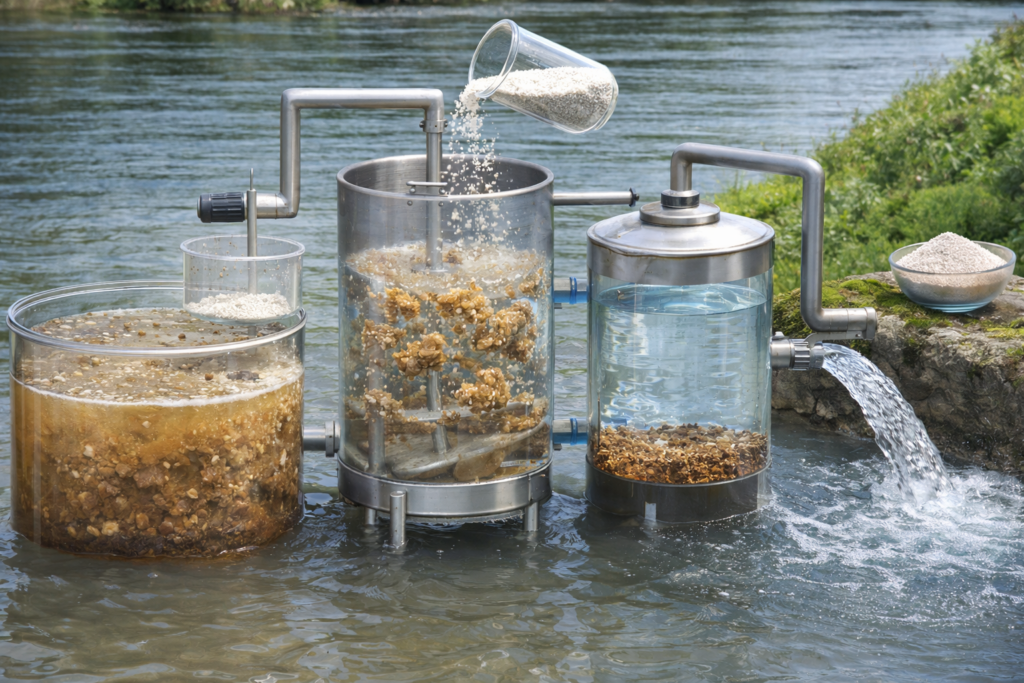
Why Chitosan Flocculant is the Future of Water Treatment Chitosan flocculant water treatment is becoming the preferred solution for industries seeking eco-friendly, high-efficiency water purification. As a natural biopolymer coagulant, chitosan effectively removes: Suspended solids Heavy metals Microplastics Organic pollutants Unlike synthetic chemicals, chitosan is biodegradable, non-toxic, and sustainable, making it ideal for modern wastewater treatment systems. What is Chitosan Flocculant Water Treatment? Chitosan flocculant water treatment uses chitosan-based coagulants to bind and remove impurities from water through natural mechanisms. Compared to traditional flocculants like alum, chitosan offers: Better sludge reduction Lower toxicity Improved environmental safety This makes it a powerful natural coagulant for wastewater treatment. How Chitosan Flocculant Works Chitosan works due to its cationic (positively charged) nature. Key Mechanisms: Charge Neutralization → Binds negatively charged particles Flocculation → Forms large flocs for easy removal Adsorption → Captures dissolved contaminants This ensures efficient removal in both industrial wastewater treatment and drinking water purification. What Can Be Removed Using Chitosan Flocculant? Chitosan-based treatment removes a wide range of contaminants: Suspended solids & turbidity Microplastics from water Heavy metals (lead, mercury, arsenic) Oils and organic pollutants Dyes and industrial chemicals This makes it a versatile bioflocculant for multiple industries. Applications of Chitosan Flocculant Water Treatment Industrial Wastewater Treatment Textile and dye industries Chemical processing plants Mining and metal processing Food processing wastewater Municipal Water Treatment Drinking water purification Sewage treatment Sludge reduction Environmental Applications River and lake cleanup Oil spill treatment Sustainable water purification Chitosan vs Chemical Flocculants Chitosan is increasingly replacing traditional chemicals like alum due to its environmental advantages. Feature Chitosan Chemical Flocculants Source Natural (biopolymer) Synthetic Biodegradability Yes No Toxicity Non-toxic Can be harmful Sludge Production Low High Environmental Impact Eco-friendly Polluting Learn more about chitosan vs alum in water treatment and why industries are switching to natural solutions. Why Industries Prefer Natural Coagulants Industries are moving toward eco-friendly water treatment solutions because: Reduced chemical usage Lower environmental impact Compliance with regulations Improved water quality Sustainable operations Chitosan fits perfectly into modern green water treatment technologies. Best Chitosan Types for Flocculation Different derivatives enhance performance: Quaternary chitosan → high charge density Chitosan hydrochloride → improved solubility Carboxymethyl chitosan → better dispersion Sulphonated chitosan → strong contaminant binding These improve efficiency in industrial-scale applications. Buy Chitosan Flocculant for Water Treatment Looking for chitosan flocculant water treatment solutions? We supply: Quaternary chitosan Chitosan hydrochloride Sulphonated chitosan Contact us for bulk supply and industrial pricing. Related Pages Learn how chitosan removes heavy metals from wastewater systems Explore eco-friendly microplastic removal solutions Discover natural coagulants for wastewater treatment Understand dye removal using chitosan-based treatment FAQ – Chitosan Flocculant Water Treatment What is chitosan flocculant water treatment used for? It is used to remove suspended particles, heavy metals, microplastics, and contaminants from water. Is chitosan better than chemical flocculants? Yes, chitosan flocculant water treatment is biodegradable, non-toxic, and environmentally friendly compared to synthetic chemicals. Where can I buy chitosan flocculant? You can buy chitosan flocculant water treatment products directly from our website with bulk supply options.
Chitosan for Microplastic Removal
Chitosan for Microplastic Removal – Advanced Natural Water Treatment Solution Chitosan for microplastic removal is emerging as one of the most effective and eco-friendly technologies for removing microplastics from water. As a biodegradable chitosan-based flocculant, it binds and aggregates microplastic particles, allowing easy removal from water systems. Industries and environmental agencies are increasingly adopting chitosan microplastic removal systems due to their high efficiency, sustainability, and safety compared to synthetic chemicals. What is Chitosan for Microplastic Removal? Chitosan for microplastic removal refers to the use of chitosan and its derivatives to capture, bind, and remove microscopic plastic particles from contaminated water. Microplastics are tiny plastic fragments found in: Drinking water Oceans and rivers Industrial wastewater Agricultural runoff Using chitosan for water treatment, these particles can be effectively removed through flocculation and adsorption. How Chitosan Removes Microplastics The effectiveness of chitosan microplastic removal comes from its unique chemical and physical properties. Key Mechanisms: Electrostatic attraction: Positively charged chitosan binds negatively charged plastic particles Flocculation: Microplastics cluster into larger particles Adsorption: Chitosan surface captures contaminants This makes chitosan flocculant water treatment highly effective for microplastic cleanup. Types of Microplastics Removed Chitosan for microplastic removal works effectively on: Polyethylene (PE) Polypropylene (PP) Polystyrene (PS) Polyethylene terephthalate (PET) These plastics are commonly found in packaging waste, cosmetics, and industrial discharge. Applications of Chitosan for Microplastic Removal Water Treatment Plants Drinking water purification Municipal wastewater treatment Industrial filtration systems Environmental Cleanup Ocean and river cleanup projects Microplastic pollution control Sustainable environmental remediation Industrial Use Textile wastewater treatment Plastic manufacturing wastewater Recycling facility filtration Best Chitosan Types for Microplastic Removal Different derivatives enhance efficiency in microplastic removal from water: Quaternary chitosan → strong electrostatic binding Chitosan nanoparticles → higher adsorption capacity Carboxymethyl chitosan → improved dispersion and binding Sulphonated chitosan → enhanced solubility and interaction These improve performance in chitosan-based water treatment systems. Why Use Chitosan for Microplastic Removal? Natural and biodegradable solution Non-toxic and safe for ecosystems High removal efficiency Cost-effective alternative to synthetic flocculants Sustainable and eco-friendly technology This makes chitosan water treatment ideal for modern environmental challenges. Buy Chitosan for Microplastic Removal Looking to implement chitosan microplastic removal solutions? We supply: Quaternary chitosan Sulphonated chitosan Contact us for bulk supply, industrial-grade material, and custom formulations. Related Pages Chitosan for heavy metal removal Chitosan flocculant water treatment Sulphonated chitosan Quaternary chitosan FAQ – Chitosan for Microplastic Removal How effective is chitosan for microplastic removal? Chitosan for microplastic removal is highly effective due to its flocculation and adsorption properties, enabling efficient removal of microplastics from water. Is chitosan safe for water treatment? Yes, chitosan for water treatment is biodegradable, non-toxic, and safe for environmental use. Which chitosan is best for microplastic removal? Quaternary chitosan and chitosan nanoparticles are highly effective due to enhanced charge and surface area.