
Modern Pharmaceutical Formulation Requires More Than Traditional Excipients
Pharmaceutical companies today are under increasing pressure to improve:
- drug delivery efficiency
- formulation stability
- bioavailability
- patient compliance
- controlled release performance
- formulation reproducibility
- regulatory compatibility
At the same time, formulation scientists and pharmaceutical manufacturers are facing major challenges with many traditional excipients:
- limited functionality
- poor biodegradability
- synthetic polymer concerns
- scalability limitations
- inconsistent release profiles
- weak mucosal interaction
- increasing regulatory scrutiny
This is why pharmaceutical companies, CDMOs, biomedical developers, and advanced formulation teams are increasingly searching for a reliable chitosan excipient supplier capable of supporting modern pharmaceutical innovation.
At Chitosan Global, we supply pharmaceutical-grade chitosan and advanced chitosan derivatives designed for:
- oral drug delivery
- sustained-release systems
- nanoparticle formulations
- hydrogel technologies
- biomedical applications
- mucoadhesive systems
- pharmaceutical coating technologies
Our solutions are designed to help pharmaceutical companies improve formulation performance while supporting long-term product scalability.
What Is Chitosan as a Pharmaceutical Excipient?
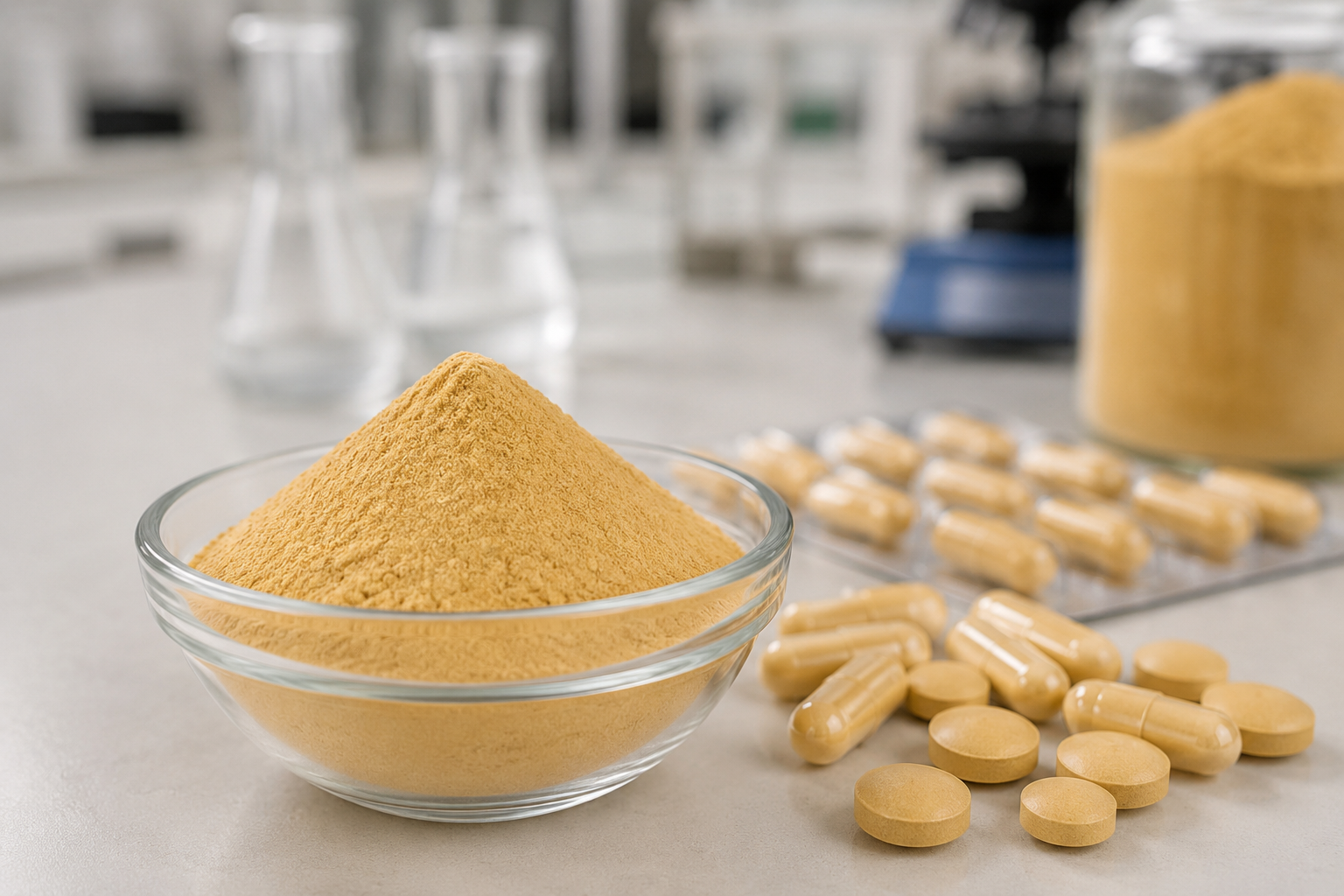
Chitosan is a naturally derived cationic biopolymer obtained through the deacetylation of chitin. In pharmaceutical systems, it functions as a highly versatile excipient with multiple formulation benefits.
Unlike conventional excipients that serve only a single purpose, pharmaceutical-grade chitosan can simultaneously contribute to:
- binding
- film formation
- controlled release
- permeability enhancement
- mucoadhesion
- stabilization
- encapsulation
- antimicrobial protection
Because of its biocompatibility and functional versatility, chitosan has become increasingly important in advanced pharmaceutical and biomedical research.
Today, chitosan is widely explored in:
- tablets
- capsules
- oral films
- nanoparticles
- microspheres
- hydrogels
- injectable systems
- wound care formulations
- tissue engineering systems
- transmucosal drug delivery
Why Pharmaceutical Companies Are Switching to Chitosan-Based Excipients
Improved Drug Delivery Performance
One of the biggest reasons pharmaceutical companies use chitosan excipients is their ability to improve drug delivery efficiency.
Chitosan interacts with biological membranes through its positive charge, helping improve:
- mucosal adhesion
- API retention time
- permeability
- absorption efficiency
- localized drug delivery
This is especially important in modern formulations where maximizing bioavailability is critical.
Chitosan-based systems are widely researched for:
- oral drug delivery
- nasal delivery systems
- buccal delivery
- ocular systems
- intestinal delivery
- colon-targeted release
Pharmaceutical researchers often choose chitosan because it helps extend drug contact time at absorption sites.
Related advanced delivery technology: trimethyl chitosan for oral delivery systems
Why Mucoadhesion Matters in Pharmaceutical Formulation
Traditional excipients often fail to maintain prolonged interaction with mucosal tissues.
Chitosan’s natural cationic structure allows strong interaction with negatively charged mucosal surfaces, improving:
- drug residence time
- absorption window duration
- sustained interaction
- formulation efficiency
This makes pharmaceutical-grade chitosan highly valuable in:
- oral thin films
- nasal sprays
- transmucosal delivery
- gastrointestinal formulations
- targeted absorption systems
Chitosan as a Controlled-Release Pharmaceutical Excipient
Controlled-release pharmaceutical systems continue growing rapidly because they help improve:
- patient compliance
- dosing frequency
- therapeutic consistency
- formulation efficiency
Chitosan functions as an effective matrix polymer in:
- sustained-release tablets
- encapsulation systems
- microspheres
- nanoparticle carriers
- hydrogel systems
Its polymeric structure helps regulate:
- drug diffusion
- hydration behavior
- release kinetics
- swelling properties
This allows formulation teams to design advanced release systems with more predictable performance.
Why Chitosan Is Used in Modern Oral Drug Delivery Systems
Oral delivery remains one of the most important pharmaceutical markets globally.
However, many APIs suffer from:
- poor absorption
- enzymatic degradation
- limited permeability
- instability in gastrointestinal environments
Advanced chitosan derivatives such as trimethyl chitosan (TMC) are increasingly used to improve permeability and oral bioavailability.
These systems are widely researched for:
- peptide delivery
- protein delivery
- nutraceutical formulations
- oral vaccines
- sensitive APIs
Chitosan as a Tablet Excipient
Pharmaceutical-grade chitosan is widely used in tablet manufacturing because of its multifunctional behavior.
It can function as:
- tablet binder
- matrix former
- coating material
- disintegrant modifier
- release-control polymer
Benefits include:
- improved tablet hardness
- controlled dissolution behavior
- better structural integrity
- enhanced coating performance
- formulation flexibility
Compared with many synthetic binders, chitosan also offers additional biological compatibility advantages.
Chitosan for Capsule Formulation Systems
Capsule manufacturers increasingly use chitosan-based systems to support:
- API protection
- moisture control
- dissolution management
- stability enhancement
Pharmaceutical chitosan can help improve formulation consistency in both:
- hard capsule systems
- advanced encapsulation technologies
Its film-forming properties also make it valuable for pharmaceutical coatings and protective encapsulation layers.
Pharmaceutical Nanoparticle Delivery Systems Using Chitosan
Nanoparticle drug delivery is one of the fastest-growing pharmaceutical research sectors.
Chitosan is widely used in nanoparticle systems because of its:
- biocompatibility
- positive surface charge
- encapsulation capability
- permeability-enhancing properties
Pharmaceutical researchers use chitosan nanoparticles in studies involving:
- oral delivery enhancement
- targeted delivery systems
- sustained-release technologies
- gene delivery research
- peptide delivery
- vaccine delivery systems
The polymer’s ability to form nano-scale delivery structures makes it highly attractive for advanced pharmaceutical R&D.
Chitosan Hydrogels in Biomedical & Drug Delivery Systems
Hydrogel technologies are becoming increasingly important in modern biomedical engineering.
Carboxymethyl chitosan and related derivatives are widely used in hydrogel systems because of their:
- water solubility
- swelling behavior
- biocompatibility
- gel-forming capability
Applications include:
- wound healing systems
- injectable hydrogels
- tissue engineering scaffolds
- localized drug delivery
- regenerative medicine systems
Related hydrogel technology → carboxymethyl chitosan for hydrogels
Why Molecular Weight Matters in Pharmaceutical Chitosan
Molecular weight is one of the most critical pharmaceutical formulation variables.
Different molecular weight ranges affect:
- viscosity
- permeability
- release profile
- swelling behavior
- dissolution performance
- encapsulation efficiency
Lower Molecular Weight Chitosan
Typically provides:
- higher solubility
- lower viscosity
- improved permeability
- better interaction in nanoparticle systems
Higher Molecular Weight Chitosan
Typically supports:
- stronger film formation
- improved matrix stability
- sustained-release systems
- hydrogel structural integrity
This is why pharmaceutical formulation teams carefully select molecular weight ranges depending on the application.
Degree of Deacetylation (DDA) and Pharmaceutical Performance
Degree of deacetylation significantly impacts pharmaceutical functionality.
Higher DDA often influences:
- cationic charge density
- mucoadhesion
- solubility behavior
- polymer interaction
- antimicrobial behavior
Pharmaceutical buyers frequently evaluate DDA because it directly affects formulation reproducibility and consistency.
Types of Chitosan Used in Pharmaceutical Formulations
Standard Pharmaceutical-Grade Chitosan
Widely used for:
- tablets
- coatings
- sustained-release systems
- binding applications
Benefits include:
- strong film formation
- matrix stability
- formulation flexibility
Chitosan Oligosaccharide (COS)
Chitosan oligosaccharide offers:
- lower molecular weight
- higher solubility
- improved biointeraction
- enhanced permeability potential
Frequently explored in:
- nutraceutical systems
- oral delivery technologies
- advanced absorption applications
Trimethyl Chitosan (TMC)
Trimethyl chitosan is one of the most advanced pharmaceutical chitosan derivatives.
It is widely researched for:
- permeability enhancement
- oral drug delivery
- mucosal transport systems
- nanoparticle technologies
Carboxymethyl Chitosan (CMCS)
CMCS is a water-soluble derivative commonly used in:
- hydrogels
- wound care systems
- injectable matrices
- tissue engineering
Quaternary Chitosan
Quaternary chitosan provides permanent cationic functionality and strong antimicrobial properties.
Applications include:
- antimicrobial coatings
- wound management systems
- biomedical protection technologies
- advanced pharmaceutical systems
Related antimicrobial systems → quaternary chitosan for antimicrobial systems
Chitosan vs Traditional Pharmaceutical Excipients
Compared with HPMC
Chitosan may offer:
- biological functionality
- mucoadhesion
- biodegradability
- antimicrobial advantages
Compared with PVP
Chitosan provides:
- natural polymer benefits
- film-forming capability
- improved biological compatibility
Compared with Carbopol
Chitosan systems may support:
- natural formulation positioning
- cationic interaction
- biodegradability
Compared with Cellulose Derivatives
Chitosan offers:
- multifunctionality
- permeability enhancement
- biomedical versatility
This is why pharmaceutical companies increasingly explore chitosan-based excipient systems for next-generation formulations.
Why Most Chitosan Excipient Suppliers Fail Pharmaceutical Companies
Many suppliers only operate as raw material resellers.
Common industry problems include:
inconsistent molecular weight
unstable viscosity profile
limited pharmaceutical understanding
weak technical support
poor documentation
inconsistent batches
lack of formulation guidance
These issues can create serious risks during:
- scale-up
- stability studies
- validation
- product commercialization
- manufacturing transfer
Why Pharmaceutical Companies Choose Chitosan Global
Application-Focused Technical Support
We support pharmaceutical applications not just raw material supply.
Our team understands:
- drug delivery systems
- hydrogel applications
- nanoparticle technologies
- formulation requirements
- pharmaceutical scalability
Multiple Pharmaceutical Chitosan Derivatives Available
Available materials include:
- pharmaceutical-grade chitosan
- chitosan oligosaccharide
- trimethyl chitosan
- carboxymethyl chitosan
- quaternary chitosan
This allows formulation teams to select derivatives based on:
- solubility
- permeability
- antimicrobial functionality
- release behavior
- hydrogel performance
R&D to Industrial Scale Supply
We support:
- laboratory quantities
- prototype development
- pilot-scale production
- commercial manufacturing
- industrial bulk supply
Pharmaceutical Documentation Support
Available upon request:
- COA
- technical specifications
- formulation guidance
- application support
- bulk pricing
- export documentation
Industries & Organizations We Support
Our pharmaceutical excipient solutions support:
- pharmaceutical manufacturers
- CDMOs
- nutraceutical developers
- biomedical engineering companies
- pharmaceutical R&D laboratories
- excipient distributors
- advanced formulation teams
- drug delivery researchers
Commercial Supply Options
We offer:
- sample quantities
- pilot-scale support
- bulk pharmaceutical supply
- global export capability
- custom specification support
- technical consultation
Developing Advanced Pharmaceutical Formulations?
Whether you are developing:
- sustained-release tablets
- oral delivery systems
- pharmaceutical hydrogels
- nanoparticle formulations
- biomedical materials
- advanced mucosal delivery systems
our pharmaceutical-grade chitosan solutions can help improve formulation performance and scalability.
Request technical specifications, sample materials, and formulation guidance today.
Looking for a Reliable Chitosan Excipient Supplier?
Chitosan Global supports pharmaceutical and biomedical companies with:
- high-purity pharmaceutical-grade chitosan
- advanced chitosan derivatives
- formulation-focused support
- scalable bulk supply
- application guidance
- pharmaceutical material expertise
Need:
- COA?
- technical data?
- formulation consultation?
- bulk pricing?
- pharmaceutical samples?
Contact Chitosan Global today to discuss your pharmaceutical excipient requirements and advanced drug delivery applications.