
N-Acetyl Glucosamine (NAG) + Niacinamide: A Clinically Proven Brightening Duo
At Chitosan Global, we believe that skincare should be guided by research, not just trends. Among the most trusted actives for skin brightening and dark spot reduction are N-acetyl glucosamine (NAG) and niacinamide. Each is effective on its own—but when combined, they work through different biological pathways to deliver visible, clinically proven results.
A published double-blind, placebo-controlled study evaluated this pairing in detail. Below, we outline the science step by step, so you can see exactly why this combination sets a new standard for safe, effective brightening.
Step 1 – Understanding the Science
How Niacinamide Works:
Niacinamide reduces the transfer of melanin (pigment) from melanocytes (the pigment-producing cells) to keratinocytes (the upper skin cells). Less transfer means less visible pigmentation.How NAG Works:
NAG reduces melanin production at the source by interfering with tyrosinase glycosylation—a process the enzyme tyrosinase needs to create melanin. By moderating this enzyme’s activity, NAG helps prevent excess pigment from forming.Why They Work Better Together:
Since the two actives work on different steps in the pigmentation process, combining them creates a dual-action effect: fewer melanin granules formed and fewer granules transferred to the skin’s surface.
Step 2 – Penetration Studies (In-Vitro Results)
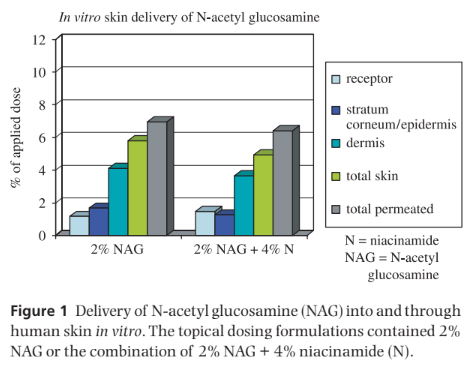
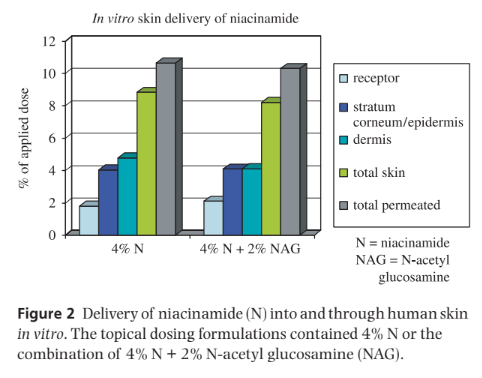
Before clinical testing, researchers checked whether NAG and niacinamide could penetrate the skin effectively, and whether using them together would change absorption. Human skin samples were mounted in Franz diffusion cells, a gold-standard model for skin delivery studies.
Result 1 – NAG Delivery:
NAG penetrated both the epidermis and dermis, and measurable amounts crossed into the receptor fluid beneath the skin, confirming it could reach its biological target.Result 2 – Niacinamide Delivery:
Niacinamide also penetrated efficiently into the skin, consistent with previous data.Result 3 – Compatibility:
When combined, the absorption of each ingredient remained unchanged. In other words, NAG and niacinamide do not interfere with each other’s delivery—a critical point for real-world formulations.
Step 3 – Human Clinical Studies
Two large split-face, double-blind, placebo-controlled trials were conducted to evaluate visible skin improvements.
Japanese Trial (50 women, ages 25–55):
Tested 2% NAG cream vs. placebo (vehicle).
Duration: 10 weeks (2-week washout + 8-week treatment).
Application: ~0.3 g per side, twice daily.
U.S. Trial (35 women, ages 35–65):
Compared 4% niacinamide alone vs. 4% niacinamide + 2% NAG.
Duration: 10 weeks (2-week washout + 8-week treatment).
Application: ~0.45 g per side, twice daily.
Both trials included full photographic documentation, image analysis software, and independent expert grading to ensure unbiased results.
Step 4 – Clinical Outcomes
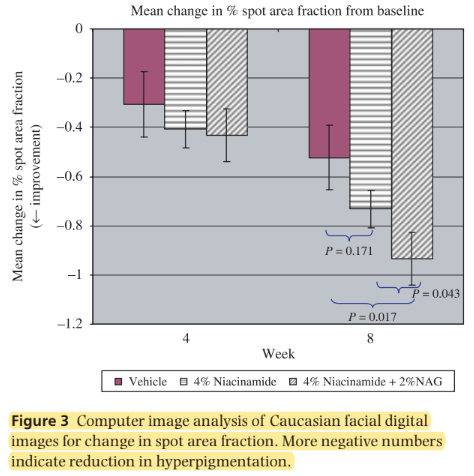
Computer Image Analysis (U.S. Study):
After 8 weeks, the combination treatment reduced the percentage of hyperpigmented spots significantly more than niacinamide alone or placebo.
Combo vs. vehicle: p = 0.017
Combo vs. niacinamide alone: p = 0.043
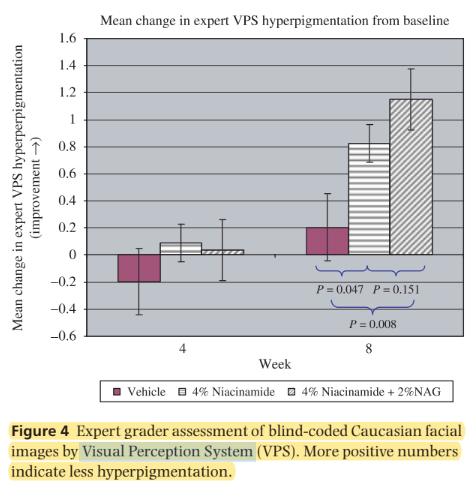
Expert Visual Grading (U.S. Study):
Dermatology experts, blinded to treatment assignment, graded before-and-after photos. Their results confirmed that NAG + niacinamide produced the strongest visible improvement.
Combo vs. vehicle: p = 0.008
Niacinamide vs. vehicle: p = 0.047
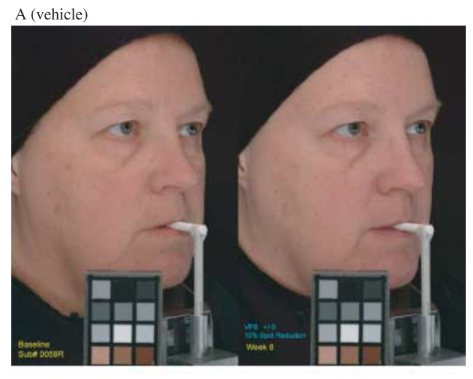
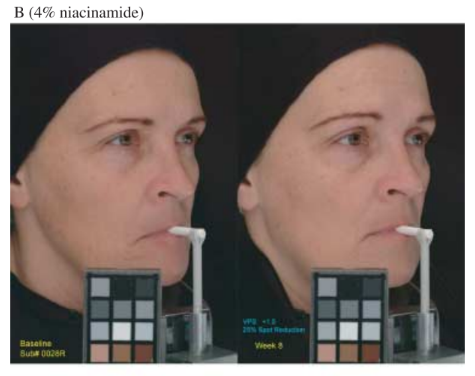
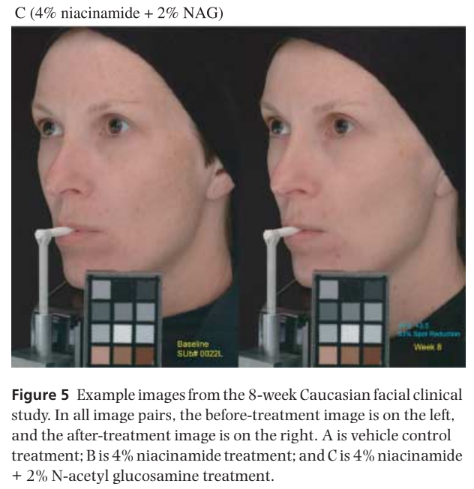
Clinical Photography:
Side-by-side photos illustrate what the statistics prove:
Vehicle-treated skin → little to no change
Niacinamide-treated skin → moderate fading
Combination-treated skin → clearer, brighter skin with fewer visible spots
Step 5 – Safety & Stability
Excellent Tolerance: No irritation or sensitivity was reported in either trial.
Chemical Stability: Plain glucosamine can discolor and destabilize formulas. NAG is stable and cosmetically elegant, making it ideal for creams, serums, and lotions.
Regulatory Compliance: Formulations can be developed under ISO, FSSC, and FDA-compliant systems, supporting global safety and quality standards.
Step 6 – Formulation & Usage
Optimal Ratio: The sweet spot is 2% NAG with 4% niacinamide—this level balances efficacy, stability, and sensory feel.
Product Types: Works well in serums, moisturizers, daily creams, and targeted treatments.
Routine: Apply twice daily for at least 8 weeks to achieve visible results.
Best Practice: Always pair with a broad-spectrum sunscreen during the day to maintain and protect results.
The combination of N-acetyl glucosamine and niacinamide represents a new benchmark in topical skin brightening. With two complementary mechanisms, strong in-vitro delivery data, and robust clinical results, this pairing consistently delivers:
Visible reduction in dark spots
Brighter, more even skin tone
Safe, stable, and well-tolerated performance
At Chitosan Global, we integrate these findings into our cosmetic ingredient offerings, helping formulators and brands create next-generation brightening solutions that are both effective and science-driven.