
Chitosan Food Preservative: A Practical Guide for Food Manufacturers Seeking Natural Shelf-Life Protection
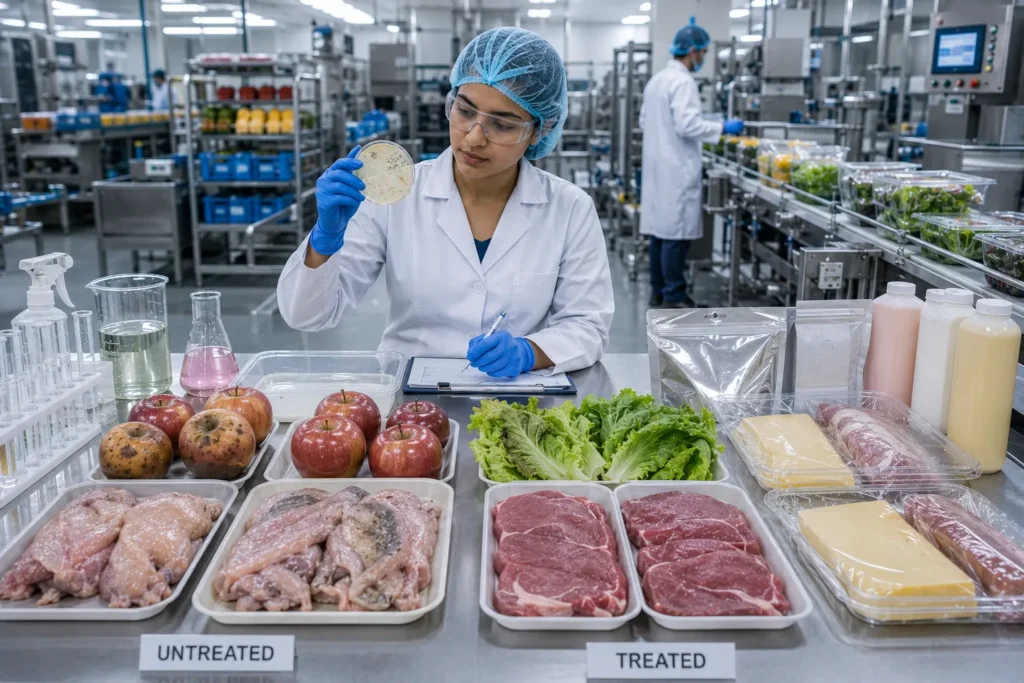
Food manufacturers are under pressure to extend shelf life without overloading formulas with synthetic preservatives, compromising sensory quality, or creating regulatory friction in export markets. That is exactly where chitosan food preservative systems have become commercially relevant. Chitosan is not simply a “natural ingredient” with marketing appeal. In the right food system, it can function as a bio-based food preservative, antimicrobial food ingredient, and film-forming protective material that helps reduce spoilage pressure, preserve product quality, and support cleaner formulation strategies. This page focuses on one question only: How does chitosan work as a natural food preservative, and when is it worth implementing commercially? If you want the broader food-technology context first, see the main pillar page on chitosan in food industry. If your main objective is wider product-life planning, also see the dedicated guide on chitosan shelf life extension. What Is a Natural Food Preservative? A natural food preservative is a substance used to slow spoilage, maintain product quality, and help protect food during storage by reducing one or more causes of deterioration, such as: bacterial growth yeast and mold development oxidation moisture loss surface contamination quality loss during storage and transport From a commercial perspective, a natural preservative is useful only if it does more than sound good on a label. It must work within the real product system, packaging format, storage conditions, and distribution chain. That is why food companies do not evaluate chitosan only as an ingredient. They evaluate it as a preservation technology. Why Manufacturers Are Replacing or Reducing Synthetic Preservatives The shift away from traditional preservatives is not driven by one factor alone. It is driven by a mix of technical, regulatory, and market pressure. Common reasons manufacturers explore alternatives clean-label product positioning retailer pressure for simpler ingredient statements export market preferences consumer resistance to synthetic preservatives demand for natural food protection systems need for more sustainable food preservation technologies interest in combining preservation with edible coatings or packaging innovation That does not mean synthetic preservatives are obsolete. In many products, they still play an important role. But many manufacturers are looking for ways to reduce dosage, replace part of the system, or build more natural preservation programs around ingredients like chitosan. What Is Chitosan as a Food Preservative? Chitosan is a functional biopolymer used in food systems for preservation, coating, stabilization, and surface protection. In preservative-focused applications, its value comes from combining several useful properties: antimicrobial activity antifungal activity film formation oxygen barrier contribution moisture regulation oxidation support surface protection This makes it different from a simple preservative molecule. In many products, chitosan is not only acting chemically. It is also acting physically, through the protective layer it forms. That is one reason it overlaps naturally with chitosan edible coating, although this page stays focused on preservative action rather than coating systems in general. How Chitosan Preserves Food A strong supporting article should explain why chitosan works, not just say that it does. 1. Antimicrobial action Chitosan is cationic under appropriate conditions. That positive charge can interact with negatively charged microbial cell surfaces. This interaction can disrupt membrane integrity, alter permeability, and interfere with normal microbial function. In practical terms, that means chitosan may help suppress: spoilage bacteria certain yeasts certain molds some foodborne pathogens, depending on food matrix and use conditions Its antimicrobial effect is one of the main reasons it is positioned as a natural food preservative rather than only a film-forming polymer. 2. Fungal inhibition In many fresh and refrigerated food systems, fungal spoilage is a major shelf-life limiter. Chitosan is especially relevant where mold and surface fungal decay drive rejection, such as: fresh produce some dairy products surface-sensitive chilled foods 3. Yeast inhibition In high-moisture and sugar-containing systems, yeast activity can shorten shelf life even when bacterial spoilage is partly controlled. Chitosan may help reduce this risk in selected systems, especially in surface or liquid-contact preservation strategies. 4. Oxygen barrier support Chitosan forms a film that can reduce oxygen exposure. This matters because oxygen accelerates: lipid oxidation color loss aroma deterioration pigment degradation nutrient loss in some products 5. Moisture regulation By forming a protective layer, chitosan can help reduce excessive moisture transfer. This is important for: dehydration-sensitive produce chilled meats products where surface dryness or shrink matters packaged foods sensitive to water migration 6. Oxidation reduction Oxidation is not always visible immediately, but it shortens shelf life by causing rancidity, color change, and flavor deterioration. Chitosan-based systems can help slow this process in the right applications. 7. Surface protection Many spoilage problems begin at the surface. Chitosan is especially valuable where preservation depends on controlling what happens at the product interface rather than inside the entire matrix. Food Science View: What Chitosan Actually Protects Food spoilage is rarely caused by only one mechanism. Chitosan is attractive because it may support several quality dimensions at once. Microbial stability Helps reduce growth pressure from bacteria, yeasts, and molds. Texture retention By reducing moisture loss and surface damage, chitosan can help preserve firmness or reduce surface drying. Color stability Less oxidation and less microbial deterioration often mean better visual stability. Aroma protection Reduced spoilage and oxidation can help preserve characteristic aroma and reduce off-notes. Nutritional preservation By slowing deterioration, chitosan may help reduce the loss of sensitive quality components over storage. This is why chitosan is often discussed not just as a preservative ingredient, but as part of broader shelf life extension strategies. Which Microorganisms Can Chitosan Help Control? A practical manufacturer does not ask whether chitosan is “antimicrobial” in theory. They ask what kind of spoilage pressure it may help reduce in real products. Relevant microbial targets in food systems spoilage bacteria on meats and chilled foods yeasts in fruit-related and beverage-related systems molds on fresh produce and surface-ripened products selected foodborne pathogens, depending on product and formulation Important caution Performance varies by: food matrix pH storage temperature water activity chitosan molecular weight degree of deacetylation concentration whether it is used alone or in a composite system So the correct technical position is: Chitosan can be highly useful for spoilage control, but it must be validated in the real