
Chitosan Derivatives Supplier | Bulk Functional Chitosan Solutions for Food, Agriculture, Pharma & Industrial Applications
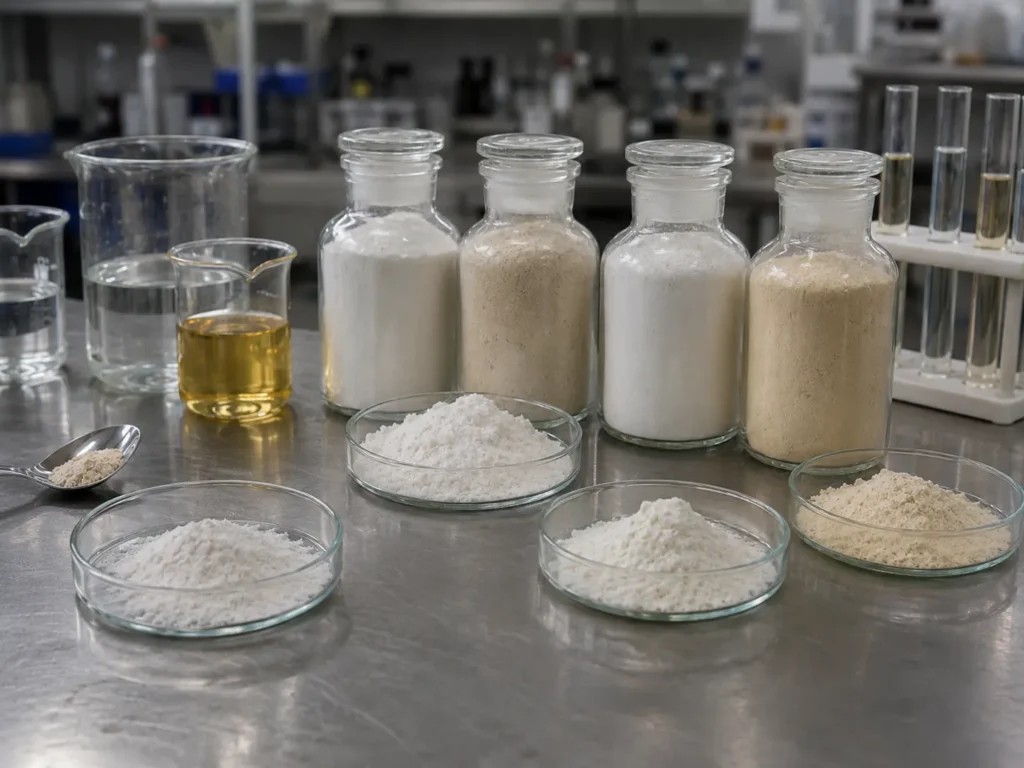
Chitosan Global – Industrial Supplier of High-Performance Chitosan Derivatives for Commercial Formulation Systems This Is Not Just a Product — It’s a Functional System If you are searching for a chitosan derivatives supplier, you are not looking for a single raw material. You are looking for a functional material platform that integrates into: food processing and preservation systems agricultural biostimulants and crop protection pharmaceutical and nutraceutical delivery systems industrial coatings, films, and water treatment Most suppliers fail here. They list products but they don’t explain: which derivative fits your application how it performs in real systems how to choose the right one Chitosan Global is structured differently. We supply a complete, application-driven portfolio of chitosan derivatives, designed for real-world commercial use. What Are Chitosan Derivatives? Chitosan derivatives are chemically modified forms of chitosan, a natural biopolymer derived from chitin. Through controlled modification (carboxymethylation, quaternization, depolymerization, etc.), chitosan becomes: water-soluble functionally tunable bioactive application-specific These derivatives are engineered to solve specific formulation challenges such as: solubility limitations delivery efficiency antimicrobial performance film formation and coating stability This is why industries are shifting from raw chitosan to engineered chitosan derivatives. Types of Chitosan Derivatives Understanding the types of chitosan derivatives is critical for selecting the right material. 1. Chitosan Oligosaccharide (COS) Best for: Food, agriculture, nutraceuticals low molecular weight → rapid absorption fully water-soluble strong bioactivity Used in: plant growth enhancement dietary supplements functional foods 2. Chitosan Hydrochloride (COS-HCl) Best for: Liquid systems, pharma, beverages enhanced solubility and stability ideal for liquid formulations improved delivery efficiency Used in: nutraceutical formulations beverage clarification advanced delivery systems 3. Carboxymethyl Chitosan (CMC) Best for: Hydrogels, coatings, controlled release highly water-soluble across pH ranges excellent film-forming capability ideal for controlled-release systems Used in: hydrogels cosmetic formulations agricultural delivery systems 4. Native Chitosan Best for: Food preservation, coatings strong antimicrobial properties excellent film-forming ability Used in: edible coatings food preservation systems post-harvest protection See our food grade chitosan supplier solutions for commercial applications. 5. Alginate Oligosaccharide (AOS) Best for: Agriculture plant metabolic activator improves stress resistance Used in: crop yield enhancement plant defense systems How to Choose the Right Chitosan Derivative Most supplier pages fail here. This is where buyers need clarity. If your goal is: Fast absorption / liquid systems →Use Chitosan Oligosaccharide Food preservation / edible coating →Use Native Chitosan Hydrogel / controlled release systems →Use Carboxymethyl Chitosan Agriculture / crop yield improvement →Use COS or AOS This structured selection approach reduces formulation risk and improves performance. Core Functional Advantages of Chitosan Derivatives 1. Multi-Functional Performance Unlike single-purpose chemicals, chitosan derivatives provide: antimicrobial protection film formation nutrient delivery bioactivity 2. Water-Solubility Engineering Different derivatives are engineered for specific solubility: COS → high solubility CMC → enhanced dispersion COS-HCl → rapid dissolution 3. Biological Activity Chitosan derivatives act as: plant biostimulants antimicrobial agents drug delivery enhancers Explore chitosan for agriculture and plant protection systems for advanced applications. 4. Sustainable & Regulatory Advantage biodegradable non-toxic eco-friendly alternative to synthetic polymers Application Industries Food Industry edible coatings food preservation systems functional ingredients Learn more about our food grade chitosan supplier capabilities. Agriculture plant growth enhancement crop protection systems biostimulant formulations See chitosan oligosaccharide for plant growth enhancement Pharmaceutical & Nutraceutical drug delivery systems capsules and supplements Industrial Applications coatings and films water treatment systems specialty polymers Quality Specifications & Buyer Assurance At Chitosan Global, we focus on industrial-grade consistency and performance. We provide: Degree of Deacetylation (DDA): 85–95% Controlled molecular weight ranges Solubility and viscosity profiling Batch-to-batch consistency Certificate of Analysis (COA) Technical documentation on request This ensures reliable integration into commercial systems. Formulation Compatibility Our derivatives are compatible with: liquid formulations foliar spray systems hydroponic solutions food processing systems coating and film applications This flexibility reduces formulation complexity. Bulk Supply & Procurement We support buyers searching for: chitosan derivatives supplier bulk chitosan derivatives price industrial chitosan supplier carboxymethyl chitosan supplier Supply Capabilities bulk quantities available global shipping consistent production quality flexible order volumes technical support Why Choose Chitosan Global complete derivative portfolio application-focused supply model strong food-grade positioning multi-industry expertise technical consultation support Frequently Asked Questions What are chitosan derivatives used for? They are used in food preservation, agriculture, pharmaceuticals, water treatment, and industrial formulations. Which chitosan derivative is best? It depends on your application: COS → bioactivity CMC → hydrogels Native → coatings Are chitosan derivatives water soluble? Many derivatives (COS, CMC, COS-HCl) are fully water-soluble and designed for liquid systems. Where can I buy chitosan derivatives in bulk? You can source directly from Chitosan Global, a supplier of bulk, application-ready chitosan derivatives. Request bulk pricing, technical datasheets, and formulation guidance today. Work with Chitosan Global — your trusted chitosan derivatives supplier.
Water-Soluble Chitosan Supplier | Bulk Soluble Chitosan for Food, Pharma & Liquid Formulation Systems
Chitosan Global – Industrial Supplier of Fully Water-Soluble Chitosan, COS & Advanced Chitosan Derivatives for Commercial Applications Water-Soluble Chitosan – Technical Overview Water-soluble chitosan is not a generic ingredient — it is a performance-critical polymer used in modern formulation systems. Key Specifications: Solubility: Fully water-soluble (no acid required) pH Stability: Functional across pH 3.0–8.0+ (depending on derivative) Molecular Weight: COS: 500–3000 Da CMC / Modified derivatives: customizable Degree of Deacetylation (DDA): 85–95% Appearance: Off-white to light yellow powder Origins Available: Mushroom / Shellfish / Black Soldier Fly Applications: Food, beverages, pharma, agriculture, coatings, liquid systems Get Bulk Pricing | Order 25g Sample Why Standard Chitosan Fails in Modern Formulations If you are sourcing chitosan for liquid systems, food processing, or pharmaceutical applications, standard chitosan is often not usable. Here’s why: It does not dissolve in neutral water Requires acidic conditions (pH < 6.5) Causes poor dispersion and aggregation Leads to instability in formulations Limits use in beverages, pharma liquids, and neutral systems These are not minor issues — they are formulation failures. That is why industries are shifting toward water-soluble chitosan derivatives. What is Water-Soluble Chitosan (WSC)? Water-soluble chitosan refers to chemically modified or low molecular weight chitosan forms designed to dissolve directly in aqueous systems. Unlike native chitosan, WSC is engineered to: Dissolve instantly in water Maintain stability across wider pH ranges Integrate seamlessly into liquid formulations Retain bioactivity and functional performance Production Methods Water-soluble chitosan is produced through: Enzymatic Hydrolysis → Chitosan Oligosaccharide (COS) Breaks polymer into low molecular weight fractions Improves solubility and bioavailability Salt Formation → Hydrochloride, Lactate, Acetate Forms Enhances dissolution in aqueous systems Improves compatibility in pharma and beverage systems Chemical Modification → Carboxymethyl, Quaternary Chitosan Introduces hydrophilic functional groups Enables solubility across wider pH conditions These processes transform chitosan from a limited polymer into a high-performance functional ingredient Our Water-Soluble Chitosan Product (Built for Industrial Use) Most suppliers offer a single derivative. Chitosan Global provides a complete system of water-soluble chitosan derivatives, allowing you to select the right material for your application. 1. Chitosan Oligosaccharide (COS – Food Grade) Ultra-low molecular weight Fully water-soluble High absorption and bioavailability Suitable for food, nutraceuticals, agriculture Best For: Gut health supplements Functional foods Plant growth enhancement 2. Chitosan Oligosaccharide Hydrochloride Enhanced solubility in aqueous systems Rapid dissolution in liquids Stable in formulation environments Best For: Beverages Pharmaceutical liquid systems Functional ingredient delivery 3. Carboxymethyl Chitosan (CMC) Highly water-soluble across wide pH range Excellent film-forming and binding properties Strong compatibility with hydrogels and coatings Best For: Biomedical applications Food coatings Cosmetic and industrial formulations 4. Advanced Water-Soluble Chitosan Derivatives Quaternary chitosan (permanent cationic charge) Modified salts and custom formulations Tailored molecular structures for specific applications Best For: Antimicrobial coatings Biomedical systems Advanced material formulations How to Choose the Right Water-Soluble Chitosan Choosing the wrong derivative leads to poor performance and wasted cost. Use this selection guide: COS → High bioavailability, nutraceuticals, agriculture COS Hydrochloride → Best for liquid formulations and beverages CMC → Best for coatings, hydrogels, structured systems Quaternary Chitosan → Best for antimicrobial and biomedical applications If your system is liquid-based, water-soluble chitosan is not optional — it is required. Functional Advantages of Water-Soluble Chitosan 1. Immediate Dissolution in Water No acid required No aggregation Uniform dispersion 2. Enhanced Bioavailability Low molecular weight improves absorption Faster interaction with biological systems 3. Antimicrobial Properties Effective against bacteria and fungi Suitable for food safety and coatings 4. Antioxidant Activity Free radical scavenging Improves product stability 5. Formulation Efficiency Compatible with complex systems Reduces processing challenges Where Standard Chitosan Fails Factor Standard Chitosan Water-Soluble Chitosan Solubility Acid-dependent Fully water-soluble Stability Limited High Formulation Difficult Easy Applications Restricted Multi-industry This shift is already happening across food, pharma, and industrial sectors Applications Across High-Value Industries Food Industry Edible coatings for shelf-life extension Preservation systems Functional food ingredients Beverage Processing Clarification Protein stabilization Improved liquid stability Pharmaceutical & Nutraceutical Drug delivery systems Capsules and liquid formulations Bioavailability enhancement Agriculture Biostimulants Foliar sprays Hydroponic systems Industrial Applications Coatings and films Filtration systems Functional polymers Formulation Compatibility (What Actually Works) Our water-soluble chitosan is designed for: Aqueous systems Neutral and acidic environments Nutrient and bioactive solutions Pharmaceutical carriers Built for real-world formulation performance, not theoretical use Quality, Compliance & Supply Reliability B2B buyers require consistency — not just claims. We provide: COA (Certificate of Analysis) for every batch Food-grade and pharma-grade options Regulatory-aligned materials (FDA / GRAS-ready positioning) Controlled manufacturing and batch consistency Reliable supply is as important as product performance Why Buyers Choose Chitosan Global 1. True Water-Soluble Performance Not “acid-soluble” — fully usable in real systems 2. Complete Derivative Portfolio COS, COS HCl, CMC, quaternary and custom derivatives 3. Industrial-Scale Supply Bulk quantities Consistent quality Global logistics 4. Technical Support Product selection guidance Application matching Formulation support Strengthen Your Sourcing Strategy Explore related solutions: food grade chitosan supplier chitosan derivatives supplier chitosan for agriculture and plant protection systems chitosan oligosaccharide for plant growth enhancement Build a complete system — not just a single ingredient Frequently Asked Questions Is water-soluble chitosan the same as regular chitosan?No. Regular chitosan requires acidic conditions. Water-soluble chitosan dissolves directly in water. Which type is best for beverages?Chitosan oligosaccharide hydrochloride offers the best solubility and stability. Can it be used in food applications?Yes, food-grade COS and derivatives are widely used. What is the difference between COS and CMC?COS is low molecular weight and bioactive. CMC is more structural and used in coatings and gels. Get High-Performance Water-Soluble Chitosan for Your Formulation Stop dealing with poor solubility, unstable formulations, and limited performance. Upgrade to industrial-grade water-soluble chitosan designed for real applications. Request samplesGet bulk pricing per kgTalk to our technical team Chitosan Global – Your trusted partner for water-soluble chitosan and advanced functional biopolymers.
Low Molecular Weight Chitosan Supplier | Bulk LMW Chitosan for Food, Pharma, Agriculture & Liquid Formulations
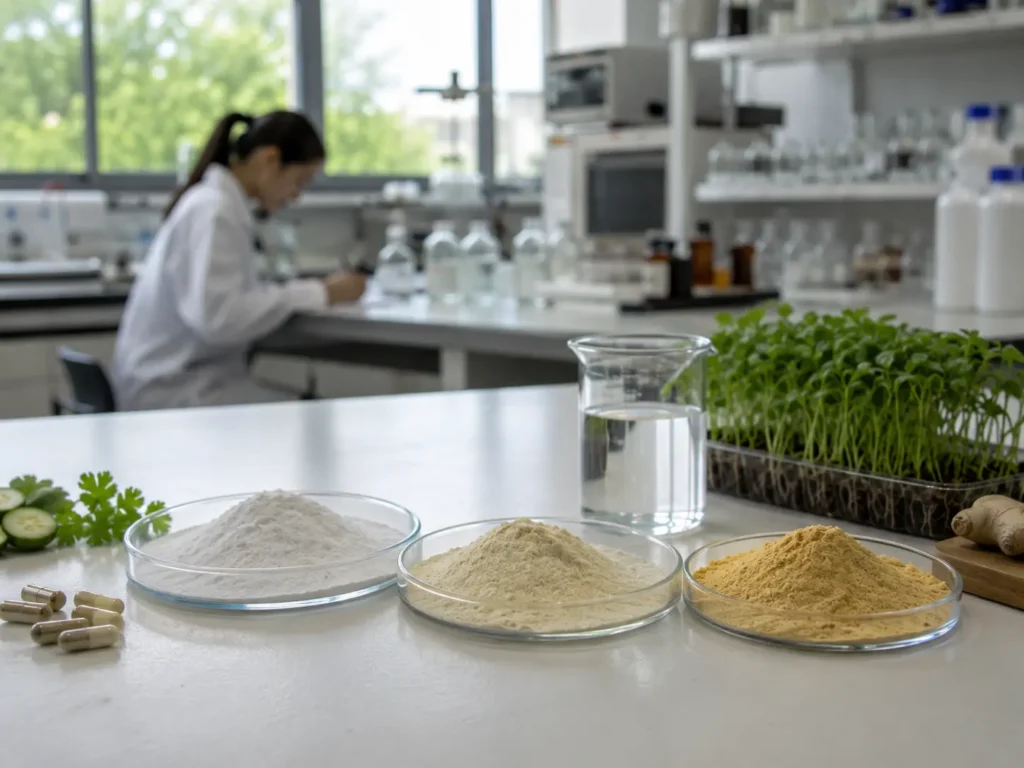
Chitosan Global – Industrial Supplier of Controlled Molecular Weight Chitosan for High-Performance Formulation Systems Low Molecular Weight Chitosan – Technical Snapshot Molecular Weight Ranges: <5 kDa (COS – ultra-low MW) 5–20 kDa (liquid formulations) 20–50 kDa (coatings & structured systems) Solubility: Improved vs native (fully soluble for COS) Degree of Deacetylation (DDA): 85–95% Viscosity: Low to moderate (controlled for formulation use) Appearance: Off-white to light yellow powder Origins Available: Mushroom / Shellfish / Black Soldier Fly Applications: Food, pharma, agriculture, liquid systems Get Bulk Pricing Most Buyers Don’t Need “Chitosan” — They Need Controlled Molecular Performance If you are searching for a low molecular weight chitosan supplier, you are not looking for generic chitosan. You are solving performance limitations: Poor solubility in water Slow absorption in biological systems High viscosity affecting formulation Inconsistent batch performance Limited usability in liquid and precision systems These issues are not formulation errors — they are molecular weight problems. Why Molecular Weight Controls Chitosan Performance Chitosan is not a single material — its performance is defined by molecular weight distribution. High Molecular Weight Chitosan (>100 kDa) Limited solubility High viscosity Structural applications (films, coatings) Low Molecular Weight Chitosan (LMW) Improved solubility Faster interaction with systems Better dispersion in liquids Higher biological activity Ultra-Low Molecular Weight (COS <5 kDa) Fully water-soluble Maximum bioavailability Rapid absorption and functionality This is why industries are shifting toward LMW chitosan and COS systems What is Low Molecular Weight Chitosan? Low molecular weight chitosan is produced through controlled depolymerization of native chitosan, reducing polymer chain length while preserving functional groups. This creates a high-performance material that bridges: Native chitosan → structural Chitosan oligosaccharide → highly bioactive Key Technical Characteristics Molecular Weight: Typically 1–50 kDa (customizable) Solubility: Significantly improved vs native chitosan Viscosity: Reduced for easier formulation Bioavailability: Enhanced due to smaller chain size Reactivity: Increased surface interaction How to Choose the Right Molecular Weight Choosing the correct MW range is essential for performance. <5 kDa (Chitosan Oligosaccharide – COS) Fully water-soluble Highest bioactivity Best for nutraceuticals, gut health, agriculture 5–20 kDa Excellent for liquid formulations Improved solubility and dispersion Ideal for pharma and beverage systems 20–50 kDa Balanced performance Moderate viscosity Suitable for coatings and structured formulations >50 kDa Structural applications Films, packaging, non-liquid systems Selecting the right MW directly impacts solubility, absorption, and final product performance Our Low Molecular Weight Chitosan Product System Chitosan Global supplies a structured portfolio, not a single product. 1. Chitosan Oligosaccharide (COS – Food Grade) Molecular Weight: <5 kDa Fully water-soluble High bioactivity Best For: Nutraceuticals Functional foods Plant growth enhancement 2. Chitosan Hydrochloride Enhanced solubility in aqueous systems Rapid dissolution in liquids Stable in formulation environments Best For: Beverages Pharmaceutical liquids High-clarity formulations 3. Controlled Low Molecular Weight Native Chitosan Molecular Weight: 5–50 kDa Moderate solubility Retains structural functionality Best For: Edible coatings Food preservation systems Controlled viscosity applications This MW-controlled system is where most suppliers fail — and where you gain a performance advantage Functional Advantages of Low Molecular Weight Chitosan 1. Improved Solubility & Dispersion Reduced polymer chain entanglement Better water interaction Stable dispersion in liquid systems 2. Higher Biological Activity Strong antimicrobial effects Enhanced antioxidant activity Increased cellular interaction 3. Faster System Penetration Smaller molecular size enables deeper interaction Improves delivery efficiency 4. Reduced Viscosity Easier processing Compatible with liquid formulations Scalable for industrial production Low Molecular Weight Chitosan vs Standard Chitosan Parameter Standard Chitosan Low MW Chitosan Solubility Limited Improved / full (COS) Viscosity High Controlled / lower Bioactivity Moderate High Absorption Slow Rapid Applications Limited Multi-industry This is the primary reason industries are upgrading to LMW systems Applications Across High-Value Industries Food Industry Edible coatings Shelf-life extension systems Functional food ingredients Beverage Processing Clarification systems Stability enhancement Protein interaction control Pharmaceutical & Nutraceutical Drug delivery systems Capsules and liquid formulations Bioavailability enhancement Agriculture Plant biostimulants Foliar spray systems Hydroponic nutrient delivery Industrial Applications Functional coatings Filtration systems Specialty polymer systems Formulation Compatibility (Real-World Performance) Low MW chitosan integrates with: Aqueous systems Neutral and acidic formulations Bioactive compounds Nutrient solutions Pharmaceutical carriers Designed for real formulation environments, not theoretical conditions Technical Specifications Degree of Deacetylation (DDA): 85–95% Molecular Weight Range: 1–50 kDa (customizable) Viscosity: Controlled for application Solubility Profile: Improved to fully soluble (COS) pH Performance: Functional across acidic to near-neutral systems COA, SDS, and technical documentation available for all batches Quality, Compliance & Supply Reliability COA available per batch SDS documentation available Food-grade and pharma-grade options Controlled molecular weight consistency Reliable global supply chain Consistency and reproducibility are critical for industrial buyers Why Buyers Choose Chitosan Global 1. Controlled Molecular Engineering Precise MW ranges, not random variability 2. Full Derivative Portfolio COS, COS HCl, LMW native, advanced derivatives 3. Industrial Supply Capability Bulk quantities Consistent quality Global logistics 4. Technical Support Application matching Formulation optimization Product selection guidance Strengthen Your Sourcing Strategy Explore related solutions: water-soluble chitosan supplier food grade chitosan supplier chitosan derivatives supplier chitosan oligosaccharide for plant growth enhancement Build a complete chitosan system, not just a single product Frequently Asked Questions What is the ideal molecular weight for nutraceuticals?Chitosan oligosaccharide (<5 kDa) offers the highest bioavailability and absorption. Is low molecular weight chitosan water-soluble?Yes, especially COS and modified derivatives, which are fully water-soluble. What is the difference between LMW chitosan and COS?COS is ultra-low MW (<5 kDa) and fully soluble, while LMW includes a broader MW range. Can LMW chitosan be used in food applications?Yes, food-grade variants are widely used in coatings and functional foods. Get Controlled Molecular Weight Chitosan for Your Application Stop using inconsistent chitosan that limits your formulation performance. Upgrade to precision-controlled low molecular weight chitosan engineered for industrial use. Request MW-specific samplesGet bulk pricing per kgTalk to our technical team Chitosan Global – Your trusted low molecular weight chitosan supplier for high-performance applications.
Chitosan for Drug Delivery Systems: A Technical Guide for Formulation Scientists

Chitosan occupies an unusual position in pharmaceutical polymer science: it is one of the few natural biopolymers that is simultaneously biodegradable, biocompatible, mucoadhesive, and chemically modifiable enough to be engineered for almost any route of administration. That combination is why chitosan and its derivatives continue to appear across oral, nasal, ocular, pulmonary, injectable, and topical drug delivery research more than three decades after the polymer first entered pharmaceutical literature. This guide is written for people who already know what DDA and mucoadhesion mean. It is not an introduction to chitosan it is a working reference for formulation scientists, CDMOs, biomedical engineers, and procurement teams who need to decide which chitosan derivative fits which delivery platform, and what to ask a supplier before committing to a formulation. We will cover the underlying polymer chemistry, derivative-by-derivative behavior, platform-specific formulation guidance, regulatory and sourcing considerations, and the practical decision-making framework our technical team uses when advising pharmaceutical partners. Why Chitosan Is Studied for Drug Delivery Chitosan is a linear polysaccharide derived from chitin, composed of randomly distributed β-(1→4)-linked D-glucosamine and N-acetyl-D-glucosamine units. Three structural properties explain almost everything about its pharmaceutical relevance: It is cationic at physiological-adjacent pH. The free amine groups on the glucosamine units protonate below their pKa (~6.5), giving chitosan a positive charge in mildly acidic environments. This is the mechanistic basis for its mucoadhesion, its permeability-enhancing effect on epithelial tight junctions, and its ability to complex with anionic drugs, nucleic acids, and polyanions to form nanoparticles. It is biodegradable via enzymatic hydrolysis. Lysozyme and bacterial chitosanases degrade chitosan into oligosaccharides and glucosamine, both of which are metabolized through normal pathways. Degradation rate is inversely related to degree of deacetylation, giving formulators a lever to tune erosion and release kinetics. It is chemically modifiable. The free amine and hydroxyl groups allow grafting, quaternization, carboxymethylation, and PEGylation, which is why chitosan is really a family of excipients rather than a single material. A formulation problem that unmodified chitosan cannot solve poor water solubility at neutral pH, insufficient permanent charge, low viscosity control — can often be solved by selecting the right derivative rather than abandoning the polymer class. None of this means chitosan is a universal solution. Batch-to-batch variability in molecular weight and DDA, limited solubility of the base polymer above pH 6.5, and the need for well-controlled deacetylation are real formulation constraints, and we address them throughout this guide rather than glossing over them. Core Polymer Properties That Drive Formulation Decisions Four parameters determine how a given chitosan lot will behave in your formulation, and they should be specified not assumed before any development work begins. Property What It Controls Formulation Impact Molecular Weight (MW) Chain length, viscosity, mechanical strength High MW → stronger gels, slower degradation, higher viscosity solutions; Low MW → better solubility, easier nanoparticle formation, faster clearance Degree of Deacetylation (DDA) Density of free amine groups Higher DDA → stronger mucoadhesion, higher charge density, better complexation with anionic drugs; Lower DDA → faster enzymatic degradation Viscosity Processability, film formation, gel strength Affects sprayability (nasal), extrudability (microparticles), and syringeability (injectables) Solubility Profile pH range in which the polymer is usable Determines whether a derivative is needed for neutral/physiological pH applications Degree of deacetylation and molecular weight are not independent of manufacturing source. Chitosan derived from shellfish, mushroom (fungal), and insect (e.g., black soldier fly) sources can differ in baseline purity, endotoxin risk profile, and consistency a distinction that matters more in pharmaceutical-grade sourcing than in food or agricultural applications, and one worth raising directly with your supplier’s technical team. The Core Formulation Limitation: Solubility Unmodified chitosan is only soluble in dilute acidic solutions (below pH ~6.5). At physiological pH (7.4) and in most GI, nasal, and ocular environments, it precipitates. This single limitation is the reason the chitosan derivative market exists nearly every modification strategy is, at some level, a solubility or charge-density fix aimed at a specific route of administration. This is the point in a formulation project where derivative selection actually matters more than “using chitosan” as a category decision. A team that selects unmodified chitosan for a physiological-pH injectable or a neutral-pH oral suspension will run into solubility and precipitation problems that no amount of process optimization will solve the fix is a derivative, not a process change. Chitosan Derivative Selection Matrix Derivative Water Solubility Charge Primary Mechanism Best-Fit Platforms Chitosan Hydrochloride High, across a wide pH range Cationic Improved solubility retains native mucoadhesive/permeability behavior Oral, nasal, ophthalmic, nanoparticles, peptide/protein carriers Carboxymethyl Chitosan (CMCS) Very high, including neutral pH Amphoteric Hydrogel/gel-network formation, tunable swelling Hydrogels, injectables, tissue engineering, topical, sustained release Trimethyl Chitosan (TMC) High, pH-independent Permanently cationic (quaternized) Opens epithelial tight junctions, enhances paracellular transport Oral peptide/protein delivery, intestinal absorption enhancement, vaccine/mucosal delivery Quaternary Chitosan High Permanently cationic Strong, pH-independent electrostatic interaction with microbial membranes Antimicrobial delivery, implant coatings, infection-control biomaterials This table is a starting point, not a substitute for formulation-specific testing. Two products carrying the same derivative name can behave differently in your system depending on MW, DDA, and residual impurity profile — which is exactly why COAs and lot-specific characterization data matter (more on this in the sourcing section below). Chitosan Hydrochloride: The Water-Solubility Workhorse Chitosan hydrochloride is produced by reacting chitosan with hydrochloric acid, converting it into a salt form that remains soluble across a much broader pH range than the free base including near-neutral conditions where unmodified chitosan would precipitate. Because the modification is a salt formation rather than a structural change to the backbone, chitosan hydrochloride largely retains the mucoadhesive and permeability-enhancing behavior of native chitosan while solving the solubility bottleneck. This makes it the default starting point for teams whose main obstacle is solubility rather than needing a fundamentally different charge behavior or gelling mechanism. Where it fits: Oral drug delivery — improved solubility supports uniform dosing in solutions and rapid dissolution in solid dosage forms Nasal drug delivery — soluble at physiological nasal mucosal pH, supports spray formulation without precipitation Ophthalmic formulations — clear, sprayable/dropable