Sulphonated Chitosan
Water-Soluble Anionic Chitosan Derivative for Industrial, Medical, and Pharmaceutical Technologies
Sulphonated Chitosan is an advanced chemically modified chitosan derivative created by introducing sulfonate functional groups into the chitosan polymer structure. This modification transforms the natural chitosan polymer into a highly water-soluble, negatively charged polysaccharide with enhanced biological and chemical performance.
While traditional chitosan behaves as a cationic polymer, sulphonated chitosan polymer exhibits an anionic character, allowing it to interact differently with biological molecules, proteins, and metal ions. Because of this property, the material is widely studied in biomedical engineering, pharmaceutical drug delivery systems, and industrial biotechnology processes.
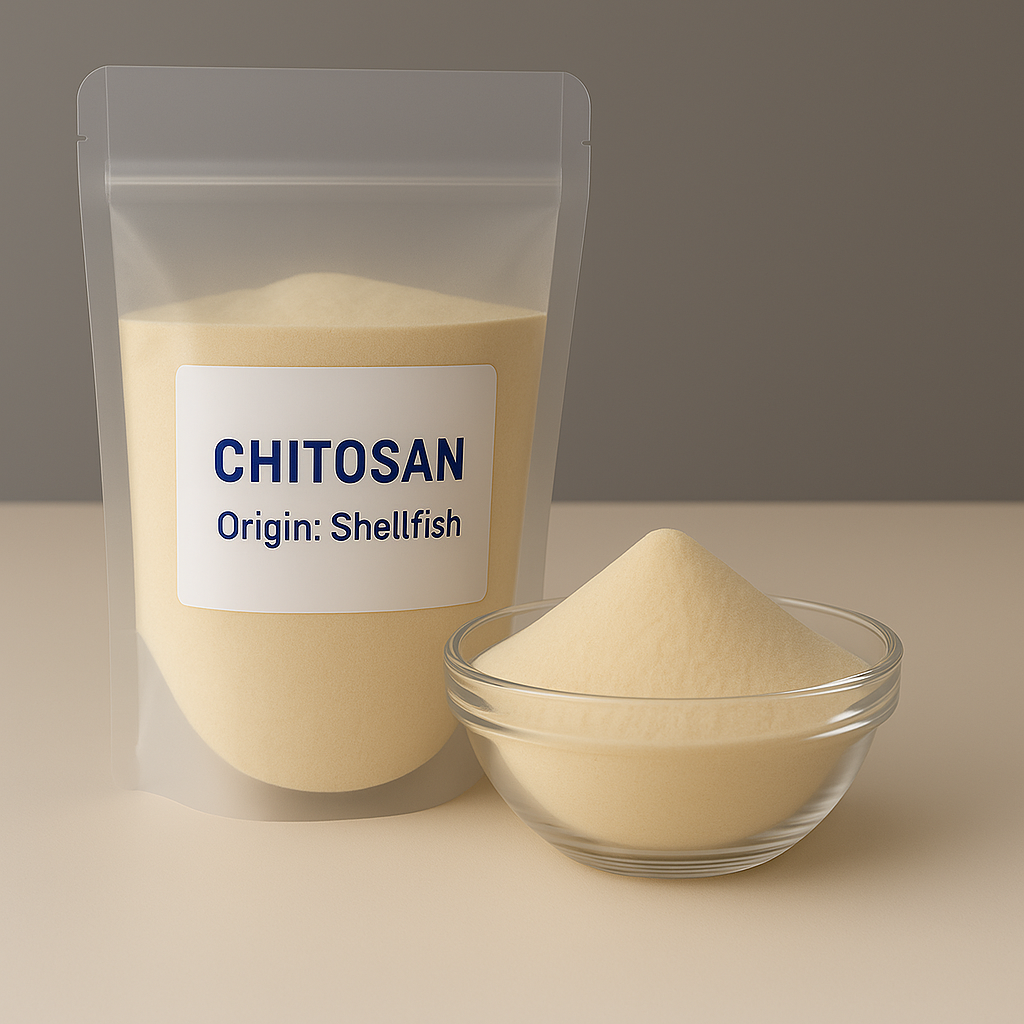
Researchers and manufacturers exploring advanced biomaterials frequently utilize sulphonated chitosan powder in applications requiring biocompatibility, high solubility, and improved biological activity.
At Chitosan Global, sulphonated chitosan is supplied for companies and research laboratories working in biotechnology, pharmaceuticals, medical materials, and advanced industrial polymer systems.
What is Sulphonated Chitosan?
Sulphonated chitosan is produced by introducing sulfonate groups (-SO3H) into the chitosan backbone through chemical modification reactions. This process significantly alters the physicochemical behavior of chitosan.
The resulting derivative exhibits:
• higher water solubility
• improved biological activity
• enhanced interaction with proteins and biomolecules
• increased compatibility with physiological environments
Because of these characteristics, sulphonated chitosan derivatives are frequently investigated in drug delivery research, anticoagulant materials, and advanced biomedical polymers.
In scientific literature, sulphonated chitosan is often compared with heparin-like polymers due to its structural similarity and potential biological interactions.
Key Functional Characteristics
Sulphonated chitosan demonstrates several important properties that distinguish it from native chitosan.
Important Features
• highly water-soluble chitosan derivative
• negatively charged anionic polysaccharide
• strong interaction with proteins and enzymes
• improved biocompatibility in biological systems
• potential anticoagulant and anti-inflammatory properties
• adaptable for biomedical and pharmaceutical research
These characteristics make sulphonated chitosan polymer particularly useful in advanced biotechnology applications.
Industrial Applications of Sulphonated Chitosan
Beyond biomedical research, sulphonated chitosan industrial uses are expanding across several sectors where functional biopolymers are required.
Water Treatment and Environmental Processing
The anionic nature of sulphonated chitosan allows it to interact with positively charged ions and contaminants, making it useful in environmental processing technologies.
Potential uses include:
• wastewater treatment systems
• heavy metal adsorption technologies
• advanced filtration materials
• eco-friendly water purification systems
Industries investigating bio-based water treatment polymers often evaluate sulphonated chitosan as an alternative to synthetic chemical agents.
Biopolymer Materials and Industrial Biotechnology
Sulphonated chitosan can also be used in bio-based industrial materials, where the polymer contributes functional chemical groups that improve performance.
Possible industrial uses include:
• biodegradable polymer materials
• enzyme immobilization matrices
• industrial biotechnology carriers
• polymer research and development
These applications demonstrate the potential of sulphonated chitosan biopolymers in sustainable industrial technologies.
Medical Applications of Sulphonated Chitosan
Sulphonated chitosan has gained significant attention in medical biomaterial research due to its compatibility with biological tissues and its structural similarity to naturally occurring sulfated polysaccharides.
Anticoagulant Biomaterials
Research suggests that sulphonated chitosan derivatives may exhibit properties similar to anticoagulant molecules such as heparin.
This characteristic has prompted investigations into the material for use in:
• blood-contact medical devices
• anticoagulant coatings
• biomedical implants
Tissue Engineering and Regenerative Medicine
Biomedical engineers are exploring sulphonated chitosan scaffolds for use in regenerative medicine and tissue engineering technologies.
Potential research areas include:
• bone regeneration scaffolds
• cartilage tissue engineering
• biomaterial coatings for implants
Because of its biocompatibility and polymer structure, sulphonated chitosan can function as a supportive matrix in tissue engineering systems.
Pharmaceutical Applications of Sulphonated Chitosan
One of the most promising areas of research for sulphonated chitosan lies in pharmaceutical technology and drug delivery systems.
Drug Delivery Systems
Sulphonated chitosan can be used as a drug carrier polymer, enabling controlled delivery of therapeutic compounds.
Applications may include:
• targeted drug delivery systems
• controlled release formulations
• nanocarrier drug delivery technologies
Researchers often investigate sulphonated chitosan nanoparticles for their ability to transport drugs within biological environments.
Antiviral and Anti-Inflammatory Research
Certain studies have explored sulphonated chitosan derivatives for their potential role in antiviral and anti-inflammatory drug development.
The polymer’s ability to interact with proteins and biological molecules makes it an attractive candidate for advanced pharmaceutical research.
Sulphonated Chitosan vs Native Chitosan
| Property | Sulphonated Chitosan | Native Chitosan |
|---|---|---|
| Polymer Charge | Anionic | Cationic |
| Water Solubility | High | Limited |
| Biological Interaction | Strong | Moderate |
| Biomedical Applications | Advanced | Standard |
| Pharmaceutical Use | Drug delivery research | Limited |
The introduction of sulfonate groups dramatically changes the behavior of chitosan, allowing sulphonated chitosan polymers to perform functions not possible with native chitosan.
Technical Specifications
| Parameter | Specification |
|---|---|
| Product Name | Sulphonated Chitosan |
| Polymer Type | Modified Chitosan Derivative |
| Functional Group | Sulfonate (-SO3H) |
| Form | Powder |
| Solubility | Highly Water Soluble |
| Applications | Industrial, Medical, Pharmaceutical |
Related Chitosan Derivatives
Sulphonated chitosan is part of a growing family of chemically modified chitosan polymers used in biotechnology and industrial research.
Other advanced derivatives include:
Trimethyl Chitosan (TMC)
Carboxymethyl Chitosan
Chitosan Oligosaccharide
Quaternary Chitosan
Together, these materials provide a comprehensive platform for biomedical innovation, pharmaceutical development, and industrial polymer research.
Partner With Chitosan Global
Companies and research institutions developing advanced biomaterials, pharmaceutical formulations, or industrial biopolymer systems can rely on Chitosan Global for high-quality chitosan derivatives.
Our team supports clients with:
• technical product documentation
• research and formulation samples
• bulk supply for industrial manufacturing
• consultation on chitosan-based polymer technologies
Contact Our Technical Team
If your organization is exploring sulphonated chitosan for industrial, medical, or pharmaceutical applications, our specialists are ready to assist.
📧 Email: info@shieldnutra.com
📞 Phone: +1 423 202 6145
Contact Chitosan Global today to request samples or discuss bulk supply of sulphonated chitosan polymer for research and industrial innovation.